What Makes the Blue-Ringed Octopus So Deadly?
TL;DR
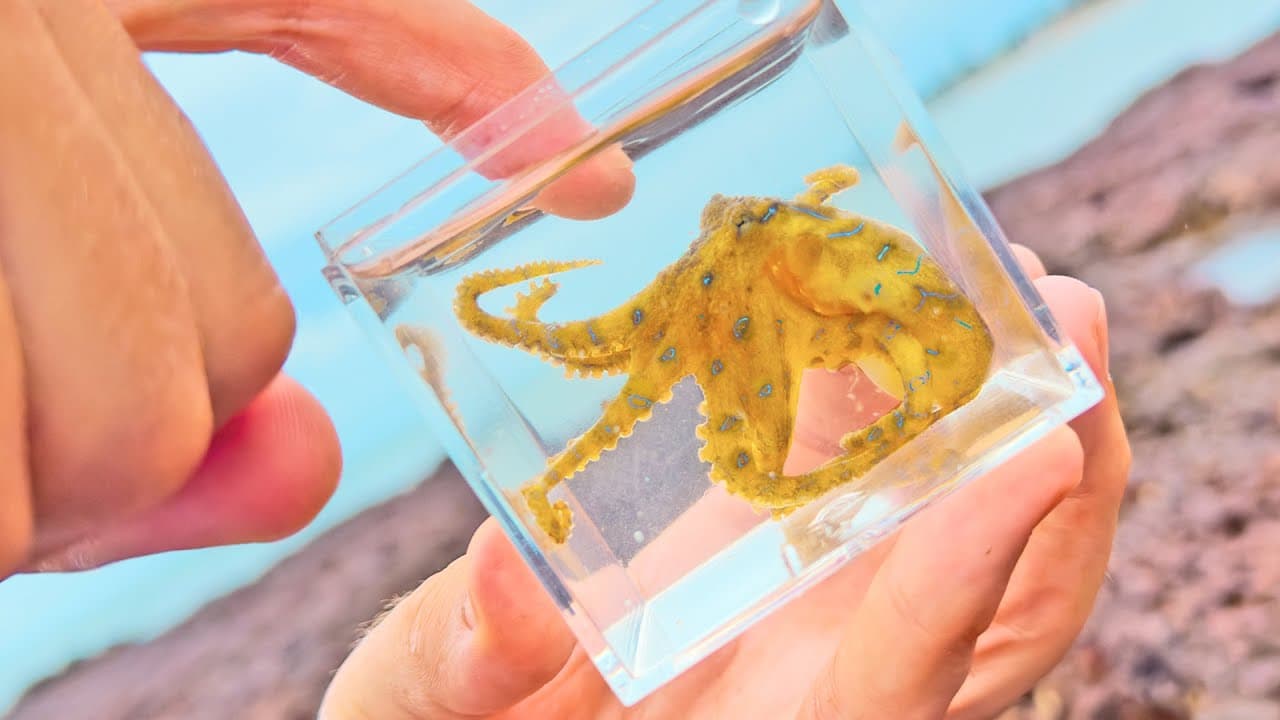
The blue-ringed octopus is the most venomous creature on Earth; a single bite can cause paralysis and respiratory failure. This octopus displays vivid blue rings when threatened, using its toxic venom acquired from bacteria to defend itself. Immediate medical attention is crucial if bitten, as symptoms can include tingling and difficulty breathing.
Transcript
- It's hard to remember the last time I was this nervous in the presence of an animal. If you get bit, it's almost certain death. Oh, I'm like, shaking right now. Like, my feet are tingling. (siren blaring) Right now, I am out tide pooling in eastern Australia in search of the deadliest creature on the planet. The blue-ringed octopus has one of the... Read More
Key Insights
- 😋 The blue-ringed octopus is the most venomous and dangerous creature on Earth.
- 😋 It uses its vivid display of bright blue rings and glowing lines to deter predators and startle prey.
- 🥺 A single bite from the octopus can cause paralysis and eventually lead to respiratory failure.
- ❓ Tide pooling is an effective method for locating these elusive creatures.
- 🏃 Caution should be exercised when exploring tide pools to avoid contact with dangerous animals like the stone fish.
- 😋 Immediate medical attention is crucial if bitten by a blue-ringed octopus.
- 🐙 Humans often come into contact with the octopus due to mistaken identity.
Install to Summarize YouTube Videos and Get Transcripts
Explore YouTube Video Summarizer or Get YouTube Transcript Extractor
Questions & Answers
Q: Why is the blue-ringed octopus considered the most dangerous creature?
The blue-ringed octopus is the most dangerous creature due to its highly toxic venom, which can kill over 20 human beings with a single bite. Its venom contains TTX, which paralyzes the nervous system and can be lethal.
Q: How does the blue-ringed octopus use its venom as a defense mechanism?
When threatened or agitated, the octopus flares up the rings on its arms and the lines on its body glow. This visual display warns predators and potential prey of its toxicity, as a single bite can be deadly.
Q: What are the symptoms of a blue-ringed octopus bite?
Initial symptoms include tingling, difficulty breathing, difficulty thinking, loss of motor skills, and wobbly walking. If bitten, immediate medical attention is required, as the venom can quickly lead to complete paralysis and respiratory failure.
Q: How does the blue-ringed octopus acquire its venom?
The blue-ringed octopus acquires its venom through bacteria found in its environment. It collects the bacteria in its saliva glands, and when it bites, the venom is injected into the wound.
Summary & Key Takeaways
-
The content follows the adventure of a brave adventurer searching for the blue-ringed octopus, known as the deadliest creature on Earth.
-
Tide pooling is explored as the best method to find the elusive octopus, and the dangers of the stone fish, the most venomous fish, are highlighted.
-
The blue-ringed octopus is found and observed, showcasing its unique defense mechanisms and lethal venom.
Read in Other Languages (beta)
Share This Summary 📚
Summarize YouTube Videos and Get Video Transcripts with 1-Click
Try YouTube Summary with ChatGPT & Claude or YouTube Transcript Generator
Explore More Summaries from Brave Wilderness 📚






Summarize YouTube Videos and Get Video Transcripts with 1-Click
Try YouTube Summary with ChatGPT & Claude or YouTube Transcript Generator