How to Use Natural English Phrases Every Day
TL;DR
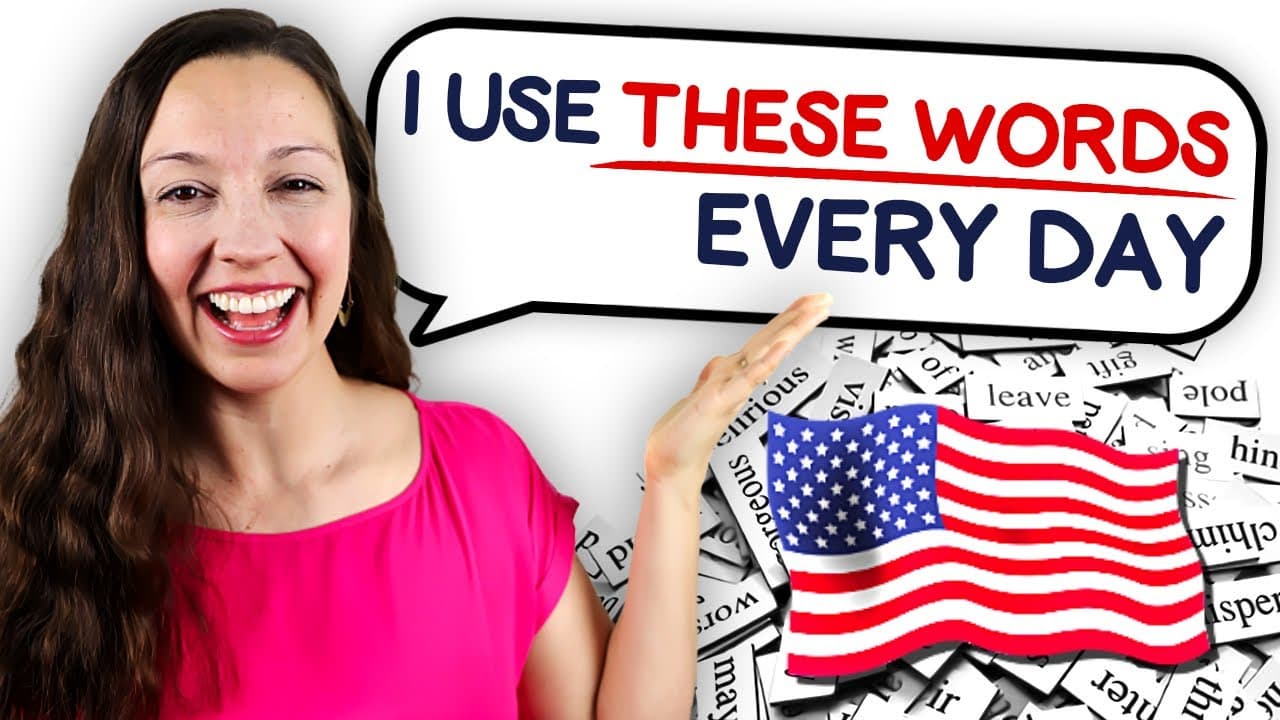
Remember everyday English by saying phrases aloud, copying their pronunciation and sentence structure, and seeing them in several contexts. Useful expressions include “inside out,” “right side out,” “comfy,” “clean up a mess,” “father figure,” “in charge of,” “get in the habit of,” “look back fondly,” and “ideally.”
Transcript
Would you like to use real life English phrases that real people use every day, not that old textbook stuff? If the answer is yes, you're in the right place. Hi, I'm Vanessa from speakenglishwithvanessa.com. And here on my YouTube channel, you will learn real life English, the way that real people speak in the real world. Today you are going to lea... Read More
Key Insights
- Active speaking is the key to remembering new vocabulary because listening to and watching lessons alone may not make expressions stick. Repeating complete sentences aloud lets learners practice their own voice while copying pronunciation and sentence structure.
- “Inside out” is a fixed phrase describing an item, such as a shirt, whose inner surface is facing outward. The expression should be memorized as a complete unit because its word order does not change.
- “Right side out” describes the correct orientation of clothing, pillowcases, and similar items after they have been reversed. A learner can say that they turn a shirt or pillowcase right side out before using it.
- “Comfy” is a shortened form of “comfortable” used for clothing, houses, and other things or places that feel pleasant and relaxing. The lesson uses comfortable pants and a frequently worn sweater as practical examples.
- “Clean up a mess” means dealing with something untidy or spilled. The phrase allows grammatical variation, including “clean up my mess” and “clean up your own mess,” which makes it useful when discussing household responsibilities.
- A “father figure” is an important male role model who is like a father but is not the person’s actual father. A coach or teacher may fill this role when someone looks up to him as an influential man.
- “In charge of” identifies the person responsible for a task or duty. The phrase can describe responsibility for dishes, laundry, or checking a neighbor’s mail, and learning it as one unit avoids uncertainty about its preposition.
- “Get in the habit of” describes developing a regular routine and requires an ing form for the activity that follows. Examples include getting in the habit of learning English daily or walking after dinner.
- “Look back fondly” means remembering a past experience with happiness, nostalgia, and possibly bittersweet feelings. Even experiences that were difficult at the time, such as repeatedly cleaning children’s messes, may later become affectionate memories.
Install to Summarize YouTube Videos and Get Transcripts
Explore YouTube Video Summarizer or Get YouTube Transcript Extractor
Questions & Answers
Q: How can I remember new English phrases for longer?
Use each phrase actively instead of only listening to vocabulary lessons. Say complete sentences aloud, repeat the model pronunciation, and copy the sentence structure with your own voice. It also helps to encounter the same expression in several contexts, such as an explanation, an example sentence, and a clip from a real conversation. This combination turns recognition into speaking practice.
Q: What do “inside out” and “right side out” mean?
“Inside out” describes clothing or another item when its inner surface is facing outward. “Right side out” describes returning that item to its correct orientation. For example, a shirt may be inside out after washing, so you turn it right side out. The same expression can apply to a pillowcase before you put it on a pillow.
Q: What does “comfy” mean in everyday English?
“Comfy” is a shortened way to say “comfortable.” It can describe clothes that feel pleasant to wear, such as a sweater, sweatpants, or other relaxed clothing. It can also describe a house if it is a comfortable place to relax and spend time. The shortened form is useful in casual, everyday speech.
Q: How do you use “clean up a mess” in a sentence?
Use “clean up a mess” when someone needs to deal with something untidy or spilled. You can say, “I need to clean up a mess,” or change the possessive word to identify responsibility, as in “I need to clean up my mess” and “You need to clean up your own mess.” The phrase is especially useful for household situations.
Q: What is a father figure?
A father figure is an important man who serves as a role model and feels like a father, although he is not the person’s actual father. A basketball coach, baseball coach, or teacher may become a father figure. The defining ideas are that the person is influential, is looked up to, and provides an important male presence in someone’s life.
Q: How do you use “in charge of” correctly?
Use “in charge of” to identify who is responsible for a task, duty, or item. For example, one person can be in charge of dishes while another handles laundry. Children can also be in charge of checking a neighbor’s mail during the neighbor’s vacation. Memorizing the full phrase makes the required preposition easier to use correctly.
Q: What grammar follows “get in the habit of”?
The activity after “get in the habit of” should use an ing form. For example, you can say, “Get in the habit of learning English every day” or “I want to get in the habit of walking after dinner.” The expression means developing a regular routine, such as listening to English music, podcasts, or lessons during daily activities.
Q: What does “look back fondly” mean?
“Look back fondly” means remembering a past event with happiness, nostalgia, and sometimes bittersweet feelings. An experience may have been frustrating when it happened but feel precious later. For example, a parent might eventually look back fondly on the silly activities or frequent messes of childhood, even though managing them required considerable effort at the time.
Summary & Key Takeaways
-
The lesson presents natural phrases used in ordinary conversations and household situations. It emphasizes that watching vocabulary lessons is not enough for lasting recall. Learners should actively speak, repeat the teacher’s pronunciation and sentence patterns, and encounter each expression in multiple contexts so the language becomes easier to remember and use independently.
-
Several expressions describe clothing, comfort, and household responsibilities. “Inside out” describes clothing with its inner surface facing outward, while “right side out” describes restoring it to the proper position. “Comfy” is a shortened form of “comfortable.” “Clean up a mess” and “in charge of” describe common chores and assigned responsibilities.
-
Other phrases describe relationships, routines, memories, and preferred circumstances. A “father figure” is an important male role model who is not someone’s actual father. “Get in the habit of” introduces a repeated routine and is followed by an ing form. “Look back fondly” expresses happy nostalgia, while “ideally” introduces a preferred plan.
Read in Other Languages (beta)
Share This Summary 📚
Summarize YouTube Videos and Get Video Transcripts with 1-Click
Try YouTube Summary with ChatGPT & Claude or YouTube Transcript Generator
Explore More Summaries from Speak English With Vanessa 📚






Summarize YouTube Videos and Get Video Transcripts with 1-Click
Try YouTube Summary with ChatGPT & Claude or YouTube Transcript Generator