How to Practice English Through Real Conversation
TL;DR
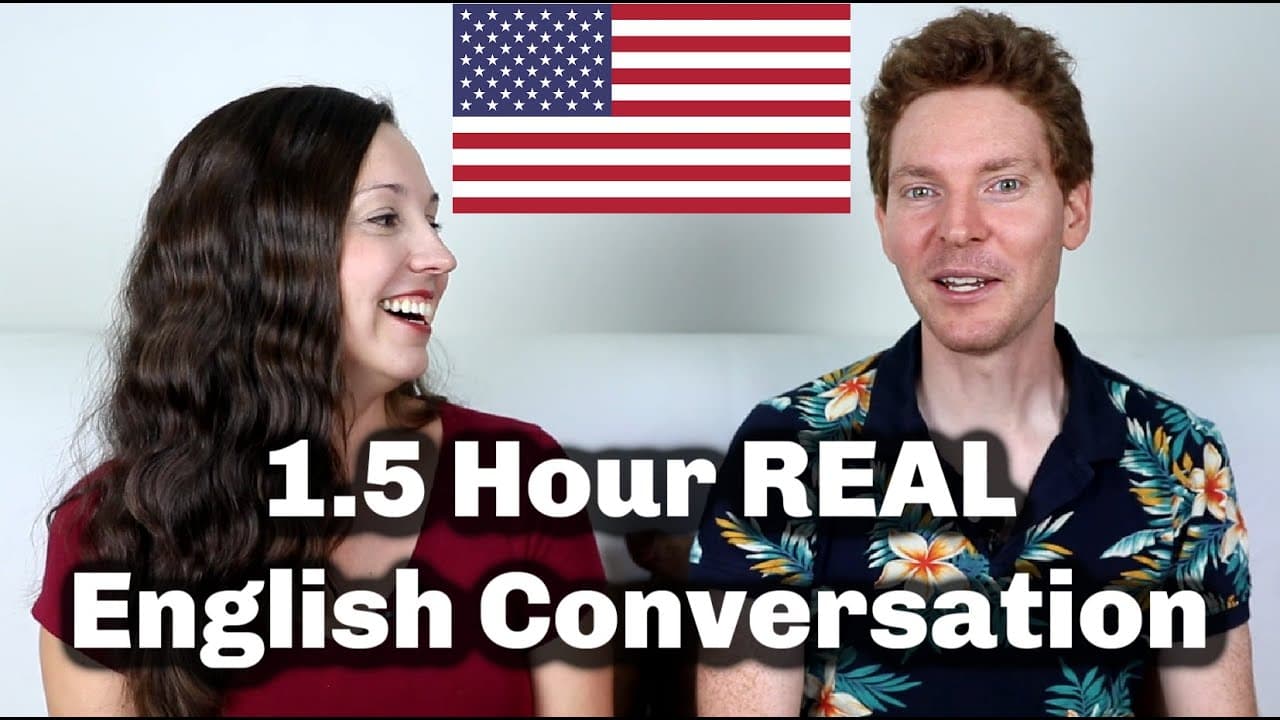
Practice natural American English by listening to Vanessa and Dan discuss personal questions, then answer the same questions yourself. Their conversation covers 14 everyday topics, including family, childhood, hobbies, travel, food, nature, sports, money, pets, and books, with key phrases, optional full subtitles, timestamps, and a downloadable worksheet supporting repeated study.
Transcript
Vanessa: Hi, I'm Vanessa from SpeakEnglishWithVanessa.com. Today, I have a special guest, my husband, Dan. Dan: Hello. Vanessa: Today, we are going to be having a long English conversation, because over two years ago, back in February 2020, we made this conversation and millions of you loved this and said that it helped you to immerse yours... Read More
Key Insights
- The lesson is structured around 14 everyday conversation topics, including family, childhood, hobbies, travel, food, nature, holidays, sports, electronics, money, games, celebrities, pets, and books. This range exposes learners to personal stories, opinions, questions, and vocabulary that can appear in ordinary American English conversations.
- The recommended practice method is active immersion through listening and personal response. Learners can follow Vanessa and Dan’s extended conversation, notice how answers develop naturally, and then use the same questions to describe their own histories, preferences, experiences, and ideas in spoken or written English.
- Subtitles are provided at two levels for different learning needs. Selected key phrases appear directly within the lesson, while the CC option provides full subtitles so viewers can check every word. Topic timestamps in the description also make it possible to repeat individual sections without replaying the entire lesson.
- Family history can be difficult to preserve when relatives leave few records or stop using an inherited language. Dan knows detailed stories from his paternal grandmother, whose German family settled in eastern Kansas, but he knows less about his mother’s side because that branch did not maintain comparable records.
- Cultural assimilation affected the German identity of Dan’s relatives in the United States. His family encountered mistrust connected to political conflict and war, spoke less German across generations, and apparently changed a more German-sounding surname as they adapted to life in their new national community.
- Vanessa’s paternal family history begins with relatives from near Naples, Italy. Her great-grandfather sought a new wife after his first wife died, but he ultimately married Antoinette rather than the intended woman. The wedding dress had already been made for someone else, so it appeared too short in their photographs.
- Antoinette became the matriarch of Vanessa’s paternal family after moving to the United States. She had three children with Vanessa’s great-grandfather, then raised six children after his death. Later generations remember and revere her as a survivor who endured hardship and helped the family continue.
- The word "critters" refers generally to small animals in Dan’s childhood story. His enthusiasm included catching frogs, lizards, grasshoppers, snakes, bugs, fish, butterflies, salamanders, and tadpoles. He continued this interest after childhood through aquariums, fish tanks, outdoor exploration, and activities shared with Vanessa and their children.
Install to Summarize YouTube Videos and Get Transcripts
Explore YouTube Video Summarizer or Get YouTube Transcript Extractor
Questions & Answers
Q: How can I practice English with a long conversation lesson?
Listen to the conversation as an immersion exercise, follow the key phrases shown on screen, and activate full CC subtitles whenever you need to check every word. Pause after each topic and answer the same personal question yourself. The description provides timestamps for revisiting particular sections, while the downloadable worksheet gives learners another way to record and review their responses.
Q: What topics can English learners practice in this lesson?
The conversation covers 14 familiar topics: family, childhood, hobbies, travel, food, nature, holidays, sports, electronics, money, games, celebrities, pets, and books. Vanessa and Dan use these subjects to share opinions, stories, ideas, and answers. Because the questions concern ordinary experiences, learners can adapt them to their own lives and practice producing personal responses.
Q: How do subtitles support this English conversation practice?
Selected key phrases are displayed during the conversation so learners can notice useful language without reading every line. Viewers who want complete textual support can click CC to see full subtitles and avoid missing words. The two options allow learners to choose between more listening-focused immersion and closer study of the exact language used by Vanessa and Dan.
Q: What does Dan reveal about his German family history?
Dan says his paternal grandmother preserved detailed memories and researched documents about the family. His relatives came from Germany, apparently near Hamburg in one case, and settled in eastern Kansas, where German-only churches existed. His grandmother knew little German, and he believes her generation or her parents’ generation was among the last in the family to speak it.
Q: Why did Dan’s German relatives assimilate in the United States?
Dan connects their assimilation to the mistrust and hostility directed toward German culture during periods when the United States was at war with Germany. He believes relatives tried to remove strongly German characteristics from family life. Speaking German declined across generations, and the family’s surname apparently had a more German-sounding form before it was changed.
Q: What is the story of Vanessa’s great-grandmother Antoinette?
Vanessa says her great-grandfather, originally from near Naples, needed help raising three children after his first wife died. Although his mother arranged another prospective bride in Italy, he saw Antoinette and chose to marry her instead. Antoinette moved to the United States, had three more children, and eventually raised all six after her husband died.
Q: What childhood activity did Dan continue as an adult?
Dan continued catching and observing small animals, which he informally calls critters. As a child, he pursued frogs, lizards, grasshoppers, snakes, bugs, butterflies, fish, and other creatures using cages, nets, terrariums, and aquariums. He and Vanessa later collected tadpoles and watched them become frogs, and his interest also continued through fish tanks and activities with their children.
Q: What safety lesson appears in Dan’s childhood animal story?
Dan recalls catching a five-foot snake without knowing what kind it was. He reached into bushes, grabbed it incorrectly, and swung it through the air. Looking back, he calls this probably the dumbest thing he did while catching animals as a child. His own assessment presents the incident as reckless rather than as behavior learners should imitate.
Summary & Key Takeaways
-
Vanessa and Dan present a 1.5-hour immersion lesson built around an informal conversation between two American English speakers. They discuss personal opinions, memories, stories, and ideas across 14 familiar topics. Key phrases appear as subtitles, while full captions help learners follow every word and revisit unfamiliar expressions.
-
The opening family discussion illustrates how personal stories create meaningful conversation. Dan describes German relatives who settled in eastern Kansas and gradually assimilated, while Vanessa recounts how her Italian great-grandmother Antoinette moved to the United States, raised six children after her husband died, and became a revered family matriarch.
-
The childhood discussion shows how a simple personal question can produce detailed vocabulary and storytelling. Dan explains that he still enjoys catching small animals, which he calls critters, just as he did as a child. Vanessa connects the hobby to their honeymoon, marriage, children, and shared experiences observing tadpoles become frogs.
Read in Other Languages (beta)
Share This Summary 📚
Summarize YouTube Videos and Get Video Transcripts with 1-Click
Try YouTube Summary with ChatGPT & Claude or YouTube Transcript Generator
Explore More Summaries from Speak English With Vanessa 📚
Summarize YouTube Videos and Get Video Transcripts with 1-Click
Try YouTube Summary with ChatGPT & Claude or YouTube Transcript Generator