How to Inspect the Work, Not the Person in Hiring
TL;DR
Inspect the work, not the person, to make better hiring and promotion decisions. Rely on portfolios and live simulations instead of conversations to reduce bias and surface true capability. This mindset helps you select and reward people based on output and impact rather than a narrative.
Transcript
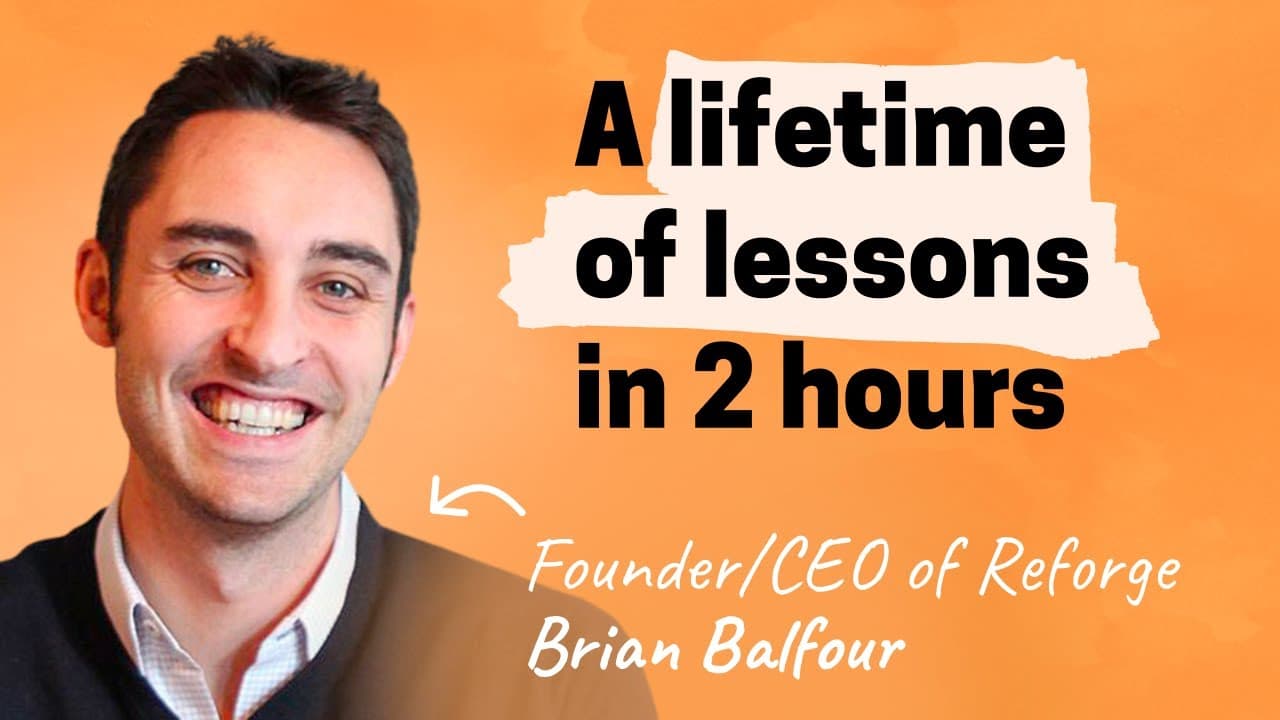
I think historically I've gotten really caught in this trap where at any moment in Reforge, it's like, "Ah, if I just solve this one thing that's X problem, everything's going to get easier." That might be landing some big hire, some executive hire, or figuring out some major lever or defining some strategy. But the reality is that the opposite... Read More
Key Insights
- Inspect the work, not the person, to reveal true capability beyond surface impressions.
- Portfolio reviews and simulations provide stronger signals of skill than conversations alone.
- Biases in hiring arise when we judge people from conversations rather than outcomes.
- Promotions should be based on concrete output and historical results, not storytelling.
- Decision making improves when you inspect artifacts people have created and contributed to.
- Systematic evaluation of work reduces friction and aligns with long term performance.
- The work driven mindset scales with growth by focusing on what actually changes outcomes.
- A culture that emphasizes verifiable results attracts and retains higher performers.
Install to Summarize YouTube Videos and Get Transcripts
Explore YouTube Video Summarizer or Get YouTube Transcript Extractor
Questions & Answers
Q: How should you evaluate candidates instead of relying on interviews?
To evaluate candidates effectively, focus on the actual work they have produced rather than the impressions formed during conversations. Use a portfolio review to assess tangible outputs and run a simulation or exercise that mirrors real job tasks. This approach reduces biases, clarifies capabilities, and reveals how they approach work, collaboration, and problem solving in practice.
Q: Why are simulations important in hiring decisions?
Simulations are important because they simulate real job challenges and demonstrate how a candidate would perform under pressure and within a team. They provide concrete evidence of skills, decision making, and execution, which a resume or interview cannot. Relying on simulations helps you distinguish true capability from polished storytelling and aligns hires with practical outcomes.
Q: What bias issues arise when hiring from conversations alone?
Relying on conversations alone invites biases related to first impressions, confidence, or eloquence, which can mislead decision makers about the candidate’s actual suitability. By inspecting work and results, you minimize bias because the signal comes from observable outputs rather than subjective interpretations.
Q: How does this approach apply to promotions and performance reviews?
In promotions and reviews, use the person’s actual contributions, outcomes, and impact rather than their narrative about what they did. Look at completed projects, metrics improved, and value delivered. This makes advancement contingent on verifiable results and reduces the chance of favoritism or misattribution.
Q: What’s the role of a Notion or similar doc in learning and growth?
A Notion style document for lessons learned helps capture concise one liners and short descriptions of what worked or failed. It turns episodic knowledge into a reusable library that informs future decisions, making learning actionable, reducing friction when facing similar challenges, and enabling quick references for strategic questions.
Q: How should teams operationalize a work based evaluation system?
Teams should establish standardized work samples, clear evaluation criteria, and consistent simulation exercises tied to real job tasks. By documenting outcomes, providing diverse scenarios, and ensuring transparent scoring, organizations create a repeatable, fair process that scales with growth while maintaining high selection standards.
Q: What happens when you prioritize outcomes over storytelling in hiring?
Prioritizing outcomes over storytelling leads to better hiring quality and long term performance. It encourages candidates to demonstrate real capabilities, aligns expectations with measurable results, and builds a culture where evidence guides decisions rather than persuasive but unverified narratives.
Q: Can you expand on why judging output is more reliable than judging people?
Judging output is more reliable because it reflects actual behavior under real conditions, collaboration, and impact. People can present themselves well in conversations, but their work reveals how they think, execute, and contribute. Observable outputs provide objective data that is harder to falsify, enabling more accurate decisions.
Summary & Key Takeaways
-
A practical rule is to judge candidates by the work they have produced and current outputs rather than the stories they tell about themselves, which helps reduce bias and improves decision quality. This approach also applies to performance reviews, where tangible results carry more weight than self narratives. It fosters a culture that values demonstrable contribution over conjecture.
-
Using portfolio reviews and simulations creates a clearer signal of capability than interviews alone. It requires upfront effort but pays off through better hiring and promotion outcomes. This framework aligns decisions with what the person has actually built, not what they say they could have done under hypothetical pressure.
-
Adopting an evidence based approach means balancing the effort of creating work samples with the payoff of more accurate judgments. By prioritizing outputs, teams can better identify top performers, reduce misjudgments, and accelerate growth through smarter personnel moves.
Read in Other Languages (beta)
Share This Summary 📚
Summarize YouTube Videos and Get Video Transcripts with 1-Click
Try YouTube Summary with ChatGPT & Claude or YouTube Transcript Generator
Explore More Summaries from Lenny's Podcast 📚




Summarize YouTube Videos and Get Video Transcripts with 1-Click
Try YouTube Summary with ChatGPT & Claude or YouTube Transcript Generator