Why Does a Good Salary Still Feel Insufficient?
TL;DR
A respectable salary can still feel inadequate because take-home pay is far lower than gross income, while housing, transportation, insurance, debt, and routine expenses consume most of what remains. Lifestyle expectations, easy credit, social comparison, and recurring payments deepen the strain, so higher earnings do not automatically create savings, wealth, or financial security.
Transcript
You just got promoted. Congratulations. Your salary jumped from 38,000 to $50,000 a year. And for about three weeks, you felt like you were finally making it. You updated your LinkedIn, maybe treated yourself to dinner at that restaurant you always walk past but never enter, and started thinking about all the things you could finally afford. Fast f... Read More
Key Insights
- Gross income is a poor measure of financial comfort because taxes, benefits, and essential expenses reduce the amount available for daily life, emergencies, and wealth building. The salary shown on an offer letter can therefore create expectations that take-home pay cannot support.
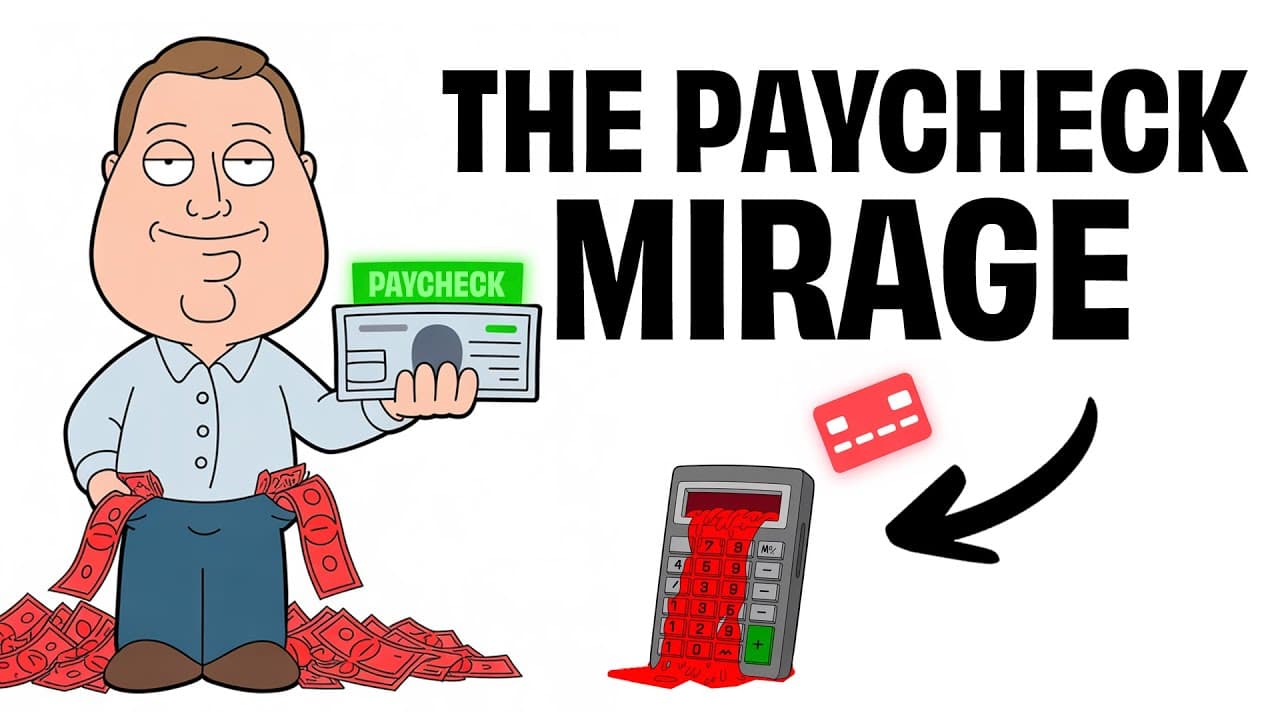
- The paycheck mirage is the disconnect between a respectable salary and limited purchasing power. It makes an earner feel financially successful on paper while rent, transportation, insurance, utilities, food, and debt preserve the same stressful patterns associated with lower earnings.
- The middle-class squeeze is a financial position where income may be too high for assistance but too low for meaningful wealth accumulation. Earners can remain responsible for every major expense without having enough surplus to build savings, purchase suitable housing, or absorb emergencies.
- Lifestyle inflation anxiety is pressure to buy what someone with a good salary is expected to afford. Purchases become symbols of professional success or normalcy, even when take-home income cannot comfortably support them, creating guilt, debt, and continuing financial strain.
- Credit works like perceived extra income when higher earnings produce access to larger credit lines. Affordable-looking monthly payments can justify repeated purchases, but the accumulated balances leave the earner with upgraded possessions and financial stress rather than genuine security.
- Social comparison is misleading because visible lifestyles do not reveal debt or unmentioned financial advantages. Seeing peers enjoy vacations, restaurants, and purchases can make a financially strained earner feel personally inadequate, even when those appearances do not represent sustainable spending.
- Monthly-payment thinking hides the total effect of spending by making each subscription, upgrade, membership, or financed purchase seem harmless. Individually manageable charges can collectively consume the remaining flexibility in a budget and prevent money from supporting savings or unexpected needs.
- Higher earnings are not automatically financial freedom because expenses and expectations can expand alongside income. Without resisting lifestyle inflation and evaluating total costs, each promotion may recreate the same emotional and financial position under a more impressive salary figure.
Install to Summarize YouTube Videos and Get Transcripts
Explore YouTube Video Summarizer or Get YouTube Transcript Extractor
Questions & Answers
Q: Why can a good salary still feel insufficient?
A good salary can feel insufficient because the amount advertised by an employer is not the amount available for spending. Taxes and benefits reduce take-home pay, while rent, transportation, insurance, utilities, food, debt, and unexpected expenses consume much of what remains. The gap between the salary’s social meaning and its actual purchasing power creates stress, disappointment, and little capacity to save.
Q: What is the paycheck mirage?
The paycheck mirage is the belief that a respectable gross salary should create comfort and financial freedom, even when take-home pay and modern living costs tell a different story. People adjust expectations to the headline salary, then discover that essential expenses leave little flexibility. The result is a lifestyle that looks more successful while preserving debt, weak savings, and paycheck-to-paycheck anxiety.
Q: How does lifestyle inflation create financial anxiety?
Lifestyle inflation creates anxiety when an income increase leads someone to upgrade spending because they believe their new status should support better food, clothing, transportation, housing, or conveniences. These purchases may reflect social expectations rather than actual affordability. As recurring obligations grow, the raise stops improving financial security and instead creates pressure to maintain a lifestyle that depends on constant income and credit.
Q: Why does a higher credit limit increase financial risk?
A higher credit limit can feel like an extension of income, especially after a promotion makes larger balances and monthly payments appear manageable. That perception encourages purchases that take-home pay cannot fully support. Repeated borrowing then converts temporary lifestyle upgrades into continuing obligations, leaving the earner with better possessions but less flexibility, weaker savings, and persistent stress about future bills.
Q: How does social media distort financial comparison?
Social media displays vacations, restaurants, vehicles, clothing, and other visible signs of consumption without revealing how they were financed. People who appear to earn similar incomes may be relying on debt or receiving financial advantages they do not disclose. Comparing a complete personal budget with another person’s curated lifestyle can therefore produce shame and the false belief that ordinary financial strain reflects poor money management.
Q: Why can monthly payments hide the true cost of spending?
Monthly payments make purchases feel smaller by directing attention toward the immediate charge instead of the complete cost and its cumulative effect. A phone upgrade, streaming service, membership, or financed purchase may seem harmless alone. When several such commitments overlap, they steadily remove budget flexibility, reduce the ability to save, and make routine disruptions feel like financial emergencies.
Q: Why might common budgeting advice feel inadequate?
Common budgeting advice may be technically useful but inadequate when essential costs already consume nearly all available income. Cutting coffee, cooking more, using coupons, or optimizing minor purchases can create only limited breathing room if housing, transportation, insurance, and debt dominate the budget. A single repair or failed device can quickly erase those savings, exposing the underlying mismatch between earnings and living costs.
Q: Why does earning more not always create financial security?
Earning more does not guarantee security because expenses and expectations can rise with income. A promotion may encourage a newer car, better housing, more subscriptions, or other recurring obligations that absorb the added take-home pay. If each raise becomes permission to expand the lifestyle, savings remain empty and the emotional experience of living paycheck to paycheck continues under a larger salary.
Summary & Key Takeaways
-
Gross salary creates misleading expectations because workers mentally anchor their lifestyle to the amount on an offer letter, not the smaller amount deposited after taxes and benefits. Once rent, transportation, insurance, utilities, food, and debt are paid, a supposedly comfortable income may leave little room for savings or unexpected costs.
-
The paycheck mirage is intensified by psychology. A higher salary encourages lifestyle upgrades, creates pressure to appear financially comfortable, and unlocks larger credit lines. Small recurring purchases and manageable-looking monthly payments then accumulate, leaving earners with nicer possessions but the same anxiety, empty savings, and paycheck-to-paycheck pattern they experienced before.
-
Common advice about eliminating minor purchases, using coupons, or adding more work may help at the margins, but it can ignore the underlying mismatch between income and essential living costs. Lasting security depends on recognizing total costs, resisting automatic lifestyle expansion, questioning recurring expenses, and separating salary status from actual financial freedom.
Read in Other Languages (beta)
Share This Summary 📚
Summarize YouTube Videos and Get Video Transcripts with 1-Click
Try YouTube Summary with ChatGPT & Claude or YouTube Transcript Generator
Explore More Summaries from Nick Invests 📚


Summarize YouTube Videos and Get Video Transcripts with 1-Click
Try YouTube Summary with ChatGPT & Claude or YouTube Transcript Generator