How Do Roller Coasters Work and Stay Safe?
TL;DR
Roller coasters create thrills by controlling acceleration and g-forces while multiple wheel assemblies keep each car secured to the track. Engineers design the ride path with calculations and CAD, then verify performance using weighted test dummies, accelerometers, design data, and recurring inspections for cracks or other changes.
Transcript
- Hi, I am Korey Kiepert. I'm a roller coaster engineer. Let's answer some questions from the internet. This is "Roller Coaster Support". [upbeat music] @mudfence asked, "What's the tallest roller coaster in the USA and the fastest in the world?" The tallest roller coaster in the world and the fastest roller coaster in the world currently is Kingda... Read More
Key Insights
- Roller coaster thrills are created by arranging changing g-forces. Designers combine moments of airtime with valleys and curves that press riders into their seats, varying the intensity, timing, and sequence to produce an experience that feels exciting without making discomfort the measure of success.
- Weightlessness occurs when the forces acting on a rider effectively cancel during motion over a hill. The engineer describes normal standing as 1g, while some valleys can produce 3g or 4g and certain rides can approach 6g, making riders feel substantially heavier.
- Roller coaster cars stay secured through several wheel positions. A top wheel rides on the running surface, side wheels control lateral movement, and an uplift or undercarriage wheel holds beneath the rail, forming an assembly that locks the vehicle onto the track.
- Roller coaster testing is an ongoing process rather than a single opening-day check. Parks initially use weighted test dummies, often water-filled, and accelerometers to measure ride forces, compare actual performance with design predictions, and monitor whether the ride changes over successive years.
- Non-destructive testing is used to find possible cracks without damaging a component. Engineers examine steel parts for material or machining defects, adding another safety layer alongside operational testing, measured acceleration data, and the extensive maintenance work performed behind the scenes at amusement parks.
- Wooden coaster track consists of layered wood topped by a steel running strip. Because wood responds to environmental conditions and can expand when wet, the ride may feel different depending on conditions, while the craftsmanship and visible structure give wooden coasters a distinctive character.
- Steel coaster track can be bent into designed curves and drops and can support several vehicle orientations. Riders may sit above the track, hang below it, or ride in a flying position, giving designers broad options for shaping both the path and the physical riding posture.
- Roller coaster design begins with the site and the park’s objectives. Engineers study maps or plans, walk the terrain, consider neighboring attractions, perform calculations, and use CAD while coordinating the structure, ride path, vehicle, rider clearances, and desired marketing or family appeal.
Install to Summarize YouTube Videos and Get Transcripts
Explore YouTube Video Summarizer or Get YouTube Transcript Extractor
Questions & Answers
Q: How do roller coasters create weightlessness and strong g-forces?
Roller coasters create changing sensations by controlling speed and curvature along the track. A person standing normally experiences 1g. Going through a valley can raise the experienced force to 3g or 4g, pressing the rider into the seat. Over a hill, opposing effects can effectively cancel, creating airtime and a near-weightless feeling similar to the brief sensation at the top of a swing.
Q: How do roller coaster cars stay on the track?
Roller coaster cars use multiple wheels positioned around the rail rather than relying only on wheels resting on top. The assembly includes a top wheel on the running surface, side wheels that control lateral movement, and an uplift or undercarriage wheel beneath the track. Together, these wheels lock the car to the rail and prevent it from simply lifting off during the ride.
Q: How are roller coasters tested before passengers ride them?
The first test runs commonly use weighted dummies, often water-filled forms shaped roughly like a human body. Engineers mount an accelerometer in the train to record forces throughout the course. They compare the measured g-forces at specific locations with the original design data, checking whether the real ride performs as calculated before it carries the public.
Q: How do amusement parks continue testing roller coasters?
Testing continues after a roller coaster opens. Engineers repeat measurements over the years to detect changes in ride performance and use non-destructive testing on components to look for cracks caused by material or machining defects. This recurring combination of operational measurements and component inspection supports the extensive safety work performed behind the scenes at an amusement park.
Q: What is the difference between wooden and steel roller coasters?
A wooden coaster uses layered wood with a steel running strip on top. The wood can respond to weather, expanding somewhat when wet and producing a ride that varies with environmental conditions. Steel coaster rails are bent into planned curves and drops and can accommodate cars above or below the track, as well as vehicles that place riders in a flying position.
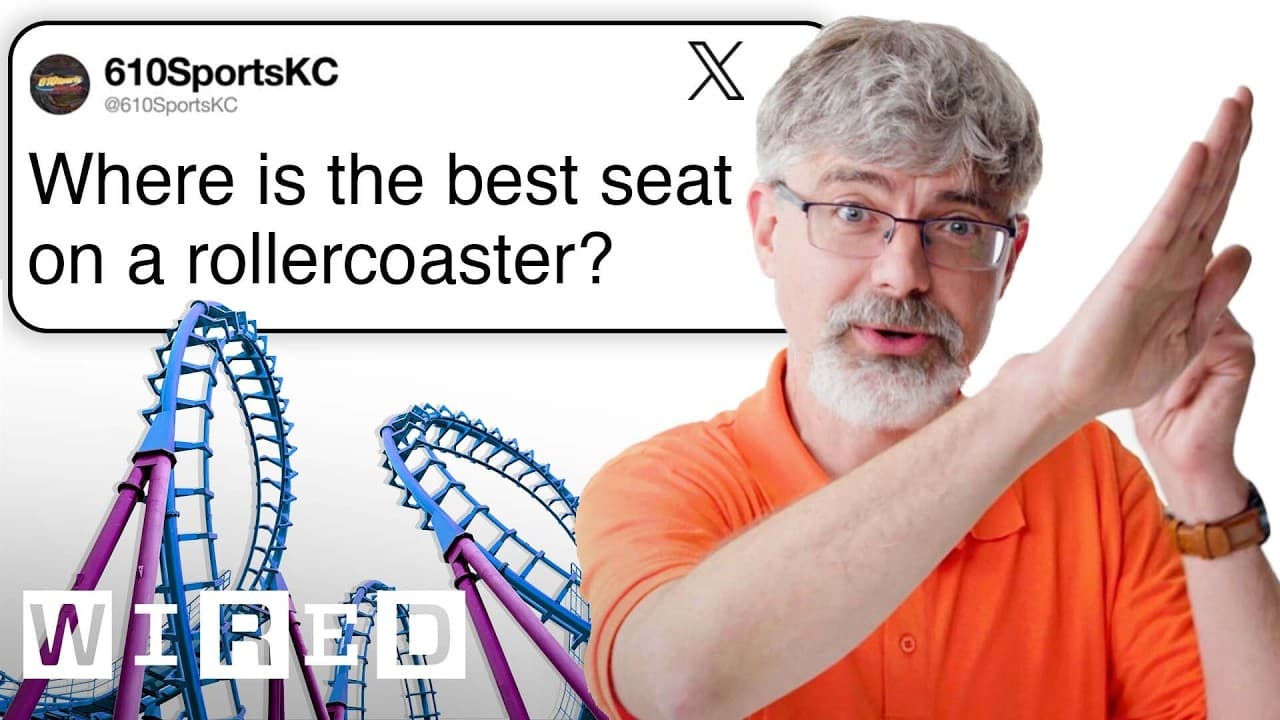
Q: Where is the best seat on a roller coaster?
The best seat depends on the train and track layout. The back can provide stronger airtime as it is pulled over the first drop, while the front can produce more pronounced airtime on elements such as a double-up. Long trains may concentrate extreme sensations near either end, although some rides deliver strong airtime in every seat, so trying multiple positions is the most reliable approach.
Q: How do engineers design a roller coaster for a specific park?
Engineers begin by examining a map, satellite image, or site plan, then walking through the park to understand its terrain and nearby attractions. They use calculations and CAD to develop the structure, track path, and vehicle while accounting for park goals. A design may even coordinate with another attraction, such as timing a drop near an approaching log flume splash.
Q: How do designers balance roller coaster thrills with rider comfort?
Designers judge success by whether riders laugh, smile, and want to ride again, not by how many people feel sick. They arrange airtime, banked curves, speed, and stronger positive forces into a deliberate rhythm. The process resembles composing music from a limited set of notes, with the order, timing, and intensity of the available g-force sensations creating different experiences.
Summary & Key Takeaways
-
Roller coaster engineers shape a ride by manipulating g-forces. Hills can produce airtime or a near-weightless sensation, while valleys and banked curves push riders into their seats. The goal is not simply maximum intensity, but a varied sequence that leaves riders smiling, laughing, and eager to ride again.
-
Safety depends on both mechanical design and continuing verification. Top, side, and uplift wheels lock cars around the track. Before passengers ride, weighted water dummies travel through the course while accelerometers record forces. Engineers compare those measurements with predictions and repeatedly inspect components for cracks, defects, and performance changes.
-
Design begins with the park’s site, goals, and intended audience. Engineers study plans, walk the location, perform calculations, and create CAD models while considering terrain, nearby attractions, clearances, structure, track path, and vehicles. Wooden and steel construction create different possibilities, but either type can deliver an excellent ride experience.
Read in Other Languages (beta)
Share This Summary 📚
Summarize YouTube Videos and Get Video Transcripts with 1-Click
Try YouTube Summary with ChatGPT & Claude or YouTube Transcript Generator
Explore More Summaries from WIRED 📚



Summarize YouTube Videos and Get Video Transcripts with 1-Click
Try YouTube Summary with ChatGPT & Claude or YouTube Transcript Generator