How Should Engineering Leaders Adapt to Change?
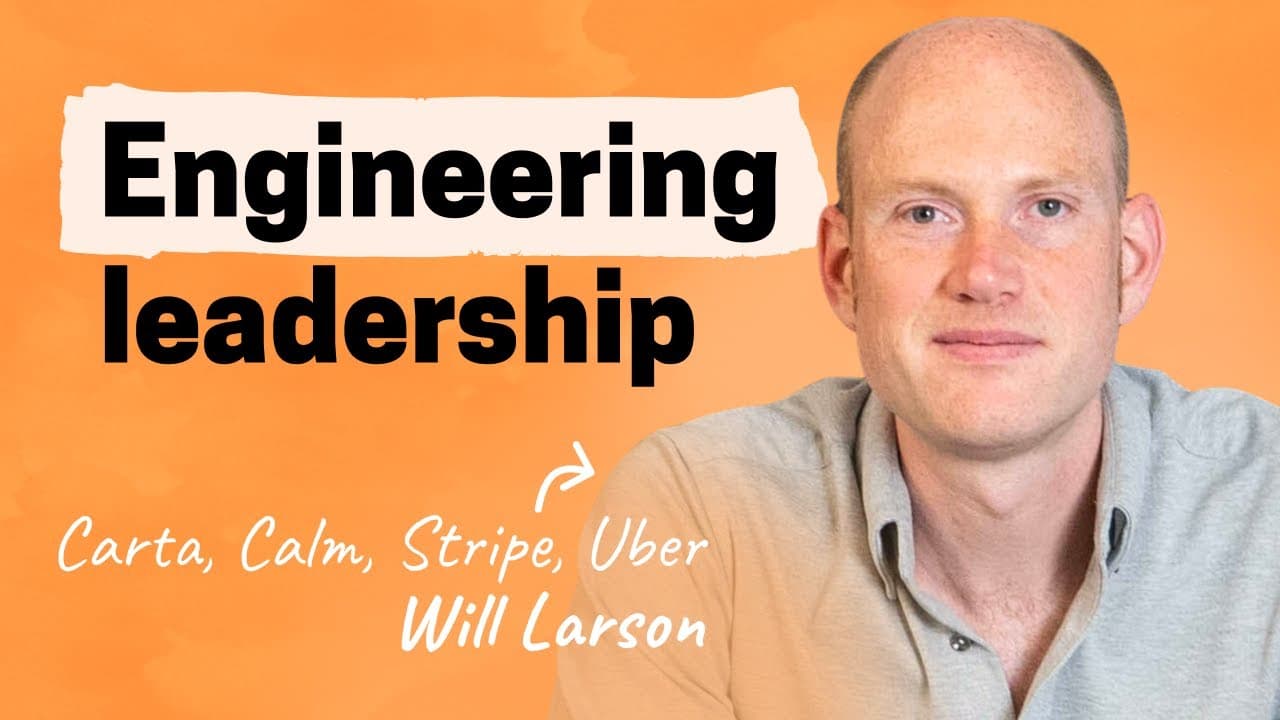
TL;DR
Engineering leaders should give engineers consequential problems, clear accountability, and access to senior roles instead of shielding them from difficult business realities. As hiring slows and teams face consolidation, managers must demonstrate broader leadership skills, including resource allocation, team sizing, operational improvement, and the judgment to revise frameworks when evidence conflicts with their assumptions.
Transcript
I think that we often treat engineers a little bit like children instead of giving them the responsibilities and ability to actually thrive as adults. And so like, "Oh, the engineers won't want to do that work." Well, that's actually not good for the engineers to be sheltered from what is important. And so actually one of the, I think, high... Read More
Key Insights
- Engineering management priorities are changing because hiring has declined from the rapid-growth period. Managers who previously devoted substantial time to interviewing must now show that they can lead existing teams, examine operational details, and address organizational constraints.
- Rapid hiring once allowed engineering leaders to distinguish themselves primarily through recruiting. When interview volume falls, that strength becomes less visible, so leaders need broader competencies to avoid being perceived as ineffective in a role whose requirements have changed.
- Team allocation and sizing are now core leadership responsibilities. Engineering organizations are facing slower growth, consolidation, reductions, and the disappearance of some teams, making resource decisions more consequential than they were during the zero interest rate era.
- Treating engineers like adults means exposing them to important and difficult work. Shielding engineers because leaders assume they will dislike certain responsibilities deprives them of the context, accountability, and challenges needed for professional growth.
- Accountability enables engineers to occupy genuinely senior leadership roles. Larson argues that organizations cannot responsibly grant substantial authority while avoiding performance expectations simply because retaining every engineer is considered a dominant management goal.
- Retention pressure encouraged some managers to coddle engineers. When management performance was heavily judged by whether team members stayed, leaders had incentives to avoid upsetting engineers, even when that behavior harmed individual development, team effectiveness, and organizational efficiency.
- Systems thinking is not universally reliable because any framework can conflict with reality. Smart practitioners may become attached to their models and mistakenly reject contrary evidence, so frameworks must remain subordinate to actual results and changing conditions.
- Incident analysis is valuable only when it produces operational improvement. At Stripe, extensive analysis of incidents risked becoming an end in itself, illustrating how teams can lose sight of whether their investigative processes are making a critical service more reliable.
Install to Summarize YouTube Videos and Get Transcripts
Explore YouTube Video Summarizer or Get YouTube Transcript Extractor
Questions & Answers
Q: How should engineering leaders adapt when hiring slows?
Engineering leaders should redirect attention from high-volume recruiting toward the operation and structure of existing teams. Larson says managers may move from spending half their time or more on hiring to conducting only a few interviews or none. They must therefore demonstrate leadership through deeper engagement with details, better team guidance, thoughtful resource allocation, appropriate team sizing, and effective responses to consolidation or reductions.
Q: Why should companies treat engineers like adults?
Companies should treat engineers like adults because shielding them from important or undesirable work prevents them from gaining responsibility and growing. Larson argues that engineers should be treated as peers, given real and difficult problems, and held accountable for outcomes. This approach supports both organizational efficiency and individual development while preparing engineers to succeed in roles with meaningful authority and leadership expectations.
Q: How does accountability create opportunities for senior engineers?
Accountability makes senior engineering roles viable because substantial authority must be paired with responsibility for results. Larson argues that organizations previously hesitated to hold engineers accountable when retention was a dominant concern. That hesitation encouraged coddling and limited genuine leadership opportunities. When companies can assign hard problems and expect performance, engineers can enter senior roles with credible ownership rather than receiving status without corresponding obligations.
Q: Why did the zero interest rate era shape engineering management?
The zero interest rate era supported an environment in which revenue, headcount, and team size generally increased. Engineering organizations learned to hire at high volume, and some managers spent much of their time interviewing. Larson contrasts that period with a market where teams can shrink, consolidate, or disappear. As a result, organizational sizing and allocation have become more prominent parts of engineering leadership.
Q: Why can a strong recruiter struggle in the changed engineering market?
A manager whose strongest capability is recruiting may struggle because the work that previously displayed that strength has sharply declined. Larson notes that a highly regarded director could once spend extensive time hiring and be considered a top performer. With few or no interviews, that person must prove effectiveness through team leadership, detailed operational involvement, resource decisions, and adaptation to organizational constraints.
Q: What is the main risk of applying systems thinking?
The main risk is becoming more loyal to a framework than to observable reality. Larson says some very smart but unsuccessful systems-thinking advocates encounter evidence that conflicts with their model and effectively conclude that reality is wrong. A useful framework must remain open to correction. When outcomes contradict assumptions, practitioners should revise their analysis and verify whether their work is producing improvement.
Q: What did incident management at Stripe reveal about analysis?
Incident management at Stripe showed that extensive analysis can become disconnected from its purpose. Because businesses depend on Stripe's API to collect money, service availability is important. Teams analyzed incidents to understand failures and identify improvements, but Larson says they became so absorbed in analysis that they risked losing track of whether the service was actually getting better.
Q: How did retention pressure affect the treatment of engineers?
Retention pressure encouraged managers to avoid upsetting engineers because losing team members could seriously damage a manager's evaluation. Larson says this environment led to coddling, including assumptions that engineers should be protected from work they might dislike. He considers that approach harmful to engineers, teams, and organizational efficiency because it removes difficult responsibilities that can build judgment, accountability, and readiness for senior leadership.
Summary & Key Takeaways
-
The shift away from the zero interest rate era changed engineering management priorities. Leaders who once spent much of their time recruiting must now focus on operating teams, understanding details, allocating resources, sizing organizations, and handling consolidation. Capabilities that received less attention during rapid growth have consequently become central to management performance.
-
Larson argues that protecting engineers from unpopular work and difficult business problems limits their growth. Giving engineers meaningful responsibility and holding them accountable allows organizations to treat them as peers. It also makes senior individual-contributor roles more credible because responsibility, authority, and expectations can accompany advancement instead of retention-driven accommodation.
-
Systems thinking is useful only when it remains connected to observed outcomes. Larson describes incident-management analysis at Stripe as an example where extensive examination risked becoming disconnected from actual improvement. A framework should help teams change reality, but evidence that contradicts the framework should prompt reassessment rather than a declaration that reality is wrong.
Read in Other Languages (beta)
Share This Summary 📚
Summarize YouTube Videos and Get Video Transcripts with 1-Click
Try YouTube Summary with ChatGPT & Claude or YouTube Transcript Generator
Explore More Summaries from Lenny's Podcast 📚






Summarize YouTube Videos and Get Video Transcripts with 1-Click
Try YouTube Summary with ChatGPT & Claude or YouTube Transcript Generator