How Does Congress Profit From Stock Trading?
TL;DR
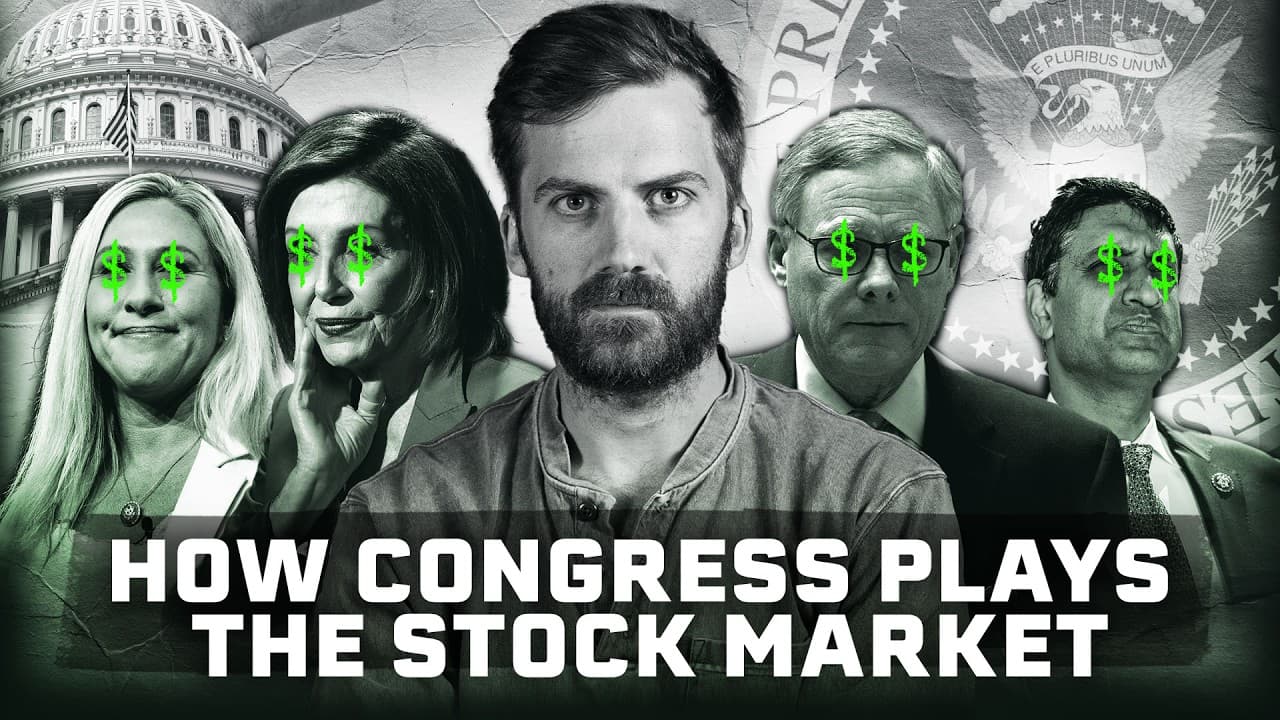
Members of Congress can receive private information capable of influencing stock prices, and their trades have sometimes closely followed confidential briefings. Although the 2012 STOCK Act banned lawmakers from trading on insider information and required public disclosures, the examples involving Spencer Bachus and Richard Burr show why suspicious timing remains difficult to investigate and prove.
Transcript
(slurping sounds) - All right, let's do this. Check this out. On September 19th, 2008, Republican Congressman Spencer Bachus made a trade that was effectively a bet that the stock market would drop. His trade meant that for every percentage point that the NASDAQ dropped, his investment would go up by 200%. This is what's known as shorting the marke... Read More
Key Insights
- Insider trading laws prohibit buying or selling investments using material information that is unavailable to the public. The prohibition also covers passing private information to another person who then trades, helping preserve a market in which insiders do not automatically possess an unfair advantage.
- Members of Congress historically faced few stock-trading restrictions despite regularly receiving private information through committee work, investigations, meetings with businesses, and briefings from government officials. That privileged access can reveal economic developments before ordinary investors receive the same information.
- Senators’ trades during four years in the 1990s produced abnormal positive returns, according to a study described in the transcript. Their trades outperformed the market by 12% per year, compared with Warren Buffett beating the market by 2.5% during that decade.
- Spencer Bachus bet that the NASDAQ would decline one day after attending a secret September 2008 meeting with senior Treasury and Federal Reserve officials. He had been told that a global financial meltdown was only days away, and his trade nearly doubled in value.
- Congressional portfolio changes clustered around government discussions before the 2008 financial collapse. A Washington Post investigation found that at least 34 lawmakers from both parties changed portions of their portfolios 166 times within two business days of speaking with administration officials.
- The STOCK Act of 2012 banned members of Congress from trading stocks based on insider information. It also required lawmakers to publish their trading activity, creating the financial disclosures used to examine whether their transactions suspiciously coincide with private briefings and emerging crises.
- Richard Burr sold $110,000 in stocks after a confidential coronavirus briefing and a later conversation involving non-public information. He subsequently moved over a million dollars from stocks into Treasury securities while publicly saying the United States was better prepared than ever for the threat.
- Federal investigations do not guarantee punishment for suspicious congressional trading. The Securities and Exchange Commission and Department of Justice investigated Richard Burr’s transactions but dropped the matter, illustrating how difficult it can be to prove that a lawmaker traded specifically because of non-public information.
Install to Summarize YouTube Videos and Get Transcripts
Explore YouTube Video Summarizer or Get YouTube Transcript Extractor
Questions & Answers
Q: What is insider trading and why is it prohibited?
Insider trading is the purchase or sale of investments such as stocks using significant information that is not available to the public. It can also include giving private information to someone who then trades on it. Such rules are intended to keep markets fair by preventing people with privileged access from consistently making better-informed trades than ordinary investors.
Q: Why can members of Congress have an investing advantage?
Members of Congress participate in committees, investigations, private meetings, and classified briefings that can reveal important information about businesses, public policy, the economy, and emerging crises. Because those developments may affect stock prices, lawmakers can sometimes understand what is likely to happen before the public does, potentially allowing them to choose more favorable times to buy or sell.
Q: How well did senators’ stock trades perform in the 1990s?
A study described in the transcript reconstructed all trades made by senators across four years in the 1990s and found consistently abnormal positive returns. Their trades outperformed the market by 12% per year. For comparison, Warren Buffett beat the market by 2.5% during that decade, making the senators’ results appear unusually strong.
Q: How did Spencer Bachus trade before the 2008 crash?
On September 19th, 2008, Congressman Spencer Bachus made a trade that gained value as the NASDAQ declined. The previous day, he had attended a secret meeting with senior Treasury and Federal Reserve officials and learned that a global financial meltdown could occur within days. He sold after the market fell and nearly doubled his investment.
Q: What did investigators find about lawmakers’ trades before the 2008 financial meltdown?
A 2012 Washington Post investigation found that at least 34 lawmakers from both political parties altered portions of their portfolios 166 times within two business days of speaking with administration officials. The activity occurred as banks and the stock market were collapsing, raising questions about whether lawmakers used privileged economic information while millions of Americans suffered major losses.
Q: What does the STOCK Act require members of Congress to do?
The Stop Trading on Congressional Knowledge Act, known as the STOCK Act, was passed in 2012. It bans members of Congress from buying or selling stocks based on insider information. It also requires them to publish their trading activity, allowing the public and journalists to compare disclosed transactions with confidential briefings, policy decisions, and major economic events.
Q: What stock trades did Richard Burr make before the coronavirus market decline?
After senators received secret coronavirus information on January 24th, 2020, Richard Burr discussed non-public information with someone whose identity was redacted in an FBI document. Minutes after that conversation, he sold $110,000 in stocks. He continued selling and eventually moved over a million dollars from stocks into Treasury securities while the market remained at an all-time high.
Q: Why was Richard Burr not punished for his coronavirus-related trades?
The Securities and Exchange Commission and Department of Justice investigated Richard Burr’s activity but ultimately dropped the matter. The transcript argues that suspicious timing alone is not enough because proving that a trade was specifically based on non-public information is difficult. Burr could maintain that he acted using public information or ordinary investment judgment rather than confidential knowledge.
Summary & Key Takeaways
-
For most of United States history, lawmakers could trade stocks with few restrictions even though their committees and private meetings exposed them to sensitive economic information. A study reconstructing senators’ trades during four years in the 1990s found abnormal positive returns, with their portfolios outperforming the market by 12% per year.
-
The 2008 financial crisis intensified scrutiny of congressional trading. Spencer Bachus bet against the market after a secret meeting with Treasury and Federal Reserve officials, then nearly doubled his investment. A Washington Post investigation later found at least 34 lawmakers adjusted portfolios 166 times soon after speaking with administration officials.
-
Congress passed the STOCK Act in 2012, banning trades based on insider information and requiring lawmakers to disclose their transactions. Yet suspicious activity continued. Senator Richard Burr sold stocks and shifted over a million dollars into Treasury securities after receiving confidential coronavirus information, but federal investigators ultimately dropped the matter.
Read in Other Languages (beta)
Share This Summary 📚
Summarize YouTube Videos and Get Video Transcripts with 1-Click
Try YouTube Summary with ChatGPT & Claude or YouTube Transcript Generator
Explore More Summaries from Johnny Harris 📚





Summarize YouTube Videos and Get Video Transcripts with 1-Click
Try YouTube Summary with ChatGPT & Claude or YouTube Transcript Generator