What Does Cultural Christianity Actually Mean?
TL;DR
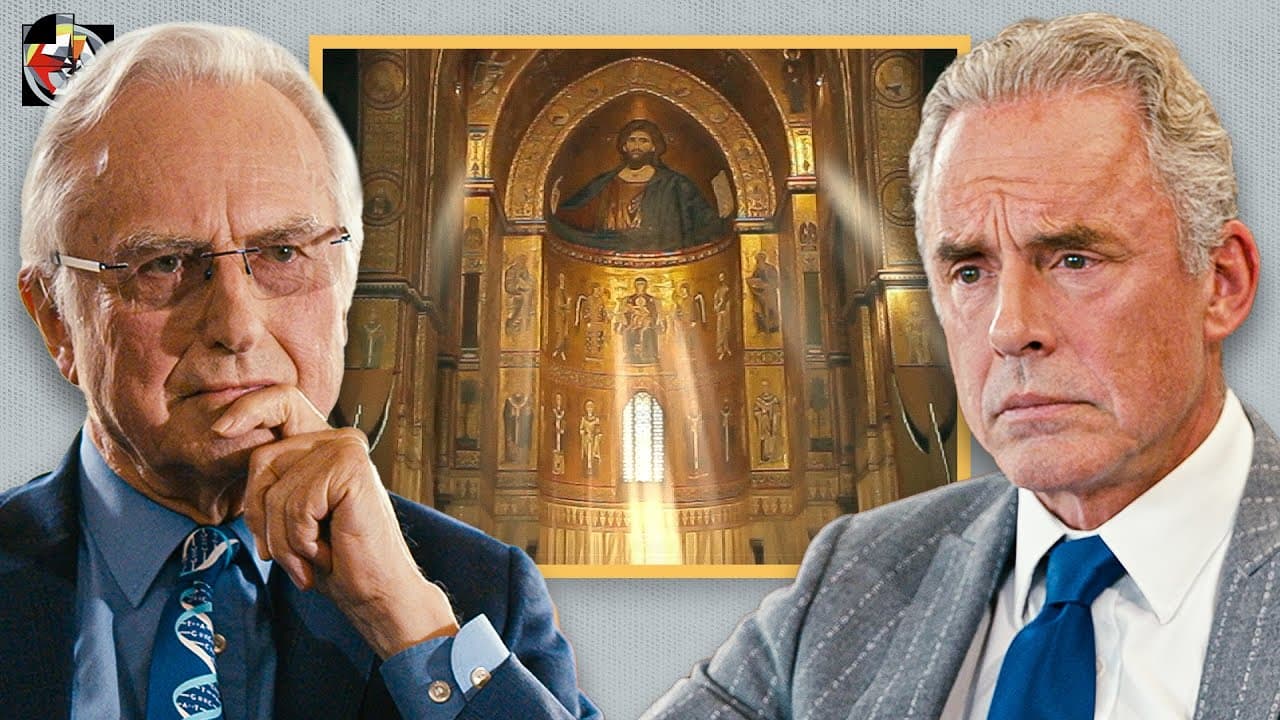
Cultural Christianity can describe familiarity with Christian traditions without accepting Christianity as factually true. Dawkins treats scientific truth as the decisive standard for claims such as the Virgin birth, while Peterson argues that religious stories may also encode moral, cultural, and mythological truths that shape societies, leaving their central disagreement rooted in competing definitions of truth.
Transcript
you made a statement a couple of months ago that I found very interesting and I don't claim to understand it and I'm not trying to put you on the spot with it you said that you were a cultural Christian okay and so that raised the number of questions in my mind you know and the first question was you are changing the subject no I'm no I'm no I'm no... Read More
Key Insights
- Cultural Christianity is, for Dawkins, an inherited familiarity with Christian institutions, language, scripture, prayer, and hymns. It does not imply that he accepts Christianity as a truthful account of miracles, the Resurrection, or the Virgin birth.
- Dawkins ranks religious cultures partly by their ethical practices. He considers Christianity preferable to forms of Islam that punish apostasy, kill gay people, or practice clitoridectomy, but regards that comparison as only faint praise rather than substantial evidence for Christianity.
- Peterson views moral progress toward mercy and tolerance as historically remarkable because humans and chimpanzees can be ruthless. He argues that even limited movement away from barbarism may deserve more recognition than Dawkins gives it.
- Scientific truth is, for Dawkins, the kind of factual truth that enables practical achievements such as reaching the Moon. He distinguishes it from the insight into human nature found in profound fiction, which he does not classify as scientific truth.
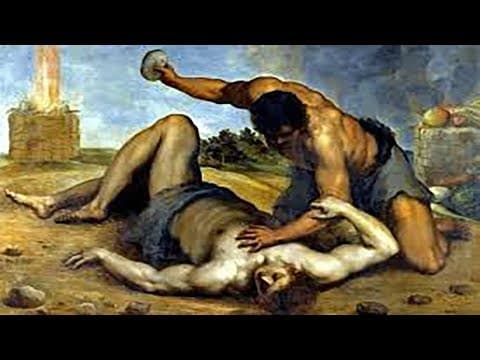
- Mythological truth is, for Peterson, connected to the narrative patterns through which people select, prioritize, and interpret facts. He argues that some patterns orient cultures toward abundant life, while destructive patterns, represented by Cain, lead toward devastation.
- Equality between men and women is presented by Peterson as a moral claim that cannot be derived straightforwardly from facts alone. He points to the Judeo-Christian idea that both sexes bear God's image as a foundation for intrinsic value beyond power and politics.
- The Virgin birth becomes a test of whether religious claims should receive direct factual answers. Dawkins and O'Connor ask whether Mary conceived Jesus without intercourse, while Peterson resists treating that biological question as decisive for the larger religious tradition.
- Peterson's eventual answer about the Virgin birth is that he does not know. He maintains that parts of the biblical text exceed his ability to explain fully and objects to using uncertainty about one factual claim to dismiss Christianity's entire mythological enterprise.
Install to Summarize YouTube Videos and Get Transcripts
Explore YouTube Video Summarizer or Get YouTube Transcript Extractor
Questions & Answers
Q: What does Richard Dawkins mean by cultural Christianity?
Richard Dawkins uses cultural Christianity to describe his upbringing and familiarity with Christian traditions, not belief in Christian doctrine. He attended Christian schools and knows his way around the Bible, the Book of Common Prayer, and Christian hymns. He explicitly says that he does not value Christianity as a truth system or accept its miraculous claims merely because he belongs to its cultural setting.
Q: Why does Dawkins consider Christianity preferable to Islamic fundamentalism?
Dawkins bases the comparison on ethical practices rather than supernatural truth claims. He condemns religious systems that punish apostasy with death, kill gay people, or practice clitoridectomy, and therefore places the Christianity familiar to him above those practices. However, he calls this only faint praise, arguing that being better than an extremely cruel system does not establish Christianity as especially virtuous or factually true.
Q: What does Peterson think Christianity may have gotten right?
Peterson suggests that Christianity may have helped cultures move toward mercy, tolerance, and recognition of intrinsic human value. He particularly emphasizes the claim that men and women both bear God's image, which he interprets as placing their worth beyond political power. He argues that such moral developments are significant when compared with the ruthlessness and barbarism that characterize much of the human past.
Q: How do Dawkins and Peterson define truth differently?
Dawkins emphasizes factual and scientific truth, especially claims that can be assessed as events in the physical world. He separates that truth from the psychological insight offered by great fiction. Peterson treats stories as structures through which people prioritize facts and orient action, so he gives mythological narratives a kind of practical and moral significance that cannot be reduced to a simple factual test.
Q: Why does the Virgin birth become central to the debate?
The Virgin birth exposes the disagreement over whether a religious claim should first receive a direct biological answer. Dawkins asks whether a man had intercourse with Mary and produced Jesus. Peterson responds through metaphor, mythology, and the fact-value problem, prompting Dawkins and O'Connor to insist that the factual issue can be clarified before discussing the story's symbolic or cultural meaning.
Q: Does Peterson say that Jesus was born of a virgin?
Peterson does not affirm or deny the Virgin birth as a biological event. After repeated questioning, he says that his answer would be that he does not know. He argues that some elements of the biblical text exceed his ability to account for fully and that a narrow scientific question should not be used to invalidate the wider mythological and cultural significance of Christianity.
Q: Can science alone justify equality between men and women?
Peterson argues that scientific facts alone do not straightforwardly establish that men and women should be treated equally. He frames equality as a moral question and asks why someone with the power to oppress another person should refrain from doing so. He presents the biblical image-of-God claim as one cultural basis for treating both sexes as intrinsically valuable beyond calculations of power.
Q: What role do stories play in Peterson's argument?
Peterson argues that people perceive and organize the world through stories because they must select and prioritize facts rather than process everything equally. Some narrative patterns help individuals and cultures orient themselves toward life and successful continuation, while other patterns produce destruction. He uses Cain as an example of a destructive pattern and treats Christianity's historical influence as evidence of unusual narrative power.
Summary & Key Takeaways
-
Dawkins defines his cultural Christianity narrowly: he was raised in Christian culture, attended Christian schools, and knows the Bible, hymns, and the Book of Common Prayer. He does not regard Christianity as a true belief system, though he considers some Christian cultures ethically preferable to religious traditions that punish apostasy or persecute gay people.
-
Peterson argues that Christianity may deserve credit for advancing mercy, tolerance, and intrinsic human worth against humanity's violent historical tendencies. He highlights the biblical claim that men and women bear God's image, then asks how equality and protection from oppression can be justified through scientific facts alone rather than through moral or religious commitments.
-
The sharpest disagreement concerns the Virgin birth. Dawkins and O'Connor seek a direct biological answer, but Peterson repeatedly emphasizes metaphor, myth, cultural consequences, and the difficulty of separating facts from values. Peterson ultimately says he does not know, while maintaining that a narrow factual question cannot determine the validity of Christianity's broader mythological enterprise.
Read in Other Languages (beta)
Share This Summary 📚
Summarize YouTube Videos and Get Video Transcripts with 1-Click
Try YouTube Summary with ChatGPT & Claude or YouTube Transcript Generator
Explore More Summaries from Jordan B Peterson 📚

Summarize YouTube Videos and Get Video Transcripts with 1-Click
Try YouTube Summary with ChatGPT & Claude or YouTube Transcript Generator