How Does Peter Yang Do a Team’s Work With AI? AI-First Playbook (2026)
TL;DR
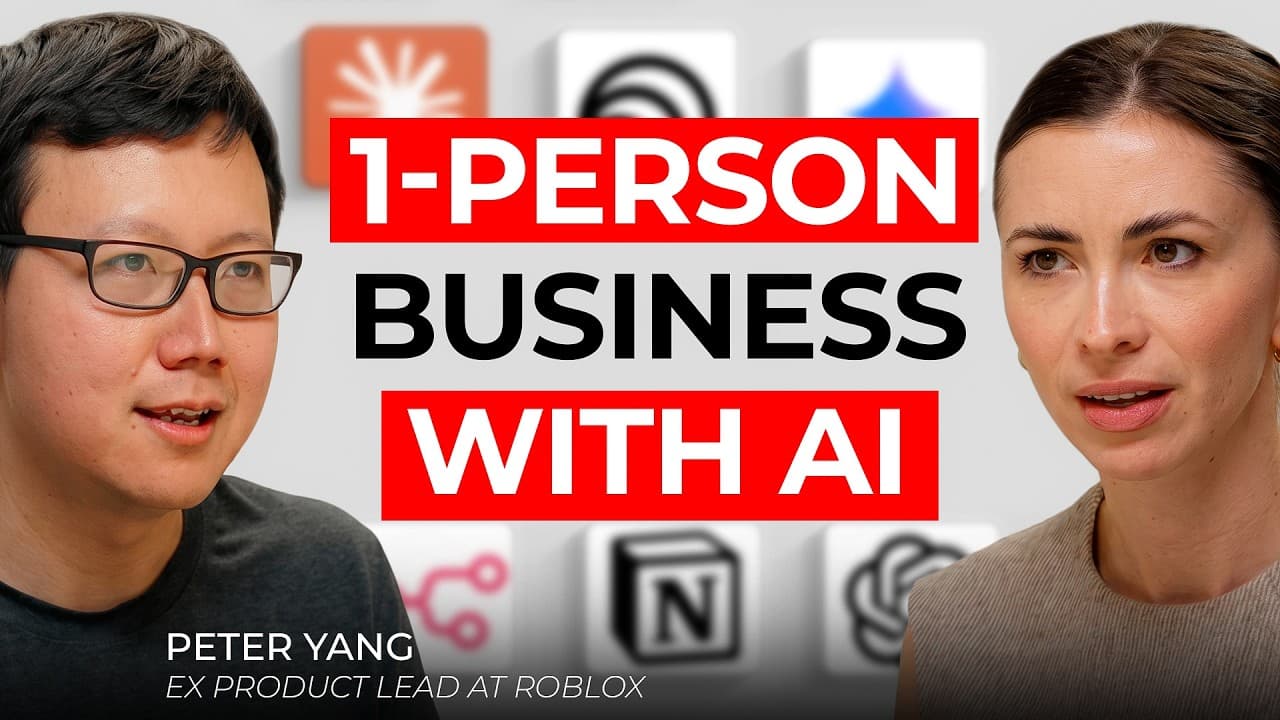
Peter Yang does a team’s work by turning recurring manual workflows into reusable AI skills, then refining their instructions through feedback and review. His system helps run a 140,000-person newsletter, prepare podcasts, edit posts, publish across X, LinkedIn, Threads, and Substack Notes, and analyze performance. He still adds the final 10% of human judgment and taste. Read on for his practical setup.
Transcript
It almost feels like cheating. >> I fear that I'm getting dumber and and lazier. Like if I'm on a flight and there's no like internet connection like that, I just don't feel like working anymore. >> That's Peter Yang. He spent a decade building products at Reddit, Meta, and Roblox. Now he runs a newsletter for 140,000 people with no team. Almost al... Read More
Key Insights
- A reusable AI skill is a text file containing instructions for a recurring task. Peter Yang maintains skills for podcast production, newsletter editing, social publishing, and business advice, allowing repeated workflows to begin with established context instead of being described again from scratch.
- Self-improvement works by asking the AI to update a skill after a feedback-heavy session. The revised instructions should capture corrections from the conversation, but the user must review those changes before relying on them during the next execution of the workflow.
- Workflow automation begins with documenting the manual process in detail. Yang spent one meeting-free day describing his repetitive creative tasks to Codex by voice, including podcast preparation, newsletter editing, content distribution, and the business context required for an AI advisor.
- Cross-platform publishing requires platform-specific instructions rather than identical copied posts. Yang's system prepares content for X, LinkedIn, Threads, and Substack Notes, finds interviewees' handles for X, and accounts for LinkedIn's more difficult tagging process before he authorizes publication.
- Human approval remains part of Yang's social publishing workflow. He records a rough idea, lets AI polish it using examples of successful prior posts, reviews the resulting drafts, and only then instructs the system to publish them across the four configured platforms.
- Analytics can turn an automated workflow into a strategic feedback system. Yang's setup reviews data from multiple platforms and Typefully, produces weekly revenue and content-performance briefs, and examines similar channels for unusually successful videos or posts that may reveal useful patterns.
- Long personal writing starts with authentic raw material rather than fully generated copy. For his post about leaving his job, Yang recorded roughly 10 minutes of thoughts during a walk, transferred the transcription into Codex, reviewed its edits, and supplied further feedback by voice.
- AI-assisted video editing can guide a human editor without replacing one. Yang feeds interview transcripts into Codex to locate awkward pauses, recommend cuts with timestamps, select strong opening material, and surface provocative quotations, while a human editor still performs the actual video editing.
Install to Summarize YouTube Videos and Get Transcripts
Explore YouTube Video Summarizer or Get YouTube Transcript Extractor
Questions & Answers
Q: How does Peter Yang build an AI-first solo work system?
He documents how he manually performs each repetitive workflow and turns that process into a reusable AI skill containing detailed instructions. His skills cover podcast post-production, newsletter editing, social publishing, and business advice. He then reviews the output and updates the instructions using feedback from each working session.
Q: What is a self-improving AI skill?
A skill is a text file containing instructions for a recurring task. After working back and forth with the AI, Yang asks it to update the skill based on their conversation so it can reach the desired result faster next time. He reviews the proposed changes before relying on the revised instructions.
Q: How can a repeated manual workflow become an AI skill?
Describe the complete process as you currently perform it, including transfers, formatting choices, platform differences, and approval steps. Yang spent one meeting-free day using voice to brain-dump his creative workflows into Codex. Examples of successful previous work give the system a clearer standard to follow.
Q: How does Peter Yang repurpose content across social platforms?
He dictates a rough idea, and the system polishes it using examples of his successful posts. A reusable skill prepares distinct versions for X, LinkedIn, Threads, and Substack Notes, including details such as finding an interviewee’s X handle and handling LinkedIn’s difficult tagging process. Yang reviews the drafts before authorizing publication to all four platforms.
Q: How does AI help Peter Yang edit newsletter posts?
Yang begins with his own raw thoughts rather than asking AI to invent the substance. For a post about leaving his job, he recorded roughly 10 minutes of thoughts during a walk, transferred the transcription into Codex, and reviewed the edited draft. He then supplied more voice feedback and manually refined the final portion.
Q: How does AI support weekly content and business analysis?
Yang’s automated reports use analytics from multiple platforms and Typefully. They summarize weekly revenue, content performance over the previous 30 days, and notable results from similar YouTube and Substack channels. He also uses a skill linked to a Google Doc containing business information as an advisor for checking ideas.
Q: How can a transcript help with podcast video editing?
Yang feeds interview transcripts into Codex to locate awkward pauses and recommend cuts with timestamps. It can also select potential opening material and surface strong or provocative quotations. A human editor still performs the actual video editing.
Q: Why does Peter Yang keep a human review step?
He says AI never gets the result right in one shot, so he reviews drafts, corrects mistakes, and improves the underlying skill. He reserves the final 10% for a human touch. This keeps personal judgment and taste in the workflow instead of publishing unattended AI-generated content.
Summary & Key Takeaways
-
Peter Yang rebuilt repetitive creative workflows by giving Codex detailed descriptions of how he previously completed them manually. His reusable skills now assist with podcast post-production, newsletter editing, social publishing, and business advice. He continually updates those instructions based on mistakes and follow-up conversations, making later outputs closer to his preferred result.
-
His publishing system converts voice-recorded ideas into polished drafts informed by examples of his successful posts. After reviewing the copy, he approves distribution to X, LinkedIn, Threads, and Substack Notes. Platform-specific instructions handle details such as finding an interview guest's X handle and adapting posts where tagging is difficult.
-
Automated reports provide weekly revenue, 30-day content performance, and notable results from similar YouTube and Substack channels. Transcripts also help identify awkward pauses, suggested cuts, timestamps, introductory excerpts, and strong interview quotations. Human review remains essential because Yang manually adjusts the final 10% to preserve accuracy, personality, and taste.
Read in Other Languages (beta)
Share This Summary 📚
Summarize YouTube Videos and Get Video Transcripts with 1-Click
Try YouTube Summary with ChatGPT & Claude or YouTube Transcript Generator
Explore More Summaries from Silicon Valley Girl 📚

Summarize YouTube Videos and Get Video Transcripts with 1-Click
Try YouTube Summary with ChatGPT & Claude or YouTube Transcript Generator