How to Start a No-Code AI Business on No Budget
TL;DR
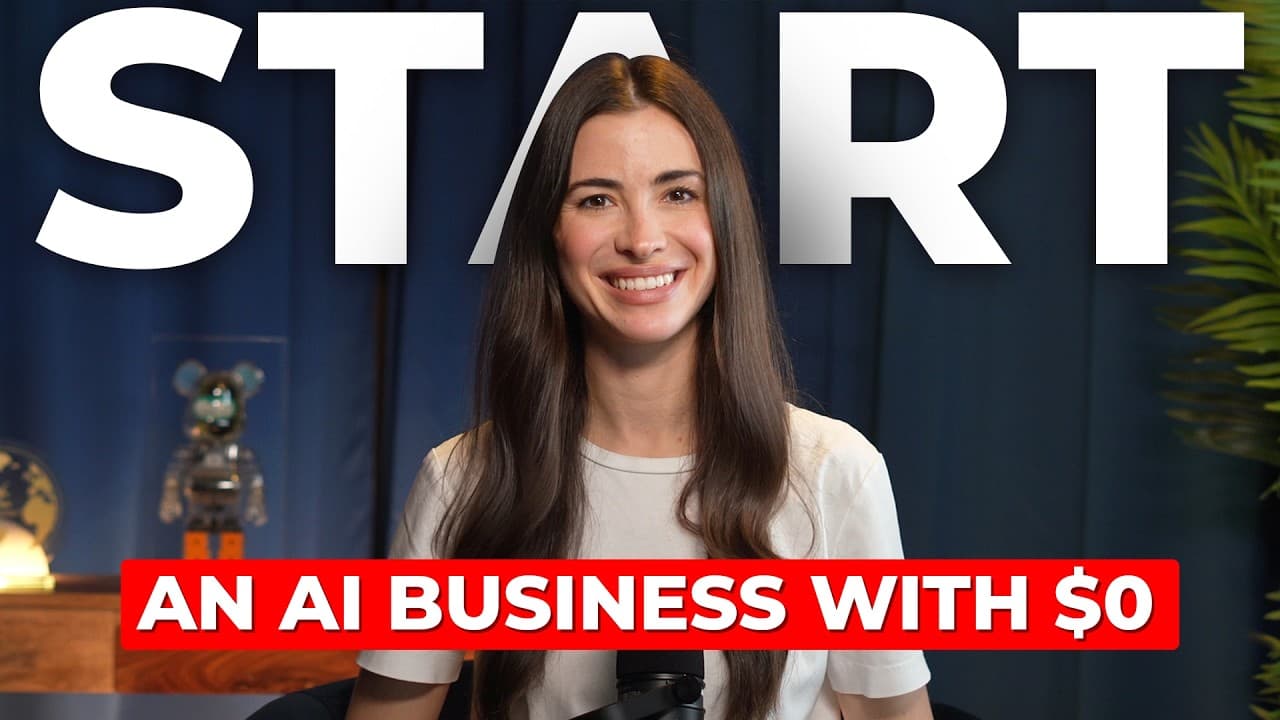
Start by choosing a narrow problem you understand, then build and test a minimum viable product with no-code AI tools such as Replit, Lovable, Cursor, or Voiceflow. Promising options include content production services, specialized AI agents, and prompt bundles, with distribution, rapid experimentation, and responsiveness to changing trends treated as essential parts of the business.
Transcript
one of my friends is building an AI startup and he just sent me this This is a graph that shows that they've grown by 260% in a day And we live in this weird time where the AI revolution is happening And there is a chance that large companies like Google Microsoft and Amazon are going to take all of the market cuz they're shipping so fast They're a... Read More
Key Insights
- Product creation is becoming accessible to more people because tools such as Lovable, Replit, Cursor, and Canva can support coding and design without a conventional development team. Some entrepreneurs can move from an idea to a minimum viable product in 24 hours and begin testing it with users.
- A growing market can provide momentum for a new business. Estimates cited in the discussion place the generative AI market between $200 billion and $1.3 trillion by 2030, with growth rates of 25%, supporting the case for building products while demand is expanding.
- A content factory is a system for producing and adapting material across many platforms without hiring a large team. Creators and companies need content for LinkedIn, Twitter, newsletters, image posts, podcasts, YouTube videos, reels, and clips, which creates demand for integrated production services.
- AI tools can perform separate stages of content production. ChatGPT can support text, ElevenLabs can provide voice, Poppy AI can generate scripts from uploaded examples, and InVideo can create videos, although the speaker still sees demand for an all-in-one solution for creators and companies.
- Adaptability is more valuable than rigid experience in a rapidly changing AI environment. The speaker describes seeking entrepreneurial producers who will test new tools, rewrite scripts, and change strategies frequently because information, workflows, and trends can shift from one week to the next.
- Specialized AI agents can act as virtual employees that operate continuously, make decisions, and learn from mistakes. The market opportunity is to create an agent for one clearly defined task, especially where small businesses need automation but cannot build or deploy the required system themselves.
- No-code platforms can lower the barrier to creating AI agents. Voiceflow, Cursor, Replit, and Lovable are presented as tools that can turn prompts into working projects, although building a useful system still requires time, experimentation, and enough understanding to deploy it for a business.
- Prompt selling is a simpler business model built around niche expertise and demonstrated demand. PromptBase listings can sell for about $15 each, bundles such as 50 fashion design prompts could be priced at $199, and cited top sellers make between $200 and $500 per month.
Install to Summarize YouTube Videos and Get Transcripts
Explore YouTube Video Summarizer or Get YouTube Transcript Extractor
Questions & Answers
Q: How can a beginner start an AI business without coding?
A beginner can start by selecting a narrow problem they already understand and creating a minimum viable product with tools such as Lovable, Replit, Cursor, or Voiceflow. The product should be shown to real users as quickly as possible so the idea can be tested. The founder then needs to revise the workflow, experiment with new tools, and respond to changing customer needs and trends.
Q: What is an AI content factory business?
An AI content factory is a service or internal system that produces and repurposes content across several channels. It can help creators and companies publish on LinkedIn, Twitter, newsletters, podcasts, YouTube, reels, clips, and image-based platforms. AI tools handle portions of writing, voice, scripting, and video creation, reducing the need to build the kind of large production team previously required for broad distribution.
Q: Which tools can support an AI content factory?
The tools identified for content production include ChatGPT for text, ElevenLabs for voice, Poppy AI for scripts based on uploaded videos and posts, and InVideo for video creation. The description also lists EasyGen, Gamma AI, HeyGen, OpusClip, Otter AI, Pika, and Replit. These tools can cover separate production tasks, although the speaker says companies and creators still want a more integrated, all-in-one solution.
Q: Why are specialized AI agents a business opportunity?
Specialized AI agents are an opportunity because small businesses may want automated virtual employees but lack the technical ability to build them. The most promising approach is to solve one specific problem, such as handling restaurant orders, finding freelance gigs, negotiating prices, drafting legal letters, processing warehouse requests, or contacting a hospital about an unexpectedly high bill. Narrow specialization helps distinguish the product from general tools.
Q: What examples of niche AI agents are mentioned?
Garfield AI is cited as a UK startup that drafts legal letters for two pounds without lawyers. Logistify AI is described as converting a voice message into a warehouse order in three seconds. Other proposed agents could handle restaurant orders, locate freelance gigs, negotiate prices, call hospitals about bills, or generate brand deals for creators. Each example focuses on automating one recognizable task.
Q: How can someone make money selling AI prompts?
A prompt seller can study a niche with active demand, write reliable instructions that produce a desired result, and list them individually or as themed bundles. PromptBase is described as a marketplace where prompts may sell for about $15 each. One suggested bundle contains 50 fashion design prompts priced at $199, while cited top sellers earn between $200 and $500 per month.
Q: Why does distribution matter for an AI startup?
Distribution matters because creating a strong product is only part of building a business. The discussion connects distribution with content factories, AI-generated content, and partnerships with creators who already reach an audience. One cited investment approach focuses on products co-created with content creators, while an example agent generates brand deals. These methods help a product reach users instead of relying only on its technical capabilities.
Q: What working style is useful for building an AI company?
A useful working style combines curiosity, experimentation, entrepreneurial judgment, and willingness to change direction quickly. The speaker describes scripts becoming outdated within a week and production strategies requiring frequent revision. For that reason, adaptable people with little experience may sometimes fit better than experienced workers who expect fixed procedures. Founders should monitor trends, test tools, update workflows, and avoid assuming that a process will remain stable for months.
Summary & Key Takeaways
-
AI tools have made product creation more accessible to solopreneurs without traditional coding experience or large budgets. The recommended approach is to identify a niche problem, build a minimum viable product quickly with no-code platforms, show it to potential users, and revise the solution as tools, customer needs, and market conditions change.
-
A content factory helps a company or creator maintain a presence across channels such as LinkedIn, Twitter, newsletters, podcasts, YouTube, short clips, and image posts. Instead of hiring hundreds of employees, a small operator can combine tools for writing, voice, scripts, and video production, then sell the resulting workflow as a service.
-
Specialized AI agents represent another opportunity because small businesses may want virtual workers but lack the technical knowledge to create them. Suggested applications include processing restaurant orders, finding and negotiating freelance work, converting voice messages into warehouse orders, drafting legal letters, and contacting hospitals about unexpectedly high bills.
Read in Other Languages (beta)
Share This Summary 📚
Summarize YouTube Videos and Get Video Transcripts with 1-Click
Try YouTube Summary with ChatGPT & Claude or YouTube Transcript Generator
Explore More Summaries from Silicon Valley Girl 📚






Summarize YouTube Videos and Get Video Transcripts with 1-Click
Try YouTube Summary with ChatGPT & Claude or YouTube Transcript Generator