How Did Switzerland Preserve Its Neutrality?
TL;DR
Switzerland preserved its neutrality by making invasion costly through armed deterrence, fortified Alpine positions, and infrastructure prepared for demolition. During World War II, it also traded with both sides, supplied Germany with military goods, and served as a repository for valuables, revealing that Swiss neutrality combined defensive preparation with ethically controversial accommodation.
Transcript
(film reeling) (dramatic music) - I want you to say something. (upbeat music) You ready? This is a giant map of Switzerland. (choir like music) I love Switzerland. And one thing I have is that the Swiss like to be neutral. (somber music) This country does not like conflict. They avoid it at all costs, which is strange because Other European countri... Read More
Key Insights
- Swiss neutrality is an armed strategy rather than a refusal to prepare for conflict. The country avoided military alliances and foreign wars while building defenses designed to raise the cost of invasion and preserve its independence during periods of intense European conflict.
- Switzerland’s geography is central to its defensive doctrine. The Alps offered terrain where Swiss forces could retreat, establish fortified positions, and continue resisting after slowing an invading army near roads, population centers, tunnels, bridges, and mountain passes.
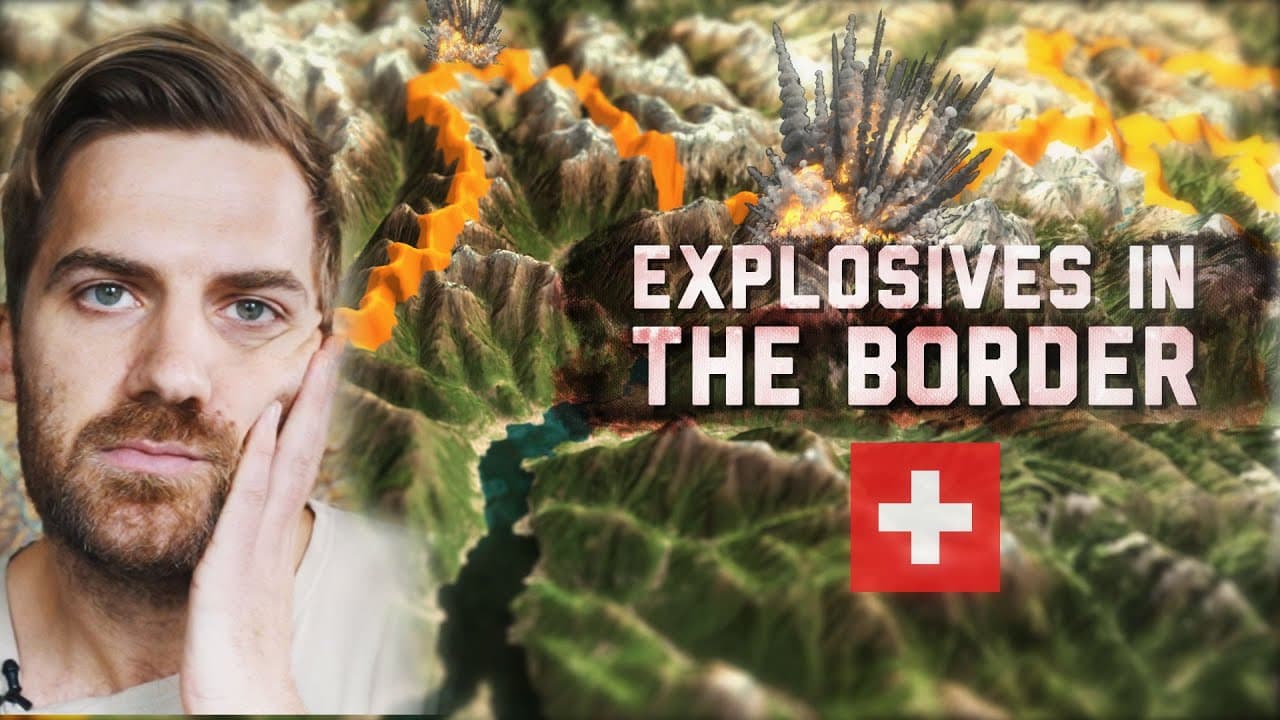
- Critical infrastructure was prepared for demolition to delay invading forces. Swiss planners placed explosives around roads, bridges, tunnels, and mountain passes, while some defensive systems included concealed guns and plans to create artificial landslides that could block access routes.
- The Alpine fortresses were designed as functioning military bases. Thousands of bunkers and tunnels contained guns, cannons, supplies, beds, and living areas, while some entrances and firing positions were disguised as ordinary barns or other civilian-looking structures.
- Civil defense expanded during the Cold War to address the possibility of nuclear destruction. By the 1960s, Switzerland had enough underground bunkers and shelters to protect its entire population, with additional capacity beyond that requirement.
- Swiss conduct during World War II complicated its claim of equal neutrality. Although it officially traded with both sides, it supplied Germany with anti-aircraft guns, ammunition, and other military goods, while Swiss institutions stored valuables associated with the war and Holocaust.
- Deterrence helped make a German invasion appear costly and impractical. Hitler developed an invasion plan, but it was not executed, while Switzerland combined prepared demolitions, Alpine defenses, military readiness, trade, and accommodation to remain outside direct occupation.
- Former defenses have acquired new civilian purposes since the global wars ended. Household shelters became storage areas or laundry rooms, while some mountain installations became hotels, cheese cellars, or secure data facilities, although many Alpine bunkers remain abandoned.
Install to Summarize YouTube Videos and Get Transcripts
Explore YouTube Video Summarizer or Get YouTube Transcript Extractor
Questions & Answers
Q: How did Switzerland remain neutral during World War II?
Switzerland remained neutral by combining military deterrence, difficult terrain, and calculated relations with the surrounding powers. It prepared infrastructure for demolition, constructed fortified positions inside the Alps, and maintained forces capable of retreating and resisting. It also continued trading with both sides and accommodated Germany in controversial ways, making neutrality a mixture of defense, deterrence, commerce, and political compromise.
Q: Why did Switzerland place explosives in its borders?
Switzerland placed explosives around roads, bridges, tunnels, and mountain passes so those access routes could be destroyed during an invasion. Blocking or damaging critical infrastructure would make enemy movement slower and more difficult. The delays were intended to give Swiss forces time to mobilize, withdraw toward the Alps, and occupy fortified positions from which they could continue resisting an attacker.
Q: How did the Swiss Alps support Switzerland’s neutrality?
The Swiss Alps provided defensible terrain where the military could retreat if the more populated lowland areas were overrun. Switzerland built thousands of bunkers, tunnels, gun positions, and full military bases inside the mountains. These installations contained weapons, provisions, beds, and living space, allowing troops to remain protected and sustain resistance while making an occupation more difficult and expensive.
Q: What was Switzerland’s plan if Nazi Germany invaded?
The plan was to slow the invasion by demolishing important roads, bridges, tunnels, and mountain access points, then withdraw forces into fortified Alpine positions. Hidden bunkers, guns, cannons, supplies, and living quarters supported prolonged resistance. This preparation signaled that Switzerland might be surrounded and initially vulnerable, but taking and controlling the country would demand substantial effort and resources.
Q: Was Switzerland completely impartial during World War II?
Switzerland officially maintained neutrality and traded with both the Axis and the Allies, but its conduct was not completely detached from the conflict. It provided Germany with anti-aircraft guns, ammunition, and other military supplies. Switzerland also stored gold, art, and valuables associated with the war and Holocaust, creating a morally controversial side to the policies that helped it avoid invasion.
Q: Why did Nazi Germany not invade Switzerland?
The account argues that an invasion was considered too costly and impractical, even though Hitler had developed a plan. Switzerland had prepared to destroy access routes, retreat into fortified mountains, and resist from extensive bunkers and tunnels. Its willingness to trade and maintain workable relations with Germany also reduced the immediate incentive to occupy a country designed to be difficult to conquer.
Q: What happened to Switzerland’s bunkers after the Cold War?
Many household shelters remained in place and became storage spaces, laundry rooms, or other extra rooms protected by unusually strong doors. Some mountain fortresses were sold and converted into hotels, cheese cellars, or secure data facilities. The military considered many installations expensive to maintain and wanted to dispose of them, while a large share of the Alpine bunkers remained abandoned.
Q: Are Swiss bridges and tunnels still packed with explosives?
The military ended the practice of keeping explosives in border infrastructure and reported that the mines, bombs, and TNT had been removed by 2014. Earlier defenses had included explosive charges in roads, bridges, tunnels, and mountain routes, including infrastructure built as recently as 2006. The old strategy survives as part of Switzerland’s defensive history, but those prepared charges are no longer maintained.
Summary & Key Takeaways
-
Switzerland’s location among major European rivals helped establish it as a useful buffer country, but geography alone did not guarantee its security. Its neutrality became an active policy of avoiding alliances and foreign wars while maintaining enough military preparation to convince surrounding powers that occupation would be difficult and costly.
-
During World War II, Switzerland prepared roads, bridges, tunnels, and mountain passes for destruction if an invasion began. These measures could obstruct enemy access and buy time for Swiss forces to retreat into fortified Alpine bunkers, tunnels, and bases supplied with weapons, beds, provisions, and hidden defensive positions.
-
Swiss neutrality also involved compromise. Switzerland traded with both the Axis and Allies, provided Germany with military supplies, and stored gold, art, and other valuables connected to the war and Holocaust. Afterward, border explosives were removed, while shelters and mountain fortresses found civilian uses or were abandoned.
Read in Other Languages (beta)
Share This Summary 📚
Summarize YouTube Videos and Get Video Transcripts with 1-Click
Try YouTube Summary with ChatGPT & Claude or YouTube Transcript Generator
Explore More Summaries from Johnny Harris 📚



Summarize YouTube Videos and Get Video Transcripts with 1-Click
Try YouTube Summary with ChatGPT & Claude or YouTube Transcript Generator