How to grow a YouTube channel using psychology principles
TL;DR
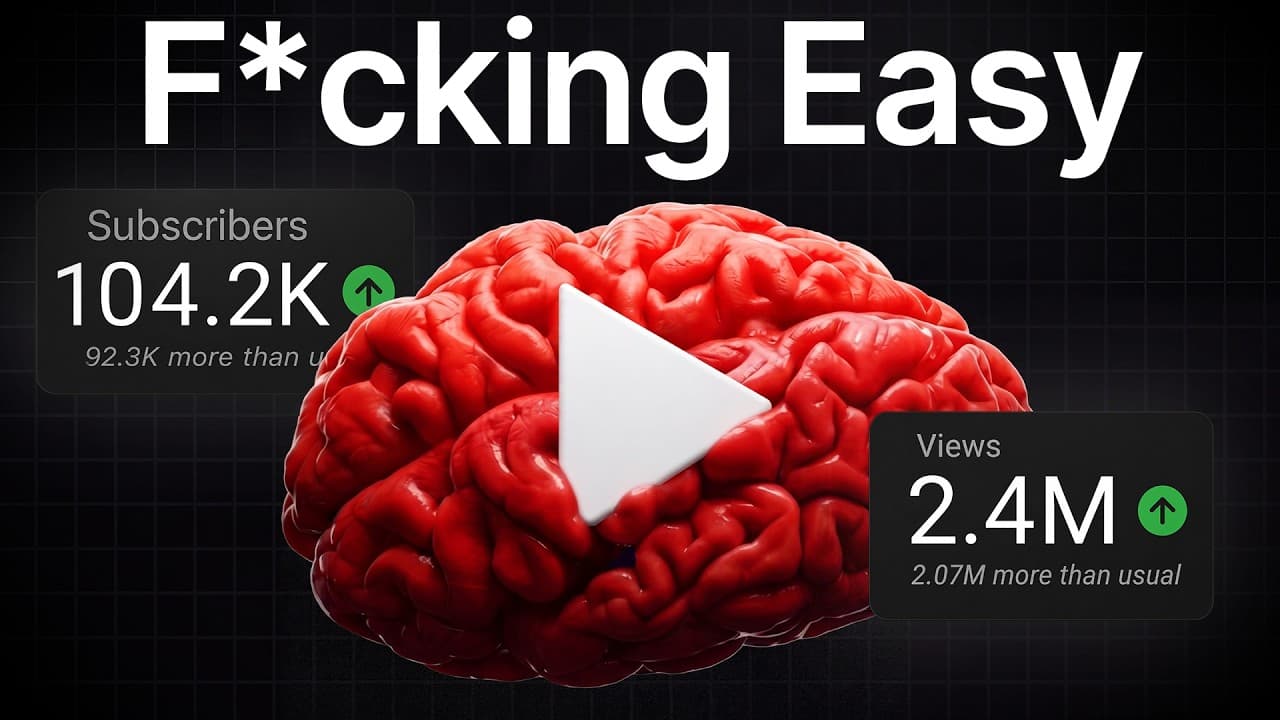
Demand drives clickability and views, but packaging decides who watches. The four psychology parts are demand, choice, consumption, and conversion, which together identify bottlenecks and guide fixes. Validate demand on YouTube with recent comparable videos, then optimize titles, thumbnails, and structure to outperform similar options and turn viewers into buyers or subscribers.
Transcript
Once you understand the psychology behind YouTube, the platform becomes embarrassingly simple. You see, most people think succeeding on YouTube is about figuring out the algorithm, but the algorithm isn't the one deciding whether to click your video. The algorithm isn't the one that gets bored and stops watching. The algorithm isn't the one that tr... Read More
Key Insights
- Demand psychology asks whether the audience actually cares about the video topic and ensures the idea has real viewer demand on YouTube, not just in theory.
- Choice psychology focuses on why a viewer would pick your video over others, using proven title and thumbnail formats that repeatedly attract clicks.
- Packaging, through titles and thumbnails, determines how much of the available attention your video captures when many similar videos compete for the same viewer.
- Verification of demand is done by analyzing recent comparable videos on YouTube in the same niche to gauge typical views and potential growth.
- If demand exists but you still fail to win clicks, you must make your video topic relevant to what the viewer already values, sometimes using a unique mechanism to differentiate.
- The winner-take-all nature of YouTube means framing and presentation matter as much as the idea itself, since viewers can only click one result at a time.
- Bottlenecks can appear at any stage, and identifying the exact part that is slowing performance allows targeted fixes rather than sweeping changes.
- The four psychology parts are demand, choice, consumption, and conversion, and understanding their interaction helps diagnose why a video underperforms and how to improve it.
Install to Summarize YouTube Videos and Get Transcripts
Explore YouTube Video Summarizer or Get YouTube Transcript Extractor
Questions & Answers
Q: What is demand psychology in YouTube video strategy?
Demand psychology is the process of confirming that the video topic matters to viewers and that there is actual interest in watching it on YouTube. It involves understanding the target market, their outcomes, and where they are in terms of awareness. The goal is to validate demand with recent, comparable YouTube videos and to ensure there is enough viewer interest to justify creating the video in the first place.
Q: How can creators verify demand using YouTube data?
Creators verify demand by searching for the topic on YouTube and examining several recent videos from relevant channels in the niche. They look at typical view counts, the upper end of performance, and whether those views come from organic traffic. They also assess comments and traffic sources to gauge skepticism or genuine engagement, ensuring the demand is current and real on YouTube.
Q: What does choice psychology address in video optimization?
Choice psychology addresses why a viewer would choose your video over others. It involves analyzing which title and thumbnail formats have repeatedly driven clicks for the same audience. By studying these behavioral patterns, creators can select formats that are more likely to convert impressions into clicks, improving the video's relative attractiveness among competing options.
Q: How does packaging affect video performance?
Packaging affects performance by determining how much of the available attention the video captures. Even with good demand, if the title and thumbnail do not present a compelling reason to click compared to similar videos, viewers will choose other options. The right packaging translates audience interest into actual clicks and prevents lost opportunities amid competition.
Q: What is the role of framing in video idea effectiveness?
Framing plays a crucial role when demand exists but the topic is not perfectly aligned with viewer interests. By using a relatable frame, or a unique mechanism that connects the topic to outcomes the audience already values, creators make the video more appealing. This often involves reframing specialized knowledge into widely valued outcomes like fat loss or health, making the content feel immediately relevant.
Q: Why is the four-part psychology model useful for diagnosing bottlenecks?
The four-part model helps identify where the bottleneck lies, whether in demand, attention capture, or conversion. If one part is weak, the entire video underperforms. By assessing demand, choice, consumption, and conversion separately, creators can pinpoint the exact stage to improve, such as demand validation, title framing, viewer retention, or call-to-action effectiveness.
Q: What does the speaker suggest about a winner-take-all platform like YouTube?
On a winner-take-all platform like YouTube, the choice of title, thumbnail, and how the video is framed matters just as much as the idea itself. Since users have many similar options, the video that stands out in packaging and relevance is more likely to be clicked. The framing determines whether the viewer perceives the video as the best option.
Q: How should creators handle topics with uncertain demand?
If the exact topic lacks demand, creators should connect it to a subject the audience already values while using a unique mechanism to differentiate. This means reframing or tying the topic to a widely valued outcome and validating demand in the context of YouTube traffic, so the video remains compelling despite initial uncertainty about the topic.
Summary & Key Takeaways
-
This video explains that YouTube success hinges on viewer psychology, not just the algorithm, with four key areas to optimize: demand, choice, consumption, and conversion. It emphasizes validating demand by analyzing recent YouTube data and ensuring the video idea aligns with what the audience actually cares about. It also covers how to frame titles and thumbnails to beat competing videos in the same niche, using real client examples.
-
The approach starts with identifying the target market and desired outcome, then testing demand through recent comparable videos. If demand exists, the video must deliver value in a way that resonates more than rivals. Bottlenecks are what block performance, and the framework helps locate and fix them across the entire video.
-
The overall aim is to move from guesswork to data-driven decisions by understanding and applying four psychology pillars to every stage of video creation and optimization, from idea to conversion.
Read in Other Languages (beta)
Share This Summary 📚
Summarize YouTube Videos and Get Video Transcripts with 1-Click
Try YouTube Summary with ChatGPT & Claude or YouTube Transcript Generator
Explore More Summaries from Jake Trinder 📚
Summarize YouTube Videos and Get Video Transcripts with 1-Click
Try YouTube Summary with ChatGPT & Claude or YouTube Transcript Generator