What Makes YouTube Videos Succeed Through Research
TL;DR
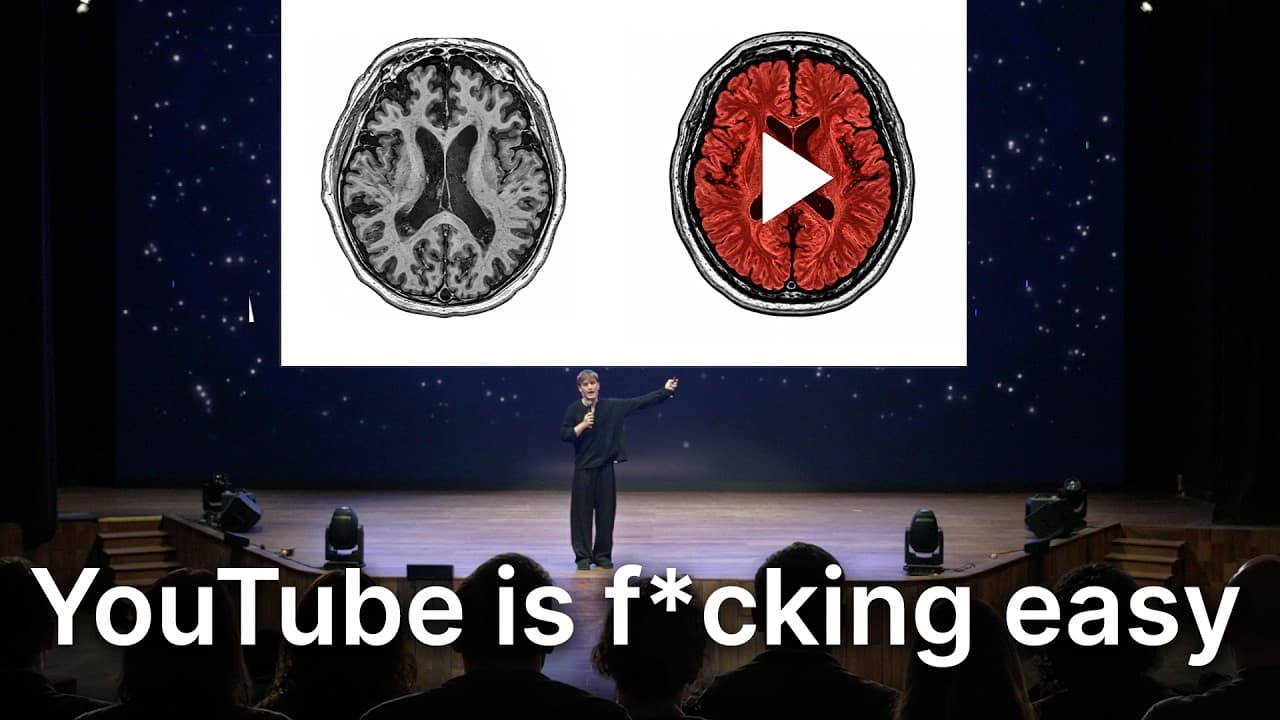
The core idea is that success on YouTube comes from research and careful decision making, not flashy editing. Treat each video as a series system where topic, packaging, and execution all must work together. By understanding audience behavior and testing ideas, you reduce failure points and improve outcomes.
Transcript
Give me 15 minutes and I'll make you disgustingly good at YouTube. I'm Jake Trinda. I run over a 100 YouTube channels for some brands that you might know. One of which is Gary Vee, Ali Abdal, Jeremy Haynes, Many Chart, Instantly AI, and many, many more. I also have the most viral video in the YouTube growth niche right now. This video added over $2... Read More
Key Insights
- YouTube is a series system where every part must work for the video to succeed.
- Decision quality on YouTube depends on the information available to you, a concept called bounded rationality.
- Research is the foundation of video ideas, packaging, and performance forecasting.
- Topic choice should reflect what the audience is actually choosing to watch, not just what they say they want.
- Packaging hinges on a compelling title and thumbnail that promise delivery aligned with the video content.
- Good formats emerge from patterns, not one-off outliers, and must be understood at a first-principles level.
- Copying formats from other niches without understanding why they work leads to failure through overfitting.
- Reducing failure points involves eliminating weakest links in the decision chain from idea to post-performance review.
Install to Summarize YouTube Videos and Get Transcripts
Explore YouTube Video Summarizer or Get YouTube Transcript Extractor
Questions & Answers
Q: What is the main idea behind making YouTube videos as a series system?
The main idea is that a video’s success depends on a chain of interdependent decisions where each part from topic to packaging to editing must work. If any single part underperforms, it can derail the entire video. This mindset helps creators focus on reliability and reducing points of failure rather than chasing flashy elements.
Q: How should creators decide what topic to cover?
Creators should look at what their audience is already choosing to watch rather than what they say they want. By analyzing revealed preferences and real viewing behavior, you identify topics with true demand. This approach requires researching performance ranges for topics and selecting ideas that balance potential views with real audience interest.
Q: What is bounded rationality and why is it important for YouTube decision making?
Bounded rationality is the concept that decisions are limited by the information available to the decision maker. On YouTube this matters because creators often cannot see the full platform picture. Acknowledging this limitation encourages more thorough research and data gathering before making content decisions to avoid costly missteps.
Q: Why is research emphasized as foundational in the video?
Research is emphasized because it provides the data needed to identify what viewers actually want to watch, how topics perform, and how packaging influences clicks. The speaker notes that channels with robust research can see opportunities others miss, and that you should allocate time and resources to continuous data collection and analysis.
Q: What role do packaging and the title thumbnail play in YouTube success?
Packaging is critical because it determines whether viewers notice your video and click it. The title and thumbnail must promise something that the video can deliver. A strong, honest promise aligns with content, supporting viewer satisfaction and favorable algorithmic promotion, which sustains longer-term growth.
Q: What is overfitting in the context of YouTube formats, and why is it risky?
Overfitting occurs when you copy a winning format from one niche and apply it to another without understanding why it works. This risks failure because the pattern may not translate to the new audience or topic, leading to reduced relevance and engagement despite strong surface indicators.
Q: How can creators raise the ceiling on video performance?
To raise the ceiling, creators should attach their topics to high-interest figures or leverage broader demand while ensuring the content remains in-market and relevant. This involves researching demand, testing variations, and stacking demand so the video appeals to a larger audience without sacrificing accuracy or authenticity.
Q: What is the practical outcome of following the outlined process for a YouTube channel?
Following the process leads to more predictable video performance by systematically reducing uncertainty and failure points. It creates a repeatable workflow for finding ideas, packaging them effectively, and reading post-publish results to guide future iterations, resulting in steady growth rather than sporadic spikes.
Summary & Key Takeaways
-
A researcher-driven approach to YouTube emphasizes understanding audience needs, evaluating topic demand, and testing packaging to maximize views and signups while reducing point of failure. The framework stresses that decisions should be data-informed and aligned with real viewer behavior.
-
The speaker argues that many creators fail when they copy formats without understanding why they work, warning against overfitting patterns from other niches. Instead, find enduring patterns in framing and adapt them to your audience and context.
-
Research, packaging, and measurement are presented as the three pillars of growing a YouTube channel. The video highlights the importance of real demand, credible data sources, and iterative improvement based on results after posting to refine future videos.
Read in Other Languages (beta)
Share This Summary 📚
Summarize YouTube Videos and Get Video Transcripts with 1-Click
Try YouTube Summary with ChatGPT & Claude or YouTube Transcript Generator
Explore More Summaries from Jake Trinder 📚
Summarize YouTube Videos and Get Video Transcripts with 1-Click
Try YouTube Summary with ChatGPT & Claude or YouTube Transcript Generator