What is AI agent commerce and how does Stripe trust?
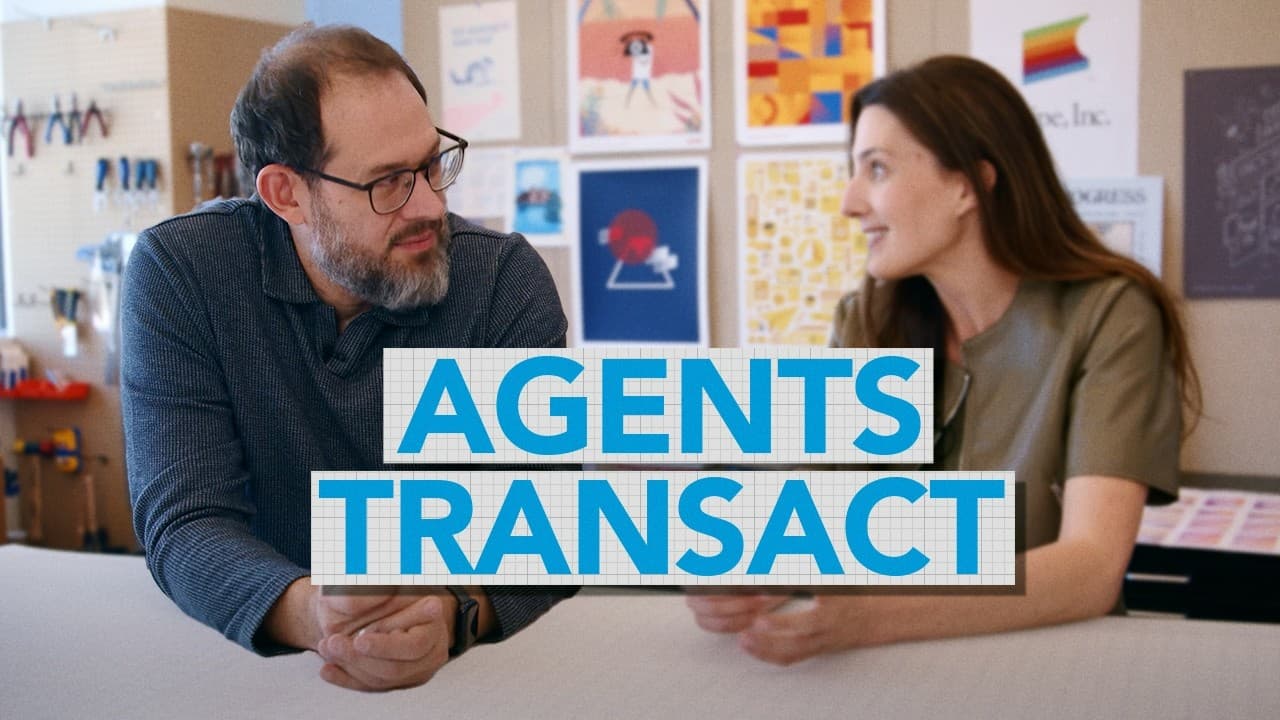
TL;DR
AI agents can spend on your behalf with wallet based controls and risk scoring, while Stripe provides identity linking and abuse protections to protect buyers and sellers. Trust grows as more automation is allowed within defined budgets and safety rules, enabling agents to buy coffee or other small goods while larger purchases require stricter review.
Transcript
Oh, we didn't change anything in the product and all of a sudden just like went vertical. Yeah. And it was cuz the agents had found it. >> In that world, how do we scale trust? How do we scale trust when the agents are supposed to be transacting >> and most of the sort of existential abuse that AI companies are facing is actually pre-transaction ou... Read More
Key Insights
- AI agents are increasingly acting as customers, and Stripe is building the trust framework to support that role.
- Stripe links consumer wallets to agents, allowing spend on behalf of buyers while preserving accountability and identity.
- Trust and fraud controls must operate outside the transaction, targeting token security and pre transaction abuse rather than just post purchase signals.
- Radar provides fraud protection at the transaction level, but the new reality requires pre transaction safety to prevent token theft.
- Cursor collaboration revealed that existing fraud tools were not solving all agent related abuse, prompting new approaches.
- The agent economy is measuring success through new business creation and faster monetization, driven in part by AI adoption.
- Economic dynamism is visible in metrics such as rising new business creation and faster monetization among AI powered cohorts.
- Agent based purchasing expands the role of Stripe from payment processing to broader economic infrastructure for AI powered marketplaces and services.
- More videos from this channel:
- More from this channel: AI News & Strategy Daily | Nate B Jones
Install to Summarize YouTube Videos and Get Transcripts
Explore YouTube Video Summarizer or Get YouTube Transcript Extractor
Questions & Answers
Q: What is AI agent commerce and why is it significant for Stripe users?
AI agent commerce refers to agents acting as buyers or spenders on behalf of humans or businesses. Stripe is working to make these agents trustworthy by linking identities and providing spend controls, so agents can purchase items like coffee within set budgets while preserving accountability and reducing fraud risk. The significance lies in enabling scalable, automated transactions without compromising safety.
Q: How does Stripe's Link wallet contribute to agent spending safety?
Link acts as a wallet for consumers and agents, connecting spending activity to an identity. This enables businesses to see who is spending and apply fraud and abuse controls across buyers and agents. The wallet infrastructure helps manage permissions, limits, and risk signals, making agent driven purchases more trustworthy.
Q: What role do pre transaction safeguards play in defending against AI related abuse?
Pre transaction safeguards target token theft and other abuses that occur before a purchase is executed. Since much of the existential abuse of AI companies happens outside the transaction, safeguarding the acquisition and use of tokens is crucial. This shifts protection earlier in the process, complementing traditional post purchase fraud detection.
Q: What are the limitations of current fraud tools like Radar for agent commerce?
Radar is strong for transaction level fraud, but agent commerce elevates the importance of pre transaction signals. The limitations arise because tokens and accounts can be misused before a transaction occurs, so new controls are required to prevent misuse before money moves.
Q: How does Stripe view the monetization impact of AI on new businesses?
Stripe notes that AI accelerates monetization and business formation, with cohorts monetizing around 50 percent faster than before. This reflects a broader shift where AI enabled agents and new AI powered services are accelerating revenue and economic activity across Stripe's platform.
Q: What did the Cursor collaboration reveal about fraud tools and AI risk?
Cursor highlighted that Radar alone was not solving AI related abuse because the key problems occur pre transaction and involve token theft rather than money theft. This realization pushed Stripe to expand its protection mechanisms to cover token security and identity validation before transactions.
Q: Why is agent trust described as an evolving, multi dimensional problem?
Agent trust combines buyer and seller safety, identity verification, spend limits, and fraud risk scoring. It requires coordination across wallets, accounts, and risk models to ensure agents can spend on behalf of buyers safely, while businesses can rely on the agents as trustworthy buyers.
Q: What is the practical takeaway about when agent commerce works best?
Agent commerce works best where the necessary infrastructure exists, including wallet, identity, and risk controls. Where pricing and economics are unclear or misaligned, it remains unsolved. The practical takeaway is to focus on building solid infrastructure and clear pricing to differentiate a viable plan from a simple payment integration.
Summary & Key Takeaways
-
A practical look at how AI agents become buyers and the role of Stripe in enabling trust in agent commerce, including wallet usage and fraud controls.
-
The video explains pre transaction abuse risks and how Stripe uses data driven rules to mitigate them, aiming for safer automation.
-
The conclusion emphasizes that agent commerce works where the infrastructure exists and fails where pricing models lack clarity, highlighting real world deployment challenges.
Read in Other Languages (beta)
Share This Summary 📚
Summarize YouTube Videos and Get Video Transcripts with 1-Click
Try YouTube Summary with ChatGPT & Claude or YouTube Transcript Generator
Explore More Summaries from AI News & Strategy Daily | Nate B Jones 📚






Summarize YouTube Videos and Get Video Transcripts with 1-Click
Try YouTube Summary with ChatGPT & Claude or YouTube Transcript Generator