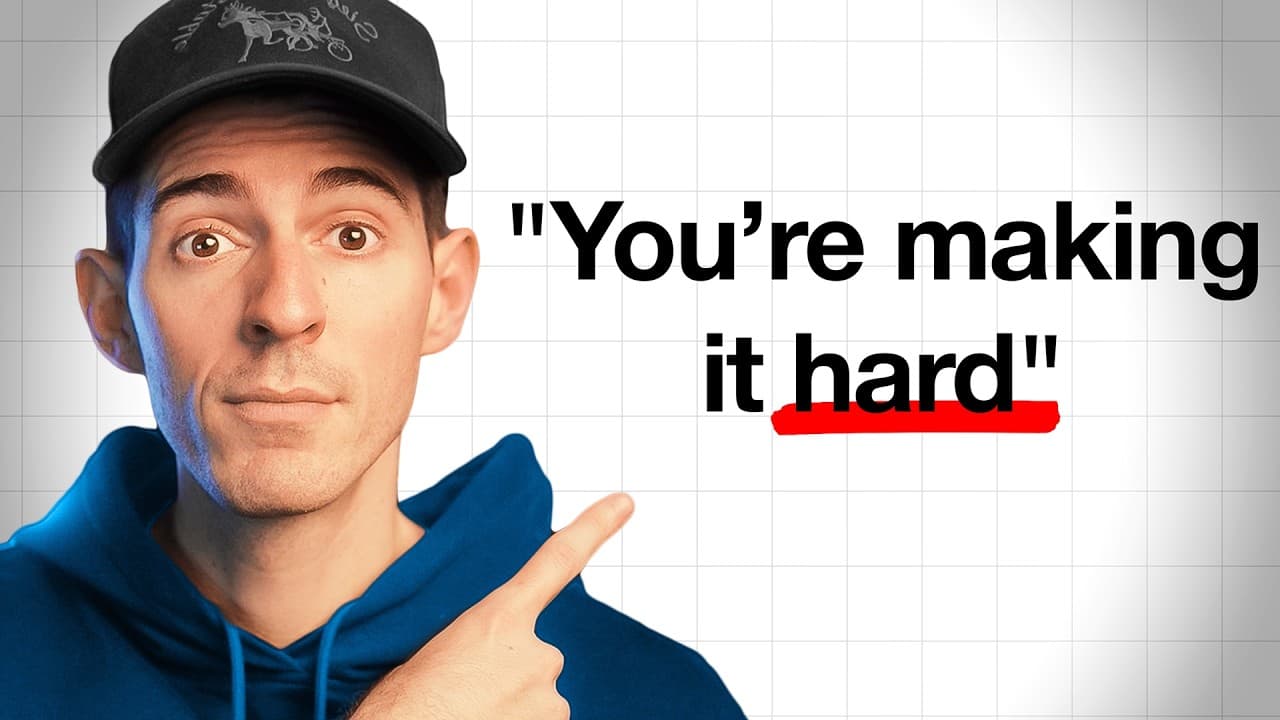
How to Transition from Hard Mode to Easy Mode on Social Media
TL;DR
To transition from hard mode to easy mode on social media, focus on overcoming impostor syndrome by accepting it and honing your skills through consistent practice. Derisk your efforts by studying successful creators and using their strategies to improve your content creation process. Emphasize incremental improvements and understand viewer psychology to boost engagement while avoiding the pitfalls of overthinking and misaligned audience expectations.
Transcript
right now is the best time in history to grow on social media the opportunity is insane I have never seen anything like this and I know this because content is all I do all day long I've made hundreds of videos billions of views I even Grew From Zer to 50,000 Subs in my first two months on this channel so if you feel like you're playing the content... Read More
Key Insights
- Mindset is crucial for success in social media; overcoming impostor syndrome involves accepting it and focusing on skill development.
- Derisking effort in content creation involves studying successful creators and applying validated strategies to improve the chances of success.
- Incremental improvement is key; focus on getting 1% better at one aspect of content creation at a time to build skills effectively.
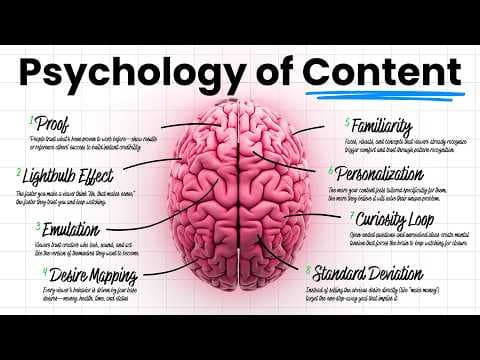
- Understanding viewer psychology can enhance content performance; aligning content with human behavior increases engagement and retention.
- Overthinking hinders productivity; focus on action rather than perfect strategy to avoid paralysis and ensure continuous output and learning.
- Begin with the end in mind to avoid the 'dead audience trap'; align content with future monetization goals for sustainable growth.
- The 'dead audience trap' occurs when content does not align with the intended product or service, limiting monetization opportunities.
- Building a community and learning from others can accelerate growth; collaboration and shared knowledge reduce the learning curve.
Install to Summarize YouTube Videos and Get Transcripts
Explore YouTube Video Summarizer or Get YouTube Transcript Extractor
Questions & Answers
Q: How can one overcome impostor syndrome in content creation?
Overcoming impostor syndrome involves accepting that feeling like an impostor is natural when one lacks the necessary skills. The key is to focus on skill development through consistent practice and learning. By acknowledging the gap in skills and working to bridge it, creators can gradually build confidence and reduce feelings of inadequacy.
Q: What does 'derisking effort' mean in the context of content creation?
'Derisking effort' refers to the process of reducing the uncertainty and risk associated with content creation by studying successful creators and applying proven strategies. This involves analyzing what works in one's niche and using those insights to guide content development, thereby increasing the likelihood of creating successful and engaging content.
Q: Why is incremental improvement important in content creation?
Incremental improvement is crucial because it allows creators to build skills effectively over time. By focusing on getting 1% better at one aspect of content creation at a time, creators can gradually enhance their overall abilities. This approach prevents overwhelm and ensures steady progress, ultimately leading to higher quality content and greater success.
Q: How can understanding viewer psychology benefit content creators?
Understanding viewer psychology can significantly benefit content creators by enabling them to align their content with human behavior and preferences. By tapping into basic psychological principles, creators can craft content that resonates with viewers, increases engagement, and enhances retention. This strategic alignment can lead to more successful and impactful content.
Q: What is the 'dead audience trap' and how can it be avoided?
The 'dead audience trap' occurs when a creator's content does not align with their intended product or service, limiting monetization opportunities. To avoid this trap, creators should start with the end in mind, ensuring their content aligns with future monetization goals. This strategic alignment helps build an engaged audience that is more likely to convert.
Q: How does overthinking affect content creation, and how can it be mitigated?
Overthinking can hinder content creation by causing paralysis and reducing output. It often stems from uncertainty about strategy or fear of judgment. To mitigate overthinking, creators should focus on taking action rather than seeking perfect strategies. Emphasizing consistent output and learning from each experience can help overcome overthinking and ensure continuous progress.
Q: What role does community play in accelerating growth for content creators?
Community plays a vital role in accelerating growth for content creators by providing opportunities for collaboration, shared learning, and support. Engaging with a community allows creators to exchange insights, gain feedback, and learn from others' experiences, reducing the learning curve and enhancing skill development. This collaborative environment fosters growth and innovation.
Q: Why is starting with the end in mind important for content creators?
Starting with the end in mind is important because it ensures that content aligns with future monetization goals. By having a clear understanding of how they want to monetize their audience, creators can tailor their content to attract the right audience and build a sustainable business model. This strategic foresight helps avoid pitfalls like the 'dead audience trap' and enhances long-term success.
Summary & Key Takeaways
-
The video emphasizes the importance of mindset in social media growth, suggesting that overcoming impostor syndrome involves accepting it and focusing on skill development. The creator shares personal experiences and strategies to help viewers transition from 'hard mode' to 'easy mode'.
-
Derisking effort is highlighted as a key strategy, involving the study of successful creators and applying validated strategies to improve content creation success rates. Incremental improvement is also crucial, focusing on getting 1% better at one aspect of content creation at a time.
-
Understanding viewer psychology is essential for enhancing content performance, and the video discusses how aligning content with human behavior can increase engagement. The creator also warns against overthinking and emphasizes the importance of starting with the end in mind to avoid the 'dead audience trap'.
Read in Other Languages (beta)
Share This Summary 📚
Summarize YouTube Videos and Get Video Transcripts with 1-Click
Try YouTube Summary with ChatGPT & Claude or YouTube Transcript Generator
Explore More Summaries from Kallaway 📚



Summarize YouTube Videos and Get Video Transcripts with 1-Click
Try YouTube Summary with ChatGPT & Claude or YouTube Transcript Generator