How to Build Habits That Compound Over Time
TL;DR
Turn what you consume into useful output, then use the response to gather better input and repeat the cycle. Improve conversations by seeking people who share your interests instead of expecting every close friend to enjoy every topic, and build routines that address energy, work, and relationships consistently over time.
Transcript
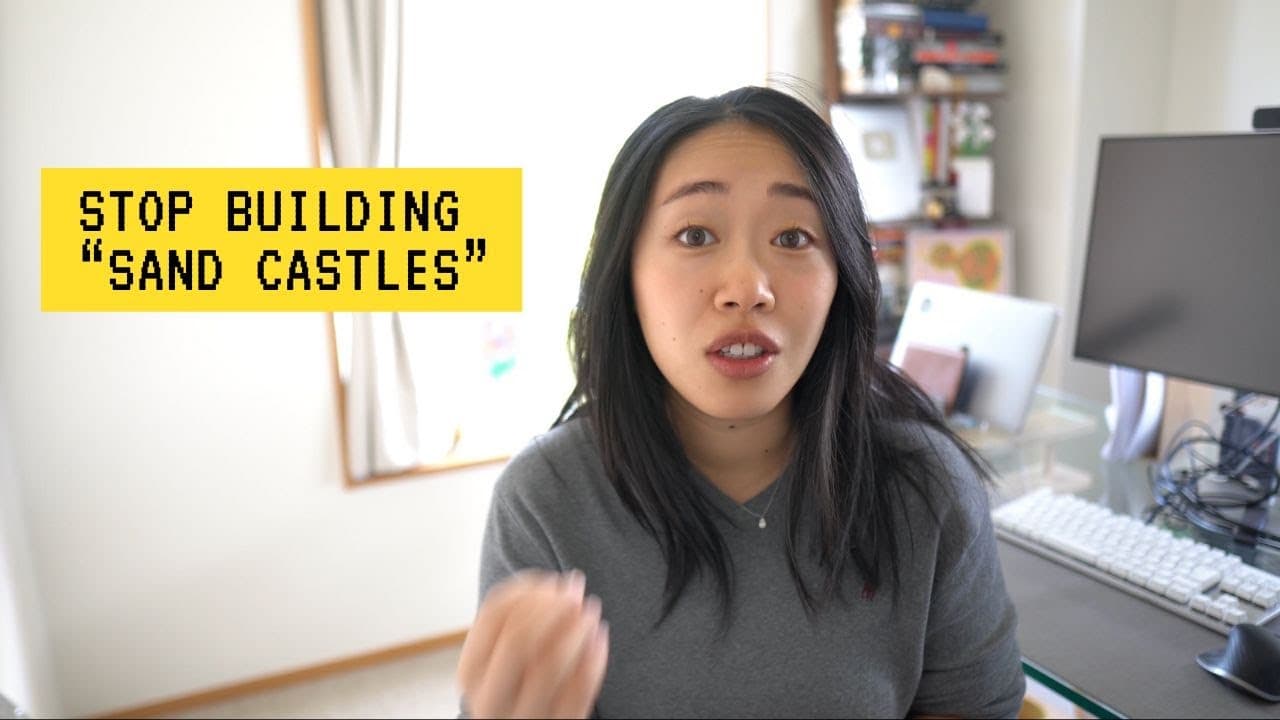
I wasn't building any specific skills. I was just kind of building little sandcastles everywhere that crumbled after the project ended, so I decided I need to change this. Three years ago, I felt drained. I felt like I was wasting time doing all of this work, but it wasn't building up to anything, and the closest people we... Read More
Key Insights
- Completed work is not necessarily cumulative work. The creator felt that isolated projects resembled temporary sandcastles because they ended without producing durable skills, groundbreaking insights, or unique contributions that could support the next project.
- An input-output loop is a repeating process in which learning produces an output, and the response to that output supplies new information for the next output. Linking the stages allows knowledge, relationships, experiments, and skills to accumulate instead of disappearing after one task.
- YouTube workshops can become research opportunities. After learning about algorithm changes and teaching large channels, the creator asked participating YouTubers how they approached the platform, capturing practical insights that were absent from the original training materials.
- SEO-focused chapter titles were described as a way one creator pursued traffic from Google search. That observation gave the creator a specific idea to discuss with the Google search team and later share in meetings, creator conversations, and channel experiments.
- Information asymmetry can create a professional advantage. By connecting training, practitioner observations, cross-functional discussions, and personal experiments, the creator developed insights that colleagues and creators did not necessarily possess, strengthening a reputation for contributing uncommon information.
- Publishing is an output that helps cement learning and attract further input. Writing articles and creating YouTube videos generated comments, discussions with writer friends, and inbound emails from people applying similar ideas, which then inspired improvements and additional topics.
- Better conversations begin with accepting differences in interest. A close friend does not need to enjoy every book, philosophical question, or extended explanation, and an interruption can signal a mismatch in topic or conversational style rather than a complete failure of friendship.
- Shared activities can serve as proxies for compatible interests. Because the creator viewed writing as a proxy for curiosity, joining a writing course provided a concentrated way to meet people who wanted to discuss philosophy, frameworks, books, and ideas about how the world works.
Install to Summarize YouTube Videos and Get Transcripts
Explore YouTube Video Summarizer or Get YouTube Transcript Extractor
Questions & Answers
Q: How do you build an input-output learning loop?
Start with information you already consume, then turn it into a concrete output such as writing, a workshop, a meeting contribution, or a YouTube video. Use questions, comments, experiments, and conversations generated by that output as the next source of input. Apply what you discover to another output, repeating the cycle so that each stage builds on earlier work.
Q: Why can isolated work projects feel unproductive?
Isolated projects can feel unproductive when they end without creating durable skills, distinctive knowledge, or contributions that support later work. The creator compared them to small sandcastles that crumble after completion. Even strong execution may leave little accumulated value if every assignment begins and ends independently, with no deliberate connection to future learning, relationships, experiments, or public output.
Q: How can workplace training produce unique professional insights?
Workplace training becomes more valuable when it is treated as the beginning of an inquiry rather than the final answer. The creator used YouTube algorithm training to run workshops, asked large creators about their own tactics, and brought those observations to the Google search team. The combined information then supported more useful advice, stronger cross-functional contributions, and experiments on a personal channel.
Q: How does publishing content improve learning?
Publishing forces a person to process information into a form that other people can understand, which helps cement what was learned. It also invites comments, conversations, and inbound messages from people with related experience. Those responses provide additional input that can challenge or extend the original thinking, improve future videos or articles, and suggest new subjects worth exploring.
Q: What is information asymmetry in a professional context?
Information asymmetry, as presented here, means possessing useful insights that other people in the same environment do not have. The creator developed it by connecting formal training with conversations involving large YouTubers, the Google search team, colleagues, readers, and personal channel experiments. This combination supported a reputation for offering knowledge that was uncommon, practical, and relevant to multiple situations.
Q: How can you have better conversations with close friends?
Better conversations require accepting that closeness does not guarantee shared enthusiasm for every subject. Instead of labeling a friend as someone who never listens, notice whether the topic, timing, or amount of detail fits that relationship. Avoid turning every interest into an extended monologue, and find additional people who genuinely enjoy discussing the books, frameworks, philosophy, or ideas that matter to you.
Q: How can you find people who share your intellectual interests?
Choose a community or activity that acts as a proxy for the quality you value. The creator associated writing with curiosity, so joining a writing course created access to people who were interested in philosophy, frameworks, books, and explanations of how the world works. This approach concentrates the search instead of expecting existing friends to satisfy every conversational interest.
Q: What three areas did the creator's habits address?
The habits were presented as responses to three connected problems: work that did not build toward durable skills or unique contributions, relationships strained by diverging interests, and a general feeling of being drained. The transcript develops input-output loops and better conversations in detail, while the description identifies the third section as an Andrew Huberman no-caffeine morning routine focused on morning caffeine use.
Summary & Key Takeaways
-
The creator felt drained because completed projects did not accumulate into durable skills, distinctive contributions, or a larger body of work. At the same time, close relationships were changing because shared interests had weakened. A period when everything paused created an opportunity to test habits that addressed work, relationships, and energy.
-
The first habit connects every input to an output, then turns reactions to that output into fresh input. YouTube training informed workshops, conversations with creators revealed practical discoveries, and discussions with the Google search team added further context. Those insights then improved meetings, creator advice, experiments, articles, and future videos.
-
The second habit improves conversations by accepting that close friends will not share every interest or want to hear every extended explanation. Instead of blaming one friend for interrupting, the creator sought curious people who enjoyed philosophy, frameworks, books, and ideas. A writing course became a practical way to find them.
Read in Other Languages (beta)
Share This Summary 📚
Summarize YouTube Videos and Get Video Transcripts with 1-Click
Try YouTube Summary with ChatGPT & Claude or YouTube Transcript Generator
Explore More Summaries from Vicky Zhao 📚

Summarize YouTube Videos and Get Video Transcripts with 1-Click
Try YouTube Summary with ChatGPT & Claude or YouTube Transcript Generator