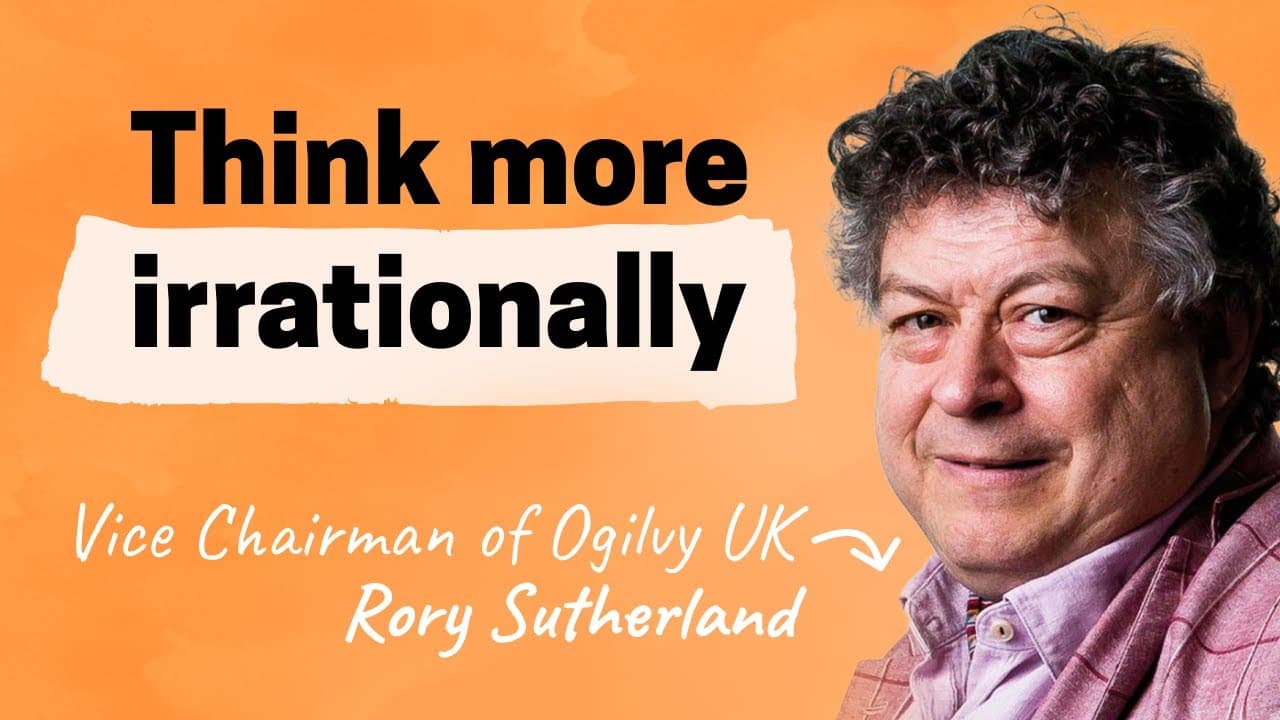
How to build famous brands with quirky marketing
TL;DR
Marketing success often comes from thinking psychologically rather than purely logically. Idiosyncrasies and distinctive touches can create memorable brands, while timing and fame help attract customers. Use a comedian’s eye to spot what is slightly odd about a product and lean into it while maintaining consistency and distinctiveness.
Transcript
Steve Jobs was not a technologist. He was a pitch man. He was a brilliant salesman. He was a fantastic marketer. When products succeed, we forget the extent to which marketing was actually instrumental or decisive in their success. You once said, "If you could imagine a stand-up comedian doing a routine about your product, then you're onto so... Read More
Key Insights
- Marketing success is not just about the product but about how it is perceived, communicated, and framed.
- Idiosyncrasies count double; small, distinctive features can make a brand memorable and help it stand out.
- Fame and being famous can reduce the need to chase every customer and create a self-reinforcing demand for the brand.
- Timing matters greatly; even great products can fail if released at the wrong moment.
- Humor and a stand-up comic mindset can reveal the useful quirks in a product that people remember and talk about.
- Thinking psychologically means designing around human behavior and biases rather than relying solely on logic.
- Consistency plus distinctiveness creates a recognizable brand that people feel drawn to over time.
- The balance between innovation and familiarity is crucial; consumers prefer gradual evolution over drastic reinvention.
- More videos from this channel:
- More from this channel: Lenny's Podcast
Install to Summarize YouTube Videos and Get Transcripts
Explore YouTube Video Summarizer or Get YouTube Transcript Extractor
Questions & Answers
Q: How can I use psychological principles to build a brand audience
Psychological branding focuses on how people think, feel, and decide. Start by identifying the quirks and micro-advantages that differentiate your product, then craft a narrative around those elements. Use consistent messaging to reinforce brand identity while highlighting distinctive features that trigger recall. Timing and audience perception matter as much as functionality, so anticipate objections and frame benefits in relatable terms.
Q: What role do idiosyncrasies play in branding
Idiosyncrasies provide memorable hooks that help a brand stand out in a crowded market. They give consumers something to talk about and create a unique association with the product. The key is to preserve meaningful quirks rather than remove them when they contribute to recognition or emotional resonance, balancing novelty with familiarity.
Q: Why is being famous advantageous for a brand
Fame reduces the friction of customer acquisition by attracting attention and creating a pull effect. When a brand becomes well-known, it can draw in customers more easily and achieve faster reach, creating a positive feedback loop where awareness drives demand and demand reinforces visibility, even if initial features were not flawless.
Q: How important is timing in product success
Timing determines whether a product meets an open window of consumer readiness. A good product released at the right moment can gain traction quickly, while the same product out of sync with market conditions may struggle despite strengths. Monitoring trends and consumer mood helps align launch timing with receptivity.
Q: What does thinking from first principles mean in marketing
Thinking from first principles means breaking down assumptions about what a product must be and exploring fundamental human needs and behaviors. It involves questioning conventional wisdom, testing ideas against core psychological drivers, and rebuilding marketing strategies around those truths rather than around inherited practices.
Q: How can marketing avoid being too logical
Marketing should not be limited to rational features alone. People respond to storytelling, emotion, and perceived value. Incorporate narratives, humor, and memorable cues that resonate on a human level, while still delivering real benefits. The aim is to make complex ideas feel obvious through clear, relatable messaging.
Q: What is the balance between evolution and reinvention in products
Consumers prefer gradual evolution to radical reinvention, so introduce changes that feel like natural progressions rather than abrupt shifts. Use the concept of most advanced yet acceptable to guide updates, ensuring improvements feel accessible and maintainable for users while still signaling progress and novelty.
Q: Can you give an example of a successful quirky marketing idea
A successful quirky idea leverages a distinctive feature, such as a design quirk or an unusual consumer benefit, that becomes a talking point. The best examples are those that align with brand identity, are easy to understand, and create memorable associations, ultimately driving word-of-mouth and repeat engagement.
Summary & Key Takeaways
-
Rory Sutherland argues that marketing is often decisive in product success and that memorable branding comes from psychological insight and distinctive quirks. He cites examples from car design and consumer rewards to illustrate how small idiosyncrasies can create lasting appeal.
-
The conversation emphasizes the value of timing, whether a product is ready for market or when the public is primed to embrace a change, and warns against overemphasizing rational product features at the expense of narrative and emotion.
-
The episode advocates thinking from first principles, using humor and storytelling, and balancing evolution with acceptable innovation to keep customers engaged without alienating them.
Read in Other Languages (beta)
Share This Summary 📚
Summarize YouTube Videos and Get Video Transcripts with 1-Click
Try YouTube Summary with ChatGPT & Claude or YouTube Transcript Generator
Explore More Summaries from Lenny's Podcast 📚



Summarize YouTube Videos and Get Video Transcripts with 1-Click
Try YouTube Summary with ChatGPT & Claude or YouTube Transcript Generator