What Should Parents Know About Breakfast Cereal?
TL;DR
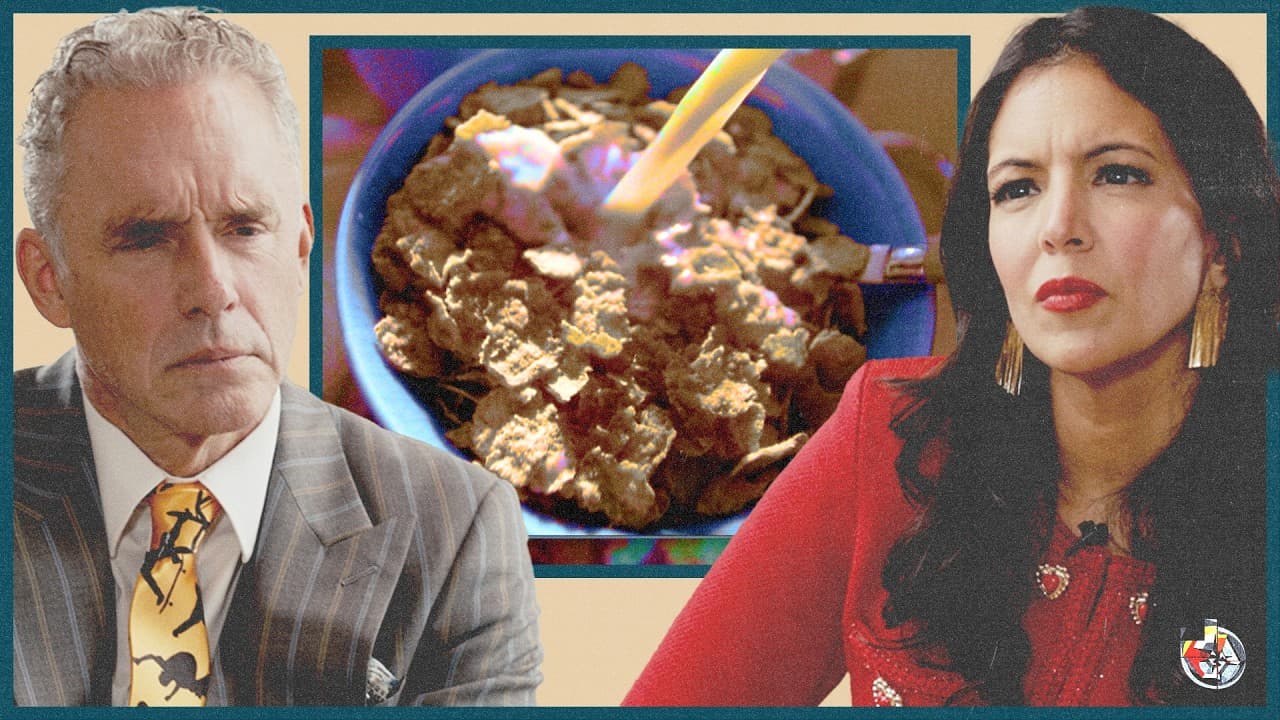
Parents should scrutinize cereal labels for artificial food dyes, BHT, high sugar content, and highly processed carbohydrates. Vani Hari argues that products such as Froot Loops are especially concerning because they are marketed and served to children, while comparable cereals are reportedly made without certain additives in Canada, Australia, Europe, India, and other markets.
Transcript
it was probably when I wrote the article chemical filet or Chick-fil-A that went viral and Chick-fil-A invited me their headquarters to consult on their menu changes and ingredient changes that I finally made the decision why did they do that um they were smart they were smart they rolled out the red carpet they picked me up in a cow wrapped car um... Read More
Key Insights
- Artificial food dyes are Hari's primary concern because she links them to hyperactivity, attention problems, allergic responses, immune reactions, and eczema. She also says their production can introduce carcinogens, although the conversation acknowledges that nutritional evidence is difficult to interpret conclusively.
- Froot Loops is criticized for combining artificial additives with high sugar content and highly processed carbohydrates. Hari considers its marketing and distribution to children particularly troubling, stating that schools represent a major source of sales and serve the cereal to children for breakfast.
- Kellogg's response is contrasted with Chick-fil-A's approach to criticism. Hari says Chick-fil-A invited her to its headquarters to discuss menu and ingredient changes, while Kellogg's would not meet activists delivering petitions with more than 400,000 signatures.
- The boycott campaign is presented as a response to Kellogg's refusal to engage with activists. Hari reports that Froot Loops sales on grocery store shelves fell 54% during the preceding 12 weeks, alongside a decline in the company's stock price.
- International reformulation is central to Hari's argument because she says comparable cereals are already made without the disputed additives in Canada, Australia, Europe, India, and many other markets. She views this difference as evidence that American products could also be reformulated.
- European labeling is described as giving parents more information about artificial food dyes. Hari says products containing these dyes carry a warning that they may adversely affect activity and attention in children, while comparable informed consent is absent in the United States.
- Real-food selection is Hari's proposed practical response to confusing nutrition science. She recommends foods containing familiar ingredients from kitchens or farmers markets and gives dates, maple syrup, and nuts as examples of ingredients that can appear in processed products without disputed additives.
- Elimination diets are discussed as a way to simplify the investigation of chronic symptoms. Peterson argues that restricting food variety reduces possible dietary variables and interactions, after which foods might be reintroduced gradually, but he distinguishes personal reports from definitive scientific proof.
Install to Summarize YouTube Videos and Get Transcripts
Explore YouTube Video Summarizer or Get YouTube Transcript Extractor
Questions & Answers
Q: What should parents look for when choosing breakfast cereal?
Parents should examine ingredient labels for artificial food dyes, BHT, high sugar content, and highly processed carbohydrates. Hari argues that brightly colored cereals marketed to children deserve particular scrutiny because children may encounter them at school as well as at home. She recommends favoring foods made with familiar ingredients that could reasonably be found in an ordinary kitchen or farmers market.
Q: Why does Vani Hari object to artificial food dyes?
Hari objects to artificial food dyes because she associates them with hyperactivity, attention difficulties, immune responses, allergies, and eczema. She also says petroleum-derived colorings can contain carcinogens created during production. Her personal dietary transformation began by eliminating artificial dyes, which she says naturally reduced her exposure to many highly processed products containing other disputed chemicals.
Q: Why is Froot Loops used as an example of cereal industry problems?
Froot Loops is used as an example because Hari describes it as highly processed, heavily loaded with sugar, artificially colored, and targeted toward young children. She is especially concerned that it is sold to schools and served for breakfast. She also says comparable cereals are manufactured without certain additives in Canada, Australia, Europe, India, and many other markets.
Q: How did Kellogg's respond to the petition about cereal additives?
Hari says activists went to Kellogg's headquarters with more than 400,000 signatures asking the company to remove artificial food dyes and BHT from its cereals. According to her account, the company would not let them enter or accept the petitions in person. She says this refusal intensified the campaign and contributed to activists launching a national boycott.
Q: What sales impact does Vani Hari attribute to the cereal boycott?
Hari reports that Froot Loops sales on grocery store shelves declined 54% over the preceding 12 weeks and that the company's stock price also fell. She presents those developments while describing the boycott, but the transcript does not establish that the campaign alone caused either decline. Her broader point is that refusing dialogue can motivate activists to escalate public pressure.
Q: How do European warnings about artificial food dyes differ from US labeling?
Hari says European products containing artificial food dyes carry a warning stating that the ingredients may adversely affect activity and attention in children. She argues that this gives European parents information that American parents do not receive on comparable products. The discussion presents this labeling difference as part of a broader contrast between European and United States approaches to food additives.
Q: What does Vani Hari recommend instead of foods with synthetic additives?
Hari recommends returning to real foods and choosing products made with recognizable ingredients associated with ordinary kitchens or farmers markets. She acknowledges that a product can still be processed while using familiar components, citing dates, maple syrup, and nuts as examples. Her central rule is to simplify food choices rather than relying on complicated formulations created with numerous synthetic chemicals.
Q: How does the conversation address uncertainty in nutrition research?
Peterson argues that nutrition research is difficult because diets contain many interacting variables and published studies may isolate one correlation from a much more complicated landscape. Hari agrees that interpretation is difficult but maintains that eating familiar, minimally complicated foods need not require advanced scientific analysis. The conversation treats anecdotes as possible sources of hypotheses, not as definitive proof.
Summary & Key Takeaways
-
Vani Hari describes campaigning against artificial food dyes and BHT in Kellogg's cereals. She says the company declined to accept petitions bearing more than 400,000 signatures in person, prompting activists to intensify their campaign and begin a national boycott focused on additives in products such as Froot Loops.
-
Froot Loops is presented as problematic because it combines artificial colorings, high sugar content, and highly processed carbohydrates while being marketed and served to children. Hari claims comparable cereals are already produced without certain additives for markets including Canada, Australia, Europe, and India, making reformulation in the United States feasible.
-
The conversation broadens into uncertainty within nutrition research and the value of simplifying food choices. Hari advocates ingredients recognizable from an ordinary kitchen or farmers market. Peterson discusses restrictive elimination diets as a possible way to reduce variables, while acknowledging that anecdotes generate hypotheses rather than conclusive scientific proof.
Read in Other Languages (beta)
Share This Summary 📚
Summarize YouTube Videos and Get Video Transcripts with 1-Click
Try YouTube Summary with ChatGPT & Claude or YouTube Transcript Generator
Explore More Summaries from Jordan B Peterson 📚


Summarize YouTube Videos and Get Video Transcripts with 1-Click
Try YouTube Summary with ChatGPT & Claude or YouTube Transcript Generator