How to Scalp the 1-Minute Chart With Sniper Entries
TL;DR
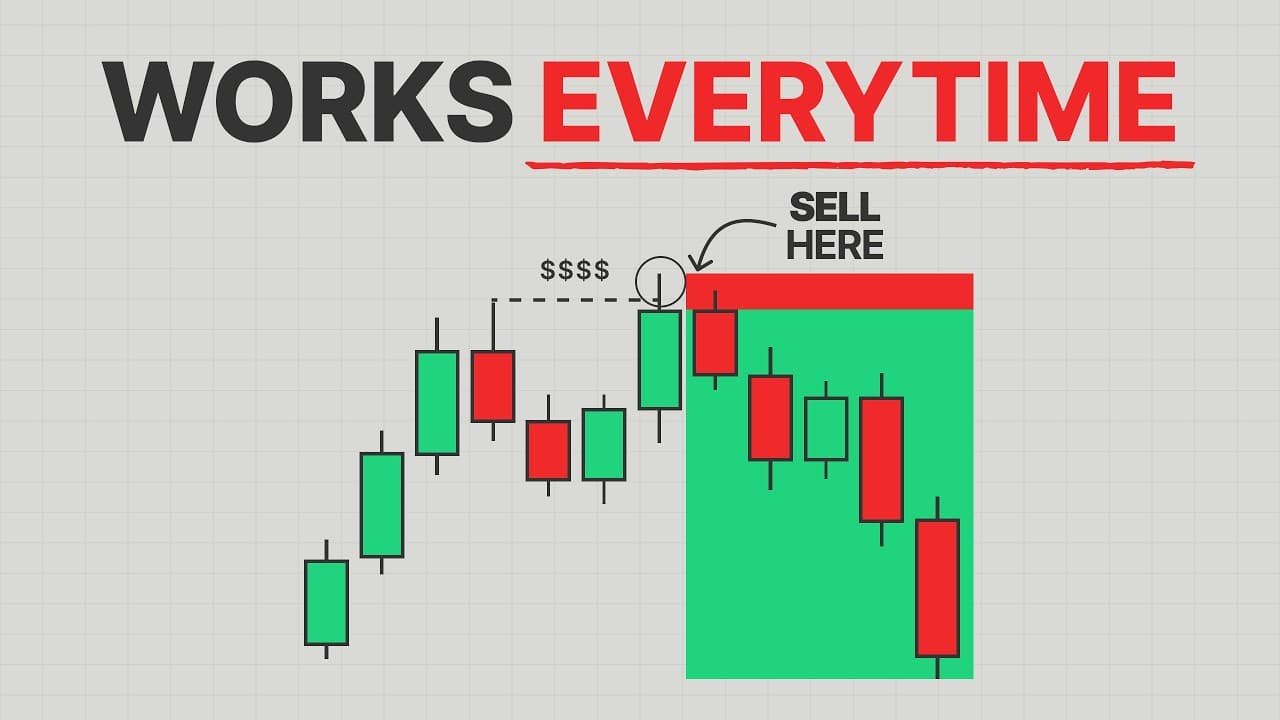
Scalp the 1-minute chart by marking untouched 15-minute highs and lows, waiting for a liquidity sweep that closes back inside the range, and entering when a 1-minute candle closes across the sweep candle’s closing price. The trigger must occur within the next 15-minute candle, with the next unswept swing point serving as the target. Read on for the exact entry, stop-loss, and invalidation rules.
Transcript
After seven years of trading, I built a simple one minute scalping strategy with high reward to risk, high win rates, and no indicators. Let's start. Now, the goal of this video is to teach you a strategy that you can use every single day. And even as a beginner, so either you're a beginner trader or advanced trader, you can use this setup. Now, us... Read More
Key Insights
- Scalping is not about catching small moves. It means using a lower time frame to take trades and be finished within 10 minutes, 15 minutes, or maybe an hour. On the 1-minute chart this setup can catch large moves, not just a few pips.
- The strategy runs on exactly two time frames: the 15-minute chart for marking liquidity levels and spotting the sweep, and the 1-minute chart for the entry trigger. The 15-minute close alone never confirms a trade; the 1-minute chart decides everything.
- Only untouched 15-minute highs and lows count as valid levels. Any high price has already broken above, or any low it has already broken below, is discarded because the liquidity there is gone.
- The wick rejection is the central mechanic: price must take the high or low but the 15-minute candle must close back inside the range, below the high or above the low. A close on the wrong side invalidates the setup entirely.
- The candle sweeping the level should still be closing in the same direction as the move into it. A candle taking a low that has already closed bullish shows the rejection happened early, and price has likely moved without leaving a valid entry.
- The stronger the rejection wick, the worse the trade. A large rejection candle produces a lower reward-to-risk ratio and a less valid entry, because much of the move has already happened before the entry line can be reached.
- The entry line is the closing price of the sweep candle, which is also the opening price of the next 15-minute candle. Entry is triggered the moment a 1-minute candle closes across that line, and it must occur within that same 15-minute candle.
- Two stop-loss placements are offered: below the 1-minute candle that broke the line or its swing low for a tighter stop, and below the entire 15-minute candle for a safer one. Targets are set at the next valid unswept 15-minute swing point.
- A level does not need to be touched exactly to count as a liquidity sweep. Price reaching the level is treated as equivalent to taking it, because traders holding stop losses there are already knocked out by spread.
Install to Summarize YouTube Videos and Get Transcripts
Explore YouTube Video Summarizer or Get YouTube Transcript Extractor
Questions & Answers
Q: How do you scalp the 1-minute chart with sniper entries?
First, mark untouched highs and lows on the 15-minute chart. Wait for price to sweep one of those levels and close back inside the range, then mark the sweep candle’s closing price. Enter when a 1-minute candle closes back across that price within the next 15-minute candle.
Q: What are the three steps of the 1-minute scalping strategy?
Step one is to mark 15-minute highs and lows that price has not reached. Step two is to wait for a 15-minute candle to sweep a level but close below the high for a sell or above the low for a buy. Step three is to switch to the 1-minute chart and use a close across the sweep candle’s closing price as the entry trigger.
Q: Which 15-minute highs and lows should be marked?
Mark only highs and lows that price has not yet reached. Ignore a high after price has broken above it and a low after price has broken below it because the liquidity at that level has already been taken.
Q: What makes a 15-minute liquidity sweep valid?
Price must take the marked high or low and then close back inside the range. For a sell setup, the 15-minute candle must close below the swept high; for a buy setup, it must close above the swept low. A close on the wrong side invalidates the setup.
Q: What exactly triggers the sniper entry on the 1-minute chart?
Mark the closing price of the 15-minute sweep candle, which is also the opening price of the next 15-minute candle. The entry triggers when a 1-minute candle closes back across that line in the trade direction. This must occur within the same newly opened 15-minute candle.
Q: Where should the stop loss be placed?
For a tighter stop, place it beyond the 1-minute trigger candle or its swing point. The safer alternative is beyond the entire 15-minute sweep candle. The choice depends on how the price action is being read.
Q: How is the take-profit target selected?
Return to the 15-minute chart and identify the next valid swing point that price has not swept. Use that untouched high or low as the target. Combining this target with the tight 1-minute entry can produce reward-to-risk outcomes of four-to-one, five-to-one, or sometimes more.
Q: Why can a large rejection wick weaken the setup?
A large rejection wick means much of the move has already occurred before the entry line can be reached. That reduces the available reward relative to the risk and makes the entry less valid. If the sweep candle has already reversed strongly, the setup may no longer leave a suitable entry.
Summary & Key Takeaways
-
The strategy was built from scratch over seven years of trading and uses no indicators. It targets high reward-to-risk trades rather than the typical one-to-one, sometimes reaching four-to-one or five-to-one. One trade a day can be enough, trades resolve within roughly 10 minutes to an hour, and it works on forex, crypto, and futures across the Asia, London, and New York sessions.
-
Step one is marking 15-minute highs and lows that price has not reached yet. Highs already broken and lows already taken are ignored. Step two is waiting for a 15-minute candle to sweep one of those levels but close back on the correct side: below the high for a sell, above the low for a buy. That wick rejection is the core signal.
-
Step three moves to the 1-minute chart once the next 15-minute candle opens. The closing price of the sweep candle becomes the opening of the next candle and is marked as the entry line. A 1-minute close back above that line (for a long) is the entry trigger, and it must happen inside the same 15-minute candle.
Read in Other Languages (beta)
Share This Summary 📚
Summarize YouTube Videos and Get Video Transcripts with 1-Click
Try YouTube Summary with ChatGPT & Claude or YouTube Transcript Generator
Explore More Summaries from Mulham Trading 📚
![The Ultimate ICT Silver Bullet Strategy: 33% ROI in 14 Days! [Backtesting] thumbnail](/_next/image?url=https%3A%2F%2Fi.ytimg.com%2Fvi%2FPOyd5Quw0WY%2Fhqdefault.jpg&w=750&q=75)
Summarize YouTube Videos and Get Video Transcripts with 1-Click
Try YouTube Summary with ChatGPT & Claude or YouTube Transcript Generator