How Do Researchers Create Super Dark Coatings Like Vantablack?
TL;DR
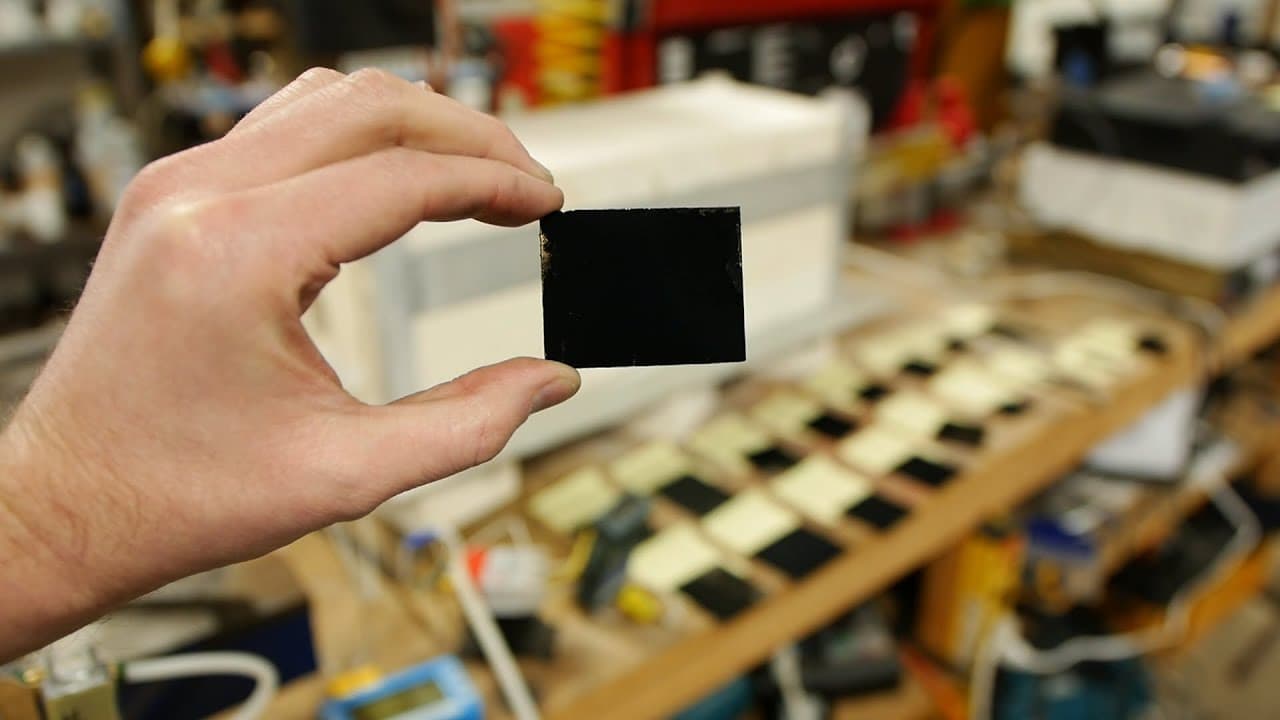
Researchers at MIT have developed a coating that is ten times darker than Vantablack, achieving a reflectance of just 0.01%. This is accomplished by growing carbon nanotubes on a chemically treated aluminum surface. However, replicating the darkening process has proven challenging, prompting experimentation with alternatives like graphite for better results.
Transcript
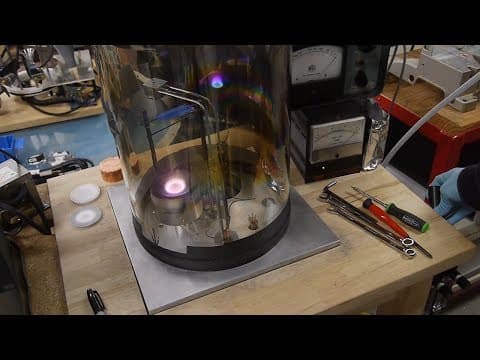
today on Applied Science we're going to talk about these very dark materials you've probably heard of vantablack which reflects very little light so I wanted to make these for a long time but part of the production process involves feeding acetylene and hydrogen gas into a sealed chamber in a red hot oven in theory you're safe because there's no ox... Read More
Key Insights
- ⌛ Researchers at MIT have developed a material that is ten times darker than vantablack, with a reflectance of only 0.01%.
- 🙂 The material is created by growing forests of carbon nanotubes on a textured aluminum surface, maximizing light-trapping capabilities.
- 🕶️ The process of chemically treating the aluminum to make it dark has been challenging, with the presenter struggling to achieve the desired results.
- 💗 Alternative materials like graphite have shown promise in growing carbon nanotubes and could be used as a viable alternative to aluminum surfaces.
- ❓ Reflectance measurements show that the presenter's samples and professional vertically aligned nanotubes have a reflectance of around 0.5%.
- 🧡 Testing other dark materials, such as soot from a candle flame and black paint, has provided a reference range for reflectance measurements.
Install to Summarize YouTube Videos and Get Transcripts
Explore YouTube Video Summarizer or Get YouTube Transcript Extractor
Questions & Answers
Q: How does the new material compare to vantablack in terms of darkness?
The new material is ten times darker than vantablack, as it has a reflectance of only 0.01%.
Q: What is the significance of growing forests of carbon nanotubes on a textured surface?
The surface texture enhances light trapping, as the nanotubes act like a carpet, bouncing light among the fibers and preventing it from escaping.
Q: Why has the process of treating the aluminum surface to make it dark been challenging?
Despite following the methods described in an MIT research paper, the presenter has struggled to achieve the desired darkness. Various attempts, including different chemicals, temperatures, and durations, have failed.
Q: Can other materials be used to grow carbon nanotubes?
Yes, graphite has been found to be a suitable alternative to aluminum. The process of growing nanotubes on graphite surfaces is relatively easy and yields comparable results.
Summary & Key Takeaways
-
Vantablack, a material that reflects very little light, has been a topic of interest. MIT researchers have created a material that is ten times darker than vantablack and easier to make.
-
The production process involves growing forests of carbon nanotubes on a textured aluminum surface for maximum light trapping.
-
The process of treating the aluminum surface to make it dark has been challenging, but alternative materials like graphite have shown promise in growing carbon nanotubes.
Read in Other Languages (beta)
Share This Summary 📚
Summarize YouTube Videos and Get Video Transcripts with 1-Click
Try YouTube Summary with ChatGPT & Claude or YouTube Transcript Generator
Explore More Summaries from Applied Science 📚


Summarize YouTube Videos and Get Video Transcripts with 1-Click
Try YouTube Summary with ChatGPT & Claude or YouTube Transcript Generator