How Do People Survive in Dangerous Villages?

TL;DR
People survive in extreme settlements by adapting buildings, transport, food production, and traditions to water, cliffs, forests, and high mountains. Stilt houses, carved rock rooms, floating reed platforms, thick earth walls, portable tents, boats, and carefully maintained pathways allow communities to endure isolation, erosion, harsh weather, limited farmland, and changing access to natural resources.
Transcript
There are villages in this world where survival is not a choice but a daily battle against nature itself. Perched on cliffs, floating on water, or hidden deep within unforgiving landscapes, these places exist where life should be impossible. Every path is dangerous, every moment uncertain, and every day demands resilience beyond imagination. Yet ag... Read More
Key Insights
- The Baja Sea Nomad communities are settlements built over shallow coastal water on wooden pillars and connected by narrow walkways. Fishing provides most food and income, while some divers descend beyond 65 ft because essential resources cannot be reached from boats.
- Kandavan is an Iranian village carved into cone-shaped formations made from ancient volcanic ash and hardened lava. Residents create multi-level rooms and stone stairways while preserving the rock's loadbearing core, and the porous material helps regulate conditions inside the homes.
- The Uros floating islands in Peru are built from reed layers several feet deep rather than solid ground. Lower layers gradually decay in the water, requiring residents to add fresh reeds regularly, and a typical island lasts about 20 years before complete reconstruction.
- Fugtal Monastery is a Buddhist complex constructed around a natural cave in a northern Indian cliff. The more than 1,000-year-old site houses several dozen monks, while its dry, nearly vegetation-free surroundings make farming difficult and create dependence on supplies from outside.
- Wae Rebo is an isolated Indonesian mountain settlement about 3,600 ft above sea level and reachable only after roughly 3 to 4 hours of steep hiking. Its cone-shaped Mbaru Niang houses contain five functional levels for living, food storage, and rituals.
- Makoko is a Nigerian community where an estimated 100,000 to 300,000 residents occupy wooden houses supported by poles driven into shallow water. Because conventional roads do not exist, small boats carry students, traders, residents, goods, and construction materials through the settlement.
- Inle floating villages in Myanmar use water as the primary route for fishing, transportation, and trade. Residents operate boats with a distinctive one-leg rowing technique and construct floating gardens from plants and lake mud, anchoring the agricultural strips with bamboo poles.
- Ushguli is a Georgian mountain community located above 7,000 ft with more than 30 stone defense towers. Built between the 9th and 12th centuries, many towers reach roughly 70 to 80 ft, while heavy snow and landslides have previously isolated the village.
Install to Summarize YouTube Videos and Get Transcripts
Explore YouTube Video Summarizer or Get YouTube Transcript Extractor
Questions & Answers
Q: How do Baja Sea Nomad communities survive above the sea?
Baja Sea Nomad communities build wooden houses on pillars fixed into shallow seabeds and connect them with narrow walkways. Their survival depends heavily on natural fishing, boat handling, and diving. Some divers descend beyond 65 ft because much of their food and income is underwater. Political changes and shifting control of sea territories have also forced entire communities to relocate.
Q: How are homes inside Kandavan's volcanic rock formed?
Kandavan families carve rooms, stairways, and multiple levels directly into cone-shaped formations created from ancient volcanic ash and hardened lava. Some cones rise more than 30 ft. Thick walls and careful excavation preserve the natural loadbearing core, while the porous volcanic stone helps regulate indoor conditions. Descendants continue occupying carved spaces associated with protection and durability.
Q: How do the Uros keep their floating islands from sinking?
The Uros construct island platforms from stacked reed layers several feet deep, creating surfaces strong enough to support houses and daily activity. Because the submerged reeds slowly decay, residents regularly place fresh layers on top to preserve stability. A typical island lasts about 20 years before it must be rebuilt with new reed bundles. Boats and homes use the same plant.
Q: Why is Fugtal Monastery considered an extreme settlement?
Fugtal Monastery is anchored to a northern Indian cliff and centered on a natural cave shaped by thousands of years of erosion. Its prayer halls and living quarters rise in tiers along the rock face. The complex has existed for more than 1,000 years and houses several dozen monks, but dry terrain and scarce vegetation make farming nearly impossible, creating reliance on outside supplies.
Q: How does Wae Rebo function despite its mountain isolation?
Wae Rebo stands about 3,600 ft above sea level within remote tropical forest and has no road accessible by vehicle. Reaching it requires roughly 3 to 4 hours of steep hiking. The community arranges cone-shaped houses around a ceremonial yard, and each Mbaru Niang house uses five levels for living space, food storage, and ritual activities.
Q: How do people travel and trade in Makoko?
Makoko has no conventional roads because its densely packed wooden homes stand on poles driven into shallow water. Small wooden boats therefore serve as the main transportation for school, commerce, residents, goods, and construction materials. The settlement's population is estimated at 100,000 to 300,000 people, so boat movement supports daily life on a scale comparable to a medium-sized city.
Q: How do Myanmar's floating villages produce food on water?
Residents create floating gardens by combining plants with lake mud, forming long agricultural strips that are tied together and secured using bamboo poles. Boats remain essential for fishing, transportation, and moving goods across water extending for more than 10 mi. The Intha also row with one leg while standing at the stern, helping them see across reeds and floating gardens.
Q: Why were defensive towers built in Ushguli, Georgia?
Large families in Ushguli constructed their own stone towers between the 9th and 12th centuries for protection during clan conflicts, creating a connected defensive network. More than 30 towers remain, with many reaching about 70 to 80 ft. The village's compact, thick-walled buildings also respond to narrow valleys and steep slopes, while heavy snow and landslides can isolate the settlement.
Summary & Key Takeaways
-
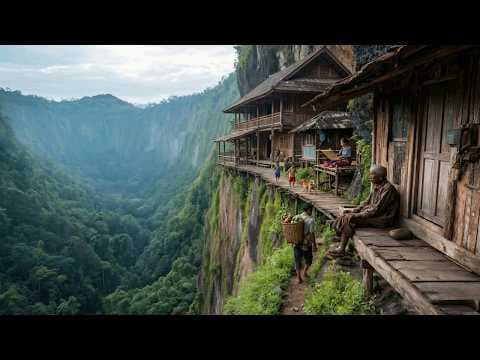
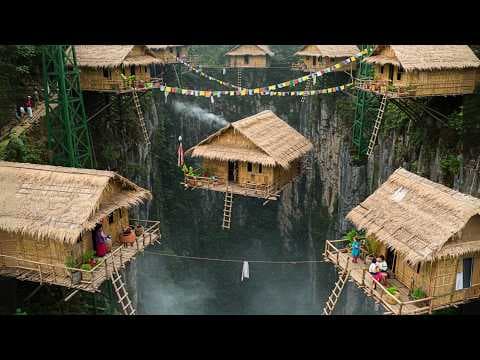
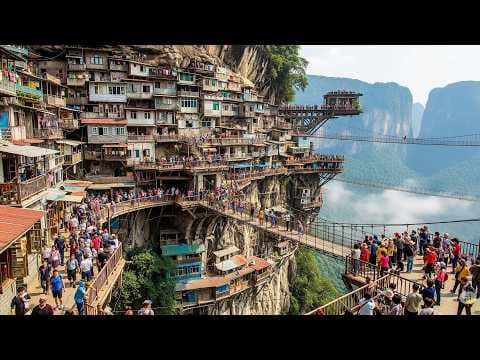
Communities across Asia, Africa, South America, and Europe have established settlements in environments that appear unsuitable for permanent life. Their homes stand on stilts, float on layered reeds, occupy volcanic cones, cling to cliffs, or cluster within remote forests and high mountain valleys where transportation and construction remain difficult.
-
Survival depends on architecture designed around local conditions and materials. Kandavan residents preserve loadbearing volcanic rock, Uros communities continually replace decaying reeds, Lolo Chai builders compress soil into thick walls, and water-based settlements use wooden pillars, walkways, boats, floating gardens, and docks instead of conventional foundations and roads.
-
These settlements preserve distinctive livelihoods and traditions while confronting environmental and social risks. Baja divers depend on underwater fishing, Mongolian nomads move for pasture and train golden eagles, Badui communities limit modern technology, and Ushguli families retain stone defense towers in terrain vulnerable to isolation from heavy snow and landslides.
Read in Other Languages (beta)
Share This Summary 📚
Summarize YouTube Videos and Get Video Transcripts with 1-Click
Try YouTube Summary with ChatGPT & Claude or YouTube Transcript Generator
Explore More Summaries from My Unreal Planet TV 📚
Summarize YouTube Videos and Get Video Transcripts with 1-Click
Try YouTube Summary with ChatGPT & Claude or YouTube Transcript Generator