How Does Book Publishing Work for New Authors?
TL;DR
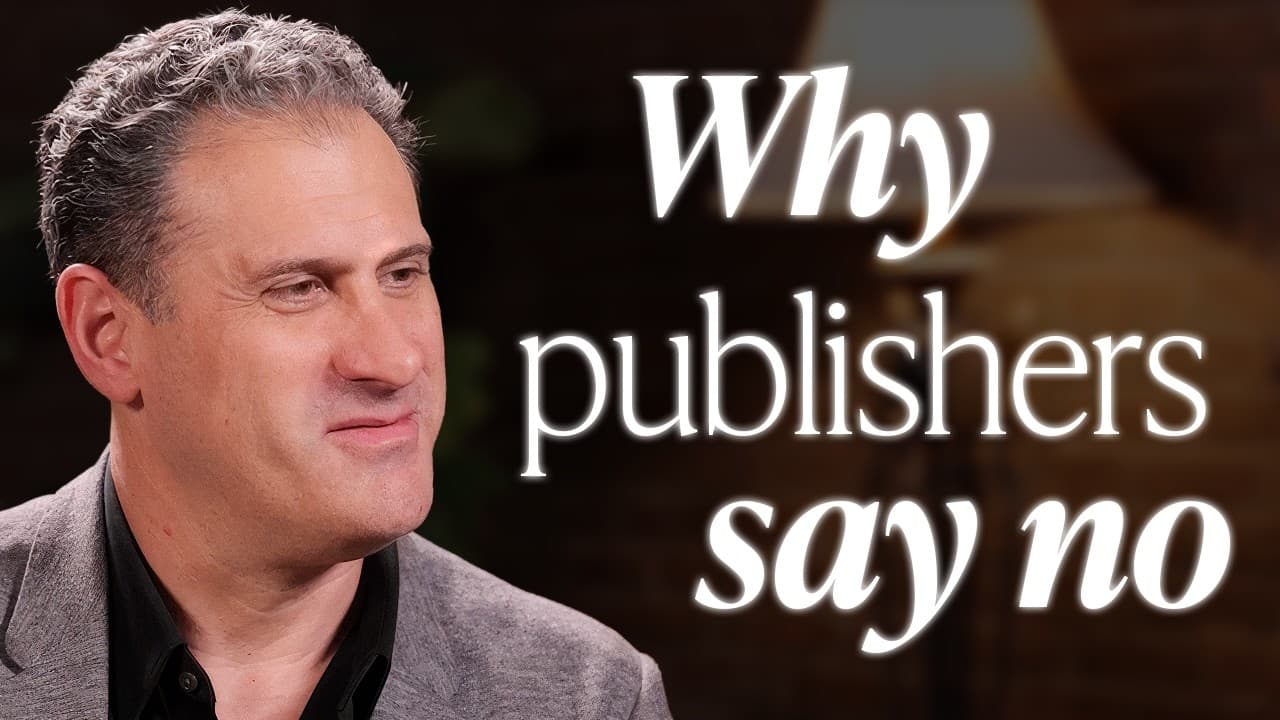
Publishers decide what to acquire by comparing a proposed book with similar titles, estimating its likely sales, and calculating what advance the economics can support. Authors face selective acquisition, but rejection is not a universal judgment: different publishers can value the same manuscript very differently, while format timing, retailer leverage, production costs, and marketing expenses all shape a book’s financial outcome.
Transcript
You ever wonder how the book publishing industry works? Like printing advances? How does the CEO of a top five publishing house even think? Well, that's what this episode's all about. And my guest is John Jaged. He runs McMillan, which is one of the top five publishing houses. And I said, "Look, talk to me like I'm a young writer. I've never publis... Read More
Key Insights
- Book publishing is a relatively low-margin business, and consolidation is intended to create scale while recovering value lost to rising costs and stronger negotiating partners. However, overlapping operations and uneven internal attention can make the combined enterprise less productive than the separate businesses were before consolidation.
- Retailer leverage is a major source of financial pressure on publishers. Large sellers can seek deeper discounts and more promotional assistance, while publishers must also absorb higher author advances and increases in freight, salaries, and printing costs, leaving less flexibility across the value chain.
- Celebrity books are highly visible and can perform at an exceptional level, but their acquisition costs also make them unusually risky. A large advance raises the publisher’s exposure because the publisher bears the loss when sales do not generate enough author royalties to earn back that payment.
- Comparable titles are the starting point for valuing a manuscript. Editors and sales teams identify previously published books that might behave similarly, review available physical sales data, estimate the proposed title’s likely performance, and calculate backward to determine how much the publisher can responsibly offer.
- BookScan provides point-of-sale information for physical books, including sales through Amazon, but it does not include ebook or audiobook sales. Publishers therefore use an important but incomplete view of market performance when comparing titles and forecasting the commercial prospects of a new acquisition.
- An unearned advance is a cost borne by the publisher when a book fails to generate enough royalties to recover the advance. Reported profitability can also depend on accounting treatment, because publishers may assign that expense to the hardcover edition or spread it across the book’s commercial life.
- Paperback timing depends on hardcover performance rather than a completely fixed schedule. Publishers often plan a later paperback edition, but they may postpone it when hardcover sales remain strong because switching formats would reduce the physical price and generally lower the related ebook price.
- Publisher rejection is not a universal verdict on a manuscript’s quality or potential. Editorial teams differ in what they believe will work for their lists, and separate houses may assign very different financial values to the same project, allowing a book rejected by one publisher to succeed elsewhere.
Install to Summarize YouTube Videos and Get Transcripts
Explore YouTube Video Summarizer or Get YouTube Transcript Extractor
Questions & Answers
Q: How do publishers decide how much advance to offer?
Publishers begin by identifying comparable titles that seem likely to behave like the proposed book. Editors and sales teams examine available physical point-of-sale information, consider sales figures presented by agents, and estimate the manuscript’s likely performance. They then work backward through the expected economics to determine how much they can pay while accepting that the forecast may prove wrong.
Q: Why has the book publishing industry consolidated?
Publishing companies consolidate primarily to gain scale and improve profitability in a relatively low-margin business. Publishers face demands for larger retailer discounts and promotional support, along with pressure from author advances, freight, salaries, and printing costs. Consolidation can help recover part of the value chain, although overlapping businesses may receive unequal attention and lose some of their combined productive value.
Q: Why are celebrity book deals risky for publishers?
Celebrity books can become exceptionally successful and are more visible when they work, but publishers often must pay more to acquire them. That higher advance increases the financial risk because the publisher absorbs the cost if the book does not sell enough copies to earn back the advance through royalties. High potential and high acquisition cost therefore rise together.
Q: What sales data do publishers use to evaluate books?
Publishers use BookScan to examine point-of-sale information for physical books, including physical sales made through Amazon. The data helps acquisition and sales teams compare a proposed title with books already in the market. However, it does not include ebook or audiobook sales, so it cannot provide a complete picture of every format contributing to a title’s performance.
Q: What happens when an author advance does not earn out?
An advance remains unearned when the book’s sales do not generate enough royalties to recover the amount already paid to the author. The publisher bears that cost. How the loss appears in profitability calculations can vary because some publishers assign the unearned amount against the hardcover edition, while others distribute it across the commercial life of the book.
Q: When does a publisher release a paperback edition?
Publishers commonly plan the paperback after the hardcover has had time in the market, but the change is not automatic. They monitor the hardcover’s sales trajectory and can postpone the paperback when the higher-priced edition continues performing strongly. Moving to paperback also affects digital pricing because the ebook price generally drops when the physical edition becomes less expensive.
Q: Are paperbacks more profitable than hardcovers?
Profitability depends on royalties, pricing, marketing spending, and how the publisher accounts for any unearned advance. Hardcover royalties are higher than paperback royalties, so a higher selling price does not automatically settle the comparison. Over a long commercial tail, a paperback may be more profitable because much of the marketing expenditure occurred earlier and later sales can continue through word of mouth.
Q: Does a publisher rejection mean a manuscript cannot succeed?
A rejection means the manuscript did not fit that publisher’s assessment, list, or commercial expectations, not that every publisher will reach the same conclusion. Another editorial team may believe the project will work and may value it far more highly. Acquisition decisions contain creative judgment, financial forecasting, and strategic fit, so the same book can receive very different responses across the industry.
Summary & Key Takeaways
-
Publishing is a relatively low-margin business facing pressure from retailer discounts, promotional support, author advances, freight, salaries, and printing costs. Consolidation seeks scale and a larger share of the value chain, but combining businesses can also cause overlap, uneven attention, and lost value when the merged organization produces less than its separate parts.
-
Acquisition teams evaluate manuscripts through comparable titles. Editors and sales teams identify books expected to behave similarly, examine physical point-of-sale data, consider information supplied by agents, estimate likely performance, and work backward to determine an affordable advance. Competing publishers may reach sharply different valuations because their expectations, strategies, and editorial judgments differ.
-
A book’s profitability changes across hardcover, paperback, ebook, and its broader commercial life. Hardcover royalties are higher, while paperback editions can become more profitable over a long tail because much of the marketing spending has already occurred. Publishers may delay paperback release while hardcover demand remains strong, and ebook pricing generally falls with the physical edition.
Read in Other Languages (beta)
Share This Summary 📚
Summarize YouTube Videos and Get Video Transcripts with 1-Click
Try YouTube Summary with ChatGPT & Claude or YouTube Transcript Generator
Explore More Summaries from David Perell 📚
Summarize YouTube Videos and Get Video Transcripts with 1-Click
Try YouTube Summary with ChatGPT & Claude or YouTube Transcript Generator