How to automate a business with AI workflows
TL;DR
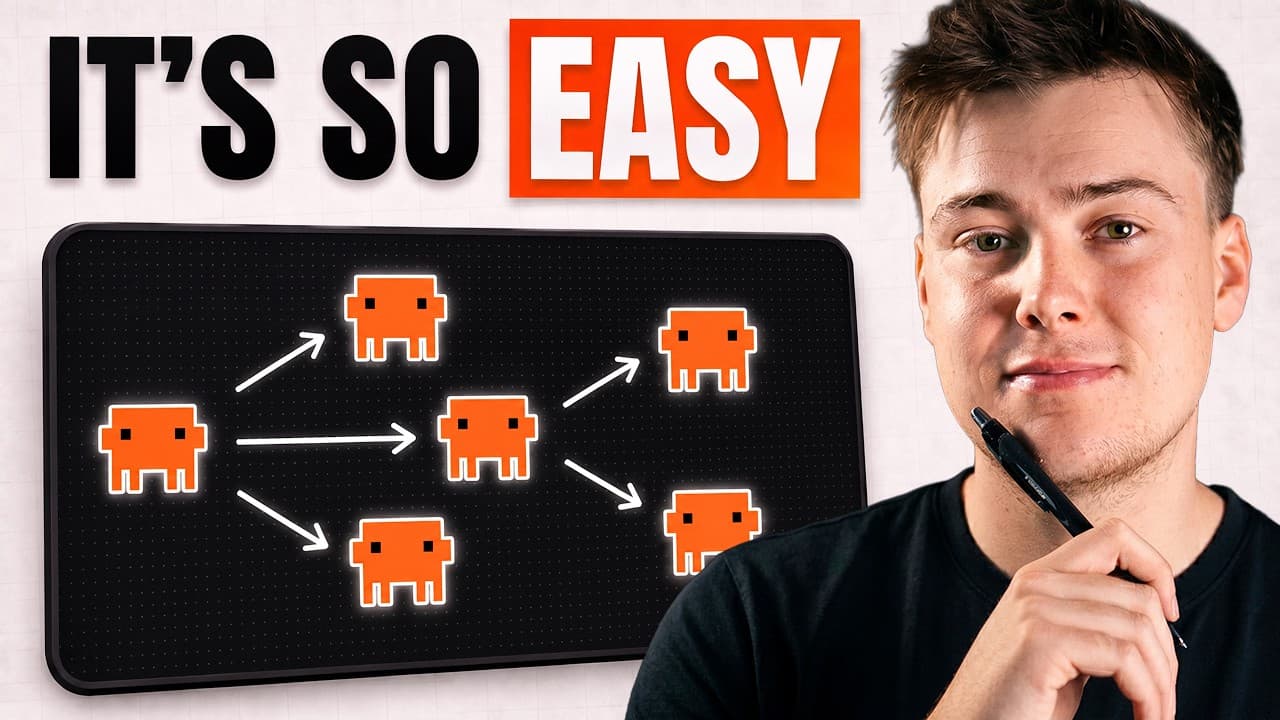
An AI-driven system can replace manual work by auditing every recurring task, breaking it into micro steps, and building a memory of processes. The video shows how to create visual maps and use agents to run the workflows, enabling autonomous operation and continuous evolution of the AI system.
Transcript
This is an outline of my entire 1.2 million follower social media business. And these are the underlying workflows that power it. In the past, I used to do everything myself. When it came to video production, I used to come up with the ideas. I used to script everything. I used to edit everything and then I used to analyze the data myself. When it ... Read More
Key Insights
- AI automation starts with an audit that catalogs every recurring task, assigns a trigger, steps, tools, frequency, and a clone score to prioritize automation opportunities.
- The core idea is to break complex processes into micro steps so AI agents can handle sub tasks and only leave the final decisions or negotiations to humans when necessary.
- A knowledge compression phase converts in head expertise into markdown files that the AI can read and later visualize as maps for clarity and collaboration.
- Visualization tools like interactive HTML mind maps help to depict each workflow clearly, making it easier for agents to follow and for humans to audit.
- Agents can be connected to a project folder and execute a predefined script or prompt chain, enabling consistent replication of workflows across tasks.
- The video emphasizes context building, suggesting one initial session to create a comprehensive profile that the AI uses to ask focused questions and gather accurate workflows.
- A clone score is used to quantify the time saved per month by automating a task and to rank automation priorities accordingly.
- The process culminates in a practical starter kit and prompts that viewers can implement to replicate the system for their own business or life automation needs.
- More videos from this channel:
- More from this channel: AI Edge
Install to Summarize YouTube Videos and Get Transcripts
Explore YouTube Video Summarizer or Get YouTube Transcript Extractor
Questions & Answers
Q: How does the audit determine what to automate in a business workflow
The audit logs every recurring workflow and asks four questions: the trigger, the steps and tools needed, the frequency, and a scoring metric. This score measures how cloneable or automatable a task is, guiding which workflows to automate first and how deeply to automate each one.
Q: What is the role of knowledge compression in AI workflow automation
Knowledge compression takes the knowledge inside your head and condenses it into a series of markdown files. These files become a machine readable base that the AI agents can read, interpret, and extend, enabling the creation of visual maps and scalable automation without repackaging the original expert insights each time.
Q: How are visuals used to support AI workflow automation
Interactive HTML mind maps are used to visualize every process in the business. These maps allow agents and humans to see the sequence of steps, identify dependencies, and review the workflow structure at a glance, which helps ensure consistent execution and easy auditing.
Q: What platforms are mentioned for running AI workflows
The video mentions Claude as a preferred option for this approach, with the possibility to use other systems like Co-Work, GPT, or Codework. The choice depends on how well the platform integrates with the folder structure and the specific task requirements.
Q: Why is an initial context file important for new AIs
An initial context file provides the AI with a starting profile of the business, goals, operations, and team. When switching AI systems, this context helps the AI ask precise questions and map workflows accurately, reducing the time needed to reach functional automation.
Q: What does a clone score evaluate
The clone score evaluates hours per month saved and the repeatability of a task. Higher scores indicate tasks that benefit most from automation, guiding the prioritization process to focus on workflows that will deliver the largest efficiency gains.
Q: How does automation affect video production and content creation
Automation breaks video production into micro steps such as idea sourcing, scripting, editing, and analytics. AI agents can handle many intermediate tasks like drafting hooks, refining grammar, or scoring content, while humans focus on final decisions and high impact aspects.
Q: What is the purpose of the starter kit mentioned in the video
The starter kit provides prompts and a base workflow structure that viewers can copy and customize. It is intended to help users audit their own tasks, create the necessary markdown files and visual maps, and deploy AI agents to begin automating their workflows immediately.
Q: How can a user begin building their own AI powered clone according to the video
Begin by auditing recurring tasks and creating a base workflow library. Then compress knowledge into markdown files, visualize processes with HTML mind maps, and connect these maps to AI agents or code tools. Finally, use a structured prompt chain to run the workflows and iterate to improve accuracy and autonomy over time.
Summary & Key Takeaways
-
This video explains auditing your workflows to identify automatable tasks, then breaking each task into micro steps to create actionable specifications for AI agents. It emphasizes building a memory and context for the AI to improve over time, reducing manual interventions.
-
It demonstrates using markdown files, HTML mind maps, and a Google Sheets-style clone score to prioritize automation. The approach includes a knowledge compression step, visualization, and agent execution to achieve autonomous work.',
Read in Other Languages (beta)
Share This Summary 📚
Summarize YouTube Videos and Get Video Transcripts with 1-Click
Try YouTube Summary with ChatGPT & Claude or YouTube Transcript Generator
Explore More Summaries from AI Edge 📚




Summarize YouTube Videos and Get Video Transcripts with 1-Click
Try YouTube Summary with ChatGPT & Claude or YouTube Transcript Generator