Dan Roberts on What Physics Can Teach Us About AI
TL;DR
Physics equips researchers to understand large neural networks at the system level, the same way thermodynamics explains steam engines or a collection of atoms, rather than tracing every individual parameter. This system-level lens, plus the tight theory-and-experiment feedback loop native to physics, is why so many physicists now flow into leading AI labs like OpenAI.
Transcript
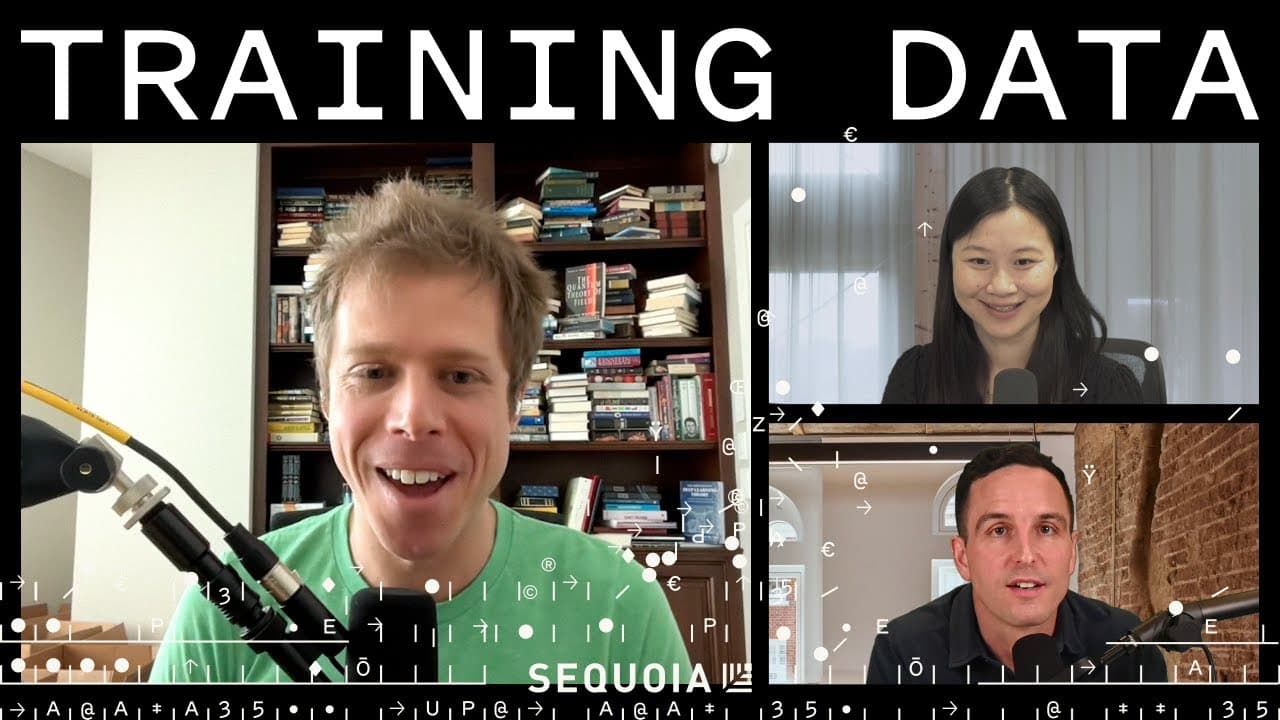
in the 40s the physicists went to the Manhattan Project even if they were doing other things that was that was the place to be and so now ai is the same thing and you know basically said open AI as that place so maybe maybe we don't need a public sector organized Um Manhattan Project but it you know it can be open AI joining us for this episode is ... Read More
Key Insights
- Physicists are drawn to AI because its methods mirror physics: a tight feedback loop between theory and experiment, flexible models fit to data, and math that physicists already know well, making large-scale machine learning feel like familiar scientific work.
- The system-level point of view, borrowed from physics, treats a deep neural network like a large collection of atoms that can be understood collectively rather than by tracing each microscopic parameter, offering a path to interpret otherwise opaque models.
- Intelligence, for Dan Roberts, is best approached through the concrete things humans do that AI can now replicate in a few lines of code, such as classifying whether an image is a cat or writing poetry, making it easier to study than biology-up approaches.
- Good old-fashioned AI, the hard-coded if-this-then-that logic Roberts first learned, initially seemed impractical and unrelated to real intelligence, yet he notes many of those older ideas are now becoming relevant again.
- The statistical, data-driven machine learning approach clicked for Roberts because you write a flexible algorithm that adapts to many examples of a task and starts performing like them, a framework that fit his scientific intuition and borrows heavily from physics.
- Physics differs from traditional computer science in method: it emphasizes toy models, explanatory theories, and validating intuitions against experiments, tools that suit studying large machine learning systems better than standard theoretical CS approaches.
- The historical pipeline for physicists leaving academia ran through quantitative finance and then data science, and machine learning became the newest exciting destination because it resembles real physics while tackling a compelling problem.
- Roberts frames OpenAI as a modern equivalent of where the ambitious go, comparing it to how physicists flocked to the Manhattan Project, suggesting the concentrated AI effort may not need a public-sector organized project because a lab can fill that role.
Install to Summarize YouTube Videos and Get Transcripts
Explore YouTube Video Summarizer or Get YouTube Transcript Extractor
Questions & Answers
Q: Why are so many theoretical physicists moving into AI research?
Roberts says the reasons overlap: physicists apply their tools broadly across subjects, and machine learning genuinely resembles the physics they were trained in. It involves a tight feedback loop between theory and experiment, flexible models fit to data examples, and mathematics physicists already understand. Historically physicists leaving academia went into quantitative finance then data science, and machine learning became the exciting new destination because it feels like real physics while tackling a compelling, high-interest problem that draws widespread excitement.
Q: What does it mean to be intelligent according to Dan Roberts?
Roberts avoids a rigid definition and focuses on the concrete things humans do that can now be replicated in AI. He points to tasks like seeing and classifying whether an image is a cat, or writing poetry, that a system can perform with just a few lines of code. Studying humans requires going from biology through neuroscience and psychology, whereas AI offers simple, easy-to-study examples that may help us better understand what human intelligence actually is.
Q: What is the difference between the microscopic and system-level points of view?
The microscopic view traces individual components, such as the specific lines of code or parameters that cause a system to behave a certain way. The system-level view, drawn from physics, understands the whole collectively, the way thermodynamics describes steam engines or how a large collection of atoms behaves together. Roberts argues deep neural networks may be interpretable at this system level, offering a complementary and powerful way to understand models that appear opaque at the individual level.
Q: How can physics help us understand deep neural networks?
Physics brings a method built on interplay between theory and experiment: you form a theoretical intuition, build toy models, run experiments to validate them, and iterate through a tight feedback loop that yields explanatory theories. Roberts says big deep learning systems allow exactly this kind of rapid experimentation, and the relevant mathematics matches what physicists already know. These tools differ from traditional theoretical computer science and are well suited to studying large-scale machine learning systems and their emergent behavior.
Q: How did Dan Roberts become interested in AI?
In college Roberts took an AI class centered on good old-fashioned, hard-coded if-this-then-that logic and some game playing, which seemed algorithmic but unrelated to real intelligence, so he initially wrote it off. During graduate school in the UK he discovered machine learning and a statistical approach that fit data examples with flexible algorithms. That framework made scientific sense to him, borrowed from physics, and coincided with deep learning's early real progress, which got him genuinely excited about the field.
Q: Why did Dan Roberts choose physics over other fields?
Roberts describes himself as an annoyingly curious child who never stopped asking why and wanting to know how everything works, comparing it to how his young son follows a repairman to peer inside a washing machine. Because he was more quantitatively oriented than philosophical, he veered toward physics rather than the humanities. Physics let him ask what the world is made of and how it works within rigorous, quantitative frameworks, which he found deeply exciting throughout his career.
Q: What is the analogy between steam engines and AI systems?
Roberts uses the industrial revolution as more than an analogy. Around the era of steam power, engineers first built steam engines through trial and hands-on engineering, and only later did a high-level theory called thermodynamics explain how they worked at the system level. He suggests AI is following a similar path: powerful systems are being engineered now, and a system-level theoretical understanding, informed by physics, can emerge to explain how these large models function collectively.
Q: Why is OpenAI compared to the Manhattan Project?
Roberts observes that in the era of the Manhattan Project, physicists gathered there because it was the place to be, even if their prior work was different. He argues AI is now that gravitational center for ambitious researchers, and suggests OpenAI can serve that role. Rather than needing a public-sector organized Manhattan Project for AI, a concentrated private lab like OpenAI can fill the same function of drawing top talent toward the defining problem of the moment.
Summary & Key Takeaways
-
Dan Roberts, a quantum physicist who studied invisibility cloaks in college and trained at MIT and Princeton's Institute for Advanced Study, joined OpenAI as a researcher and became a core contributor to the o1 model. He applies theoretical physics tools to understanding deep neural networks and co-authored The Principles of Deep Learning Theory.
-
Roberts traces his path from an endlessly curious child asking how things work, into physics rather than philosophy because he was quantitatively oriented. He first dismissed the hard-coded AI he learned in college, then discovered statistical machine learning in grad school, which fit his scientific framework and coincided with deep learning's early breakthroughs.
-
The core argument is that physics offers a system-level view: like thermodynamics explaining steam engines during the industrial revolution, or understanding a mass of atoms collectively, large neural networks may be interpretable at the aggregate level. This complements the microscopic view of tracing individual code, and explains the influx of physicists into AI labs.
Read in Other Languages (beta)
Share This Summary 📚
Summarize YouTube Videos and Get Video Transcripts with 1-Click
Try YouTube Summary with ChatGPT & Claude or YouTube Transcript Generator
Explore More Summaries from Sequoia Capital 📚




Summarize YouTube Videos and Get Video Transcripts with 1-Click
Try YouTube Summary with ChatGPT & Claude or YouTube Transcript Generator