How Can I Improve My Self-Discipline Quickly?
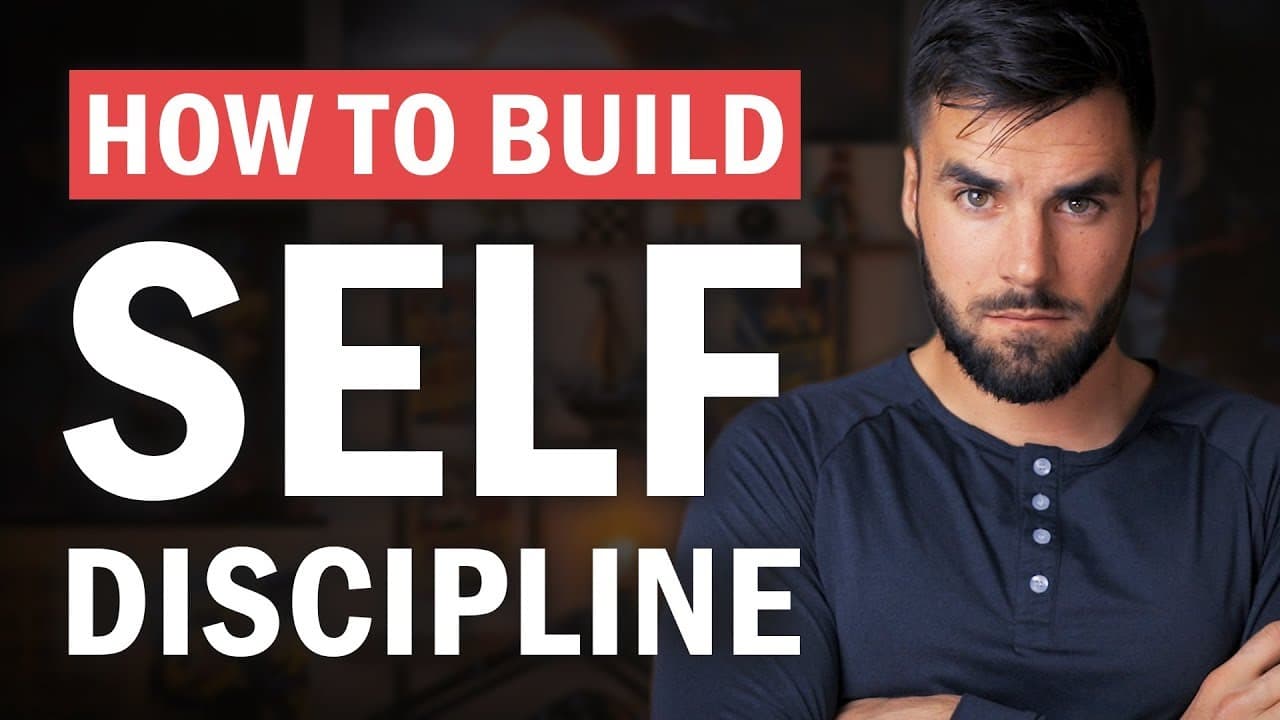
TL;DR
To quickly improve self-discipline, focus on shifting your identity to align with the habits you want to develop. Embrace discomfort, maintain healthy sleep and nutrition, and practice meditation to enhance emotional regulation. Additionally, remind yourself of your motivations consistently for sustained commitment.
Transcript
- Hey, what is goin' on guys? So today we are gonna be covering six important strategies for improving your level of self-discipline. Now before we get into the nitty gritty, I do wanna take a brief moment to define what exactly self-discipline is, because when I asked you guys to tell me about your problems with discipline on Twitter the other day... Read More
Key Insights
- 💭 Self-discipline involves acting in accordance with your thoughts, not your feelings.
- 🥅 A shift in mindset, focusing on the change in identity, can be more effective than merely aiming for external goals.
- 🤳 Reminding yourself of your why can help maintain motivation and self-discipline.
- 🤳 Embracing discomfort and resistance helps develop self-discipline as a skill.
- 😪 Prioritizing sleep, nutrition, and exercise supports cognitive functions necessary for self-discipline.
- 🤳 Meditation has scientifically shown benefits in improving self-discipline and emotional regulation.
- 🤳 Building new habits fosters self-discipline and automates desired behaviors.
Install to Summarize YouTube Videos and Get Transcripts
Explore YouTube Video Summarizer or Get YouTube Transcript Extractor
Questions & Answers
Q: How does self-discipline differ from motivation?
Self-discipline involves taking action regardless of how you feel, while motivation refers to your desire to do something. Self-discipline is crucial for acting in alignment with your long-term goals, even when you don't feel motivated.
Q: How can I change my mindset to improve self-discipline?
Instead of focusing on external goals, start thinking about the change in identity you want to embody. Embracing a new identity, such as seeing yourself as an athlete, can help you act in alignment with your desired behaviors.
Q: Why is embracing discomfort important for self-discipline?
Embracing discomfort allows you to practice self-discipline as a skill and build the necessary muscle. It improves your ability to resist the "I don't feel like it" excuse and act in defiance of resistance.
Q: How can meditation enhance self-discipline?
Meditation has been scientifically shown to improve self-discipline by helping individuals regulate their emotions and make rational decisions. It cultivates focus and concentration, both of which are essential for self-discipline.
Q: Why are sleep, nutrition, and exercise crucial for self-discipline?
Prioritizing your health fundamentals provides the energy and rest needed for optimal executive functioning in the brain. Taking care of your sleep, nutrition, and exercise habits ensures peak performance for self-discipline.
Q: How can building new habits improve self-discipline?
Building new habits requires initial self-discipline to establish the behavior. Practicing new habits not only helps develop self-discipline but also enables behaviors to become automatic over time.
Key Insights:
- Self-discipline involves acting in accordance with your thoughts, not your feelings.
- A shift in mindset, focusing on the change in identity, can be more effective than merely aiming for external goals.
- Reminding yourself of your why can help maintain motivation and self-discipline.
- Embracing discomfort and resistance helps develop self-discipline as a skill.
- Prioritizing sleep, nutrition, and exercise supports cognitive functions necessary for self-discipline.
- Meditation has scientifically shown benefits in improving self-discipline and emotional regulation.
- Building new habits fosters self-discipline and automates desired behaviors.
- Practice, consistency, and celebrating progress are key to improving self-discipline.
Summary & Key Takeaways
-
Self-discipline is about leaning into resistance and acting in accordance with your thoughts, not your feelings.
-
To improve self-discipline, shift your focus from external goals to the change in identity you want to achieve.
-
Remind yourself of why you're being disciplined to stay motivated.
-
Embrace discomfort and resistance to develop self-discipline as a skill.
-
Prioritize your sleep, nutrition, and exercise habits to support your overall self-discipline.
-
Consider incorporating meditation into your routine, as it has been shown to improve self-discipline.
-
Practice building new habits to enhance self-discipline and make desired behaviors automatic.
Read in Other Languages (beta)
Share This Summary 📚
Summarize YouTube Videos and Get Video Transcripts with 1-Click
Try YouTube Summary with ChatGPT & Claude or YouTube Transcript Generator
Explore More Summaries from Thomas Frank 📚






Summarize YouTube Videos and Get Video Transcripts with 1-Click
Try YouTube Summary with ChatGPT & Claude or YouTube Transcript Generator