How Can Collaboration Deliver Impact in AI for Science? | AI for Science Forum
TL;DR
AI science collaboration can deliver impact by treating AI as a scientific instrument while connecting disciplines, organizations, and differently trained researchers around clear questions and shared definitions of success. AlphaFold demonstrates how curated data and a distributed collective can support progress without a single centralized project. Read on to explore how permeable boundaries, deliberate coordination, and ARIA’s people-then-projects model can turn ambitious research into public benefit.
Transcript
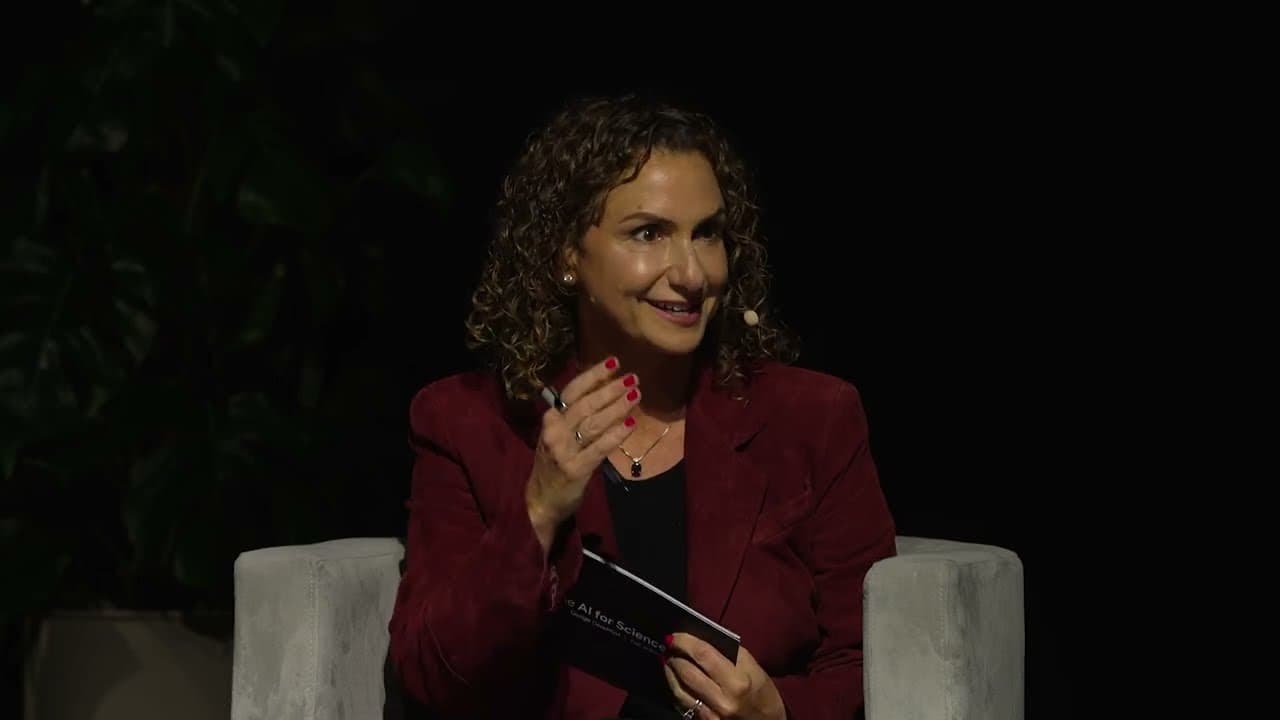
[APPLAUSE] LILA IBRAHIM: I am delighted to have you with me to talk about the evolving role of science and how to best collaborate for impact with the theme for today, really about how do we pave the path for the future. I've been through a lot of technology changes in my career, and I feel like we're at an inflection point. And I want to first sta... Read More
Key Insights
- Modern science is increasingly expansive and complex, which has encouraged the formation of self-referential disciplinary silos. Breaking those silos requires researchers to communicate and interact across fields before productive collaboration can reliably emerge.
- AI is becoming a new scientific instrument, but it should remain integrated with the wider scientific community. Greater permeability can prevent AI expertise from becoming a separate priesthood disconnected from researchers, institutions, and scientific questions.
- Interdisciplinary collaboration is not automatically effective because professions have different languages, training traditions, hierarchies, and working methods. Institutions must deliberately create conditions that help participants understand one another and combine their expertise productively.
- AlphaFold depended on a distributed collective that assembled and curated the required data rather than a single centrally controlled project. Its clearly stated protein-shape question also made it possible to compare competing approaches against an understandable measure of success.
- Scientific disciplines differ in how they identify open questions. Mathematics and physics can gather around recognized problems, while biology contains a broader and less centralized range of questions, making agreement about shared research priorities more difficult.
- Biological discovery can benefit from relatively unfocused research organizations that accommodate diverse problems and researchers. Such organizations need mechanisms that capture knowledge and approaches that work, rather than focusing only on generating more research activity.
- Innovation is fundamentally pursued by people and intended for people. Research organizations therefore need to consider who performs the work, which environments and incentives support them, what motivates their efforts, and who will ultimately receive the benefits.
- ARIA uses a people-then-projects model to pursue difficult breakthroughs. Limited-term scientists and engineers develop research theses and organize constellations of projects that cross disciplines, institutional types, and technology readiness levels while pursuing a focused target.
Install to Summarize YouTube Videos and Get Transcripts
Explore YouTube Video Summarizer or Get YouTube Transcript Extractor
Questions & Answers
Q: How can AI science collaboration deliver impact?
AI science collaboration can deliver impact by keeping AI connected to the wider scientific community and increasing permeability across disciplines. Researchers also need clearly articulated questions, shared definitions of success, carefully curated data, and deliberate ways to bridge differences in language, training, hierarchy, and working practices.
Q: How should scientific institutions integrate AI into research?
Institutions should treat AI as a new scientific instrument while preventing its specialists from becoming a separate priesthood. That requires interaction across disciplines and organizations, including universities, industrial groups, and commercial organizations, as well as careful attention to how differently trained people communicate and work together.
Q: Why do scientific silos make AI collaboration difficult?
The expansion and growing complexity of science have produced more self-referential silos. These silos reduce communication between fields, potentially separating AI expertise from the scientific questions and communities it should support.
Q: Why is interdisciplinary collaboration more than assembling experts?
Different professions bring distinct languages, training traditions, hierarchies, and ways of working. Simply mixing disciplines does not guarantee success, so organizations must deliberately create conditions that help participants communicate, understand one another, and contribute effectively.
Q: What makes a scientific question suitable for collective research?
A suitable question is clearly articulated and has an understandable definition of success. This gives contributors a common objective, allows competing approaches to be compared, and helps people gather around the same problem.
Q: What does AlphaFold show about distributed scientific collaboration?
AlphaFold depended on a distributed collective that assembled and curated the necessary data rather than one centrally controlled project. Its clearly stated question, how a DNA sequence makes a shaped protein, also enabled researchers to compare results and recognize better approaches.
Q: Why is choosing a shared research question harder in biology?
Mathematics and physics can organize around recognized open problems, while biology has a broader and less centralized range of questions. That makes deciding what biologists should pursue together an important challenge in its own right.
Q: How does ARIA organize high-risk scientific research?
ARIA follows a people-then-projects model, recruiting scientists and engineers for limited three-to-five-year terms to develop focused research theses. They then mobilize constellations of projects spanning disciplines, institutional types, and technology readiness levels while considering the people doing the work and those who may ultimately benefit.
Summary & Key Takeaways
-
Science has expanded and become more complex, creating self-referential disciplinary silos. AI makes it especially important to increase communication and permeability across those boundaries. Successful collaboration requires more than assembling experts: institutions must address differences in professional training, hierarchy, language, incentives, organizational culture, and ways of working together.
-
AlphaFold illustrates how distributed contributors can collectively support major scientific progress through extensive data curation and a sharply defined question. Clear questions allow researchers to gather around a common objective and compare results. However, disciplines differ in how readily they agree on their most important open problems, making collective priority setting difficult.
-
ARIA organizes high-risk research around a people-then-projects approach. It recruits scientists and engineers for limited three-to-five-year terms to develop focused theses, then mobilizes constellations of projects spanning disciplines, institutional types, and technology readiness levels. The model emphasizes human judgment, research environments, motivation, and the people who may ultimately benefit.
Read in Other Languages (beta)
Share This Summary 📚
Summarize YouTube Videos and Get Video Transcripts with 1-Click
Try YouTube Summary with ChatGPT & Claude or YouTube Transcript Generator
Explore More Summaries from Google DeepMind 📚

Summarize YouTube Videos and Get Video Transcripts with 1-Click
Try YouTube Summary with ChatGPT & Claude or YouTube Transcript Generator