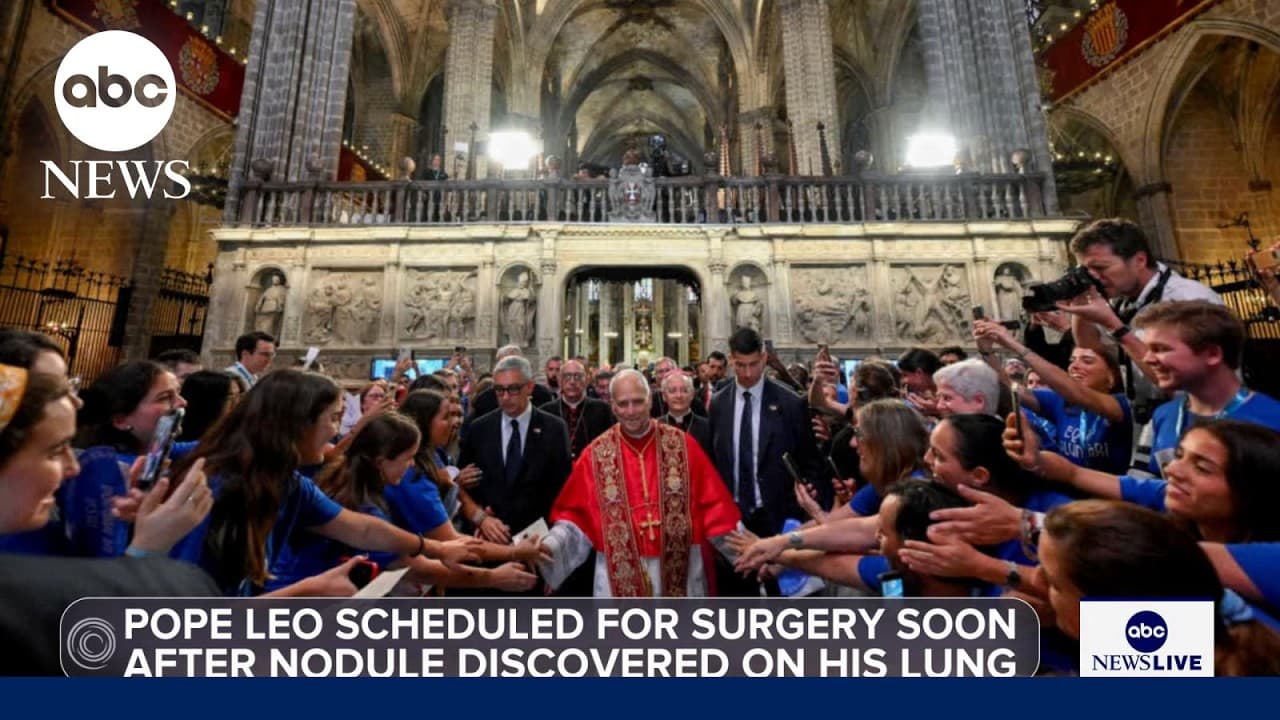
How will Pope Leo's upcoming surgery affect his health?
TL;DR
The Vatican says the Pope has a localized issue that will be fixed with a simple surgery, and he is in good health for his age. He plans to travel to South America after the procedure, and the tone from authorities is cautious but reassuring. Public prayers are being organized around the event.
Transcript
Today's top searches are only a part of the story. A simple scroll can sometimes take you down that deep rabbit hole. It's time now for the spiral. Okay. And it feels like the whole world right now is talking about Pope Leo. So, we're following your clicks and curiosity and looks like you want to know more about that surgery he has planned and more... Read More
Key Insights
- Pope Leo is 71 years old and in good health for his age.
- The Vatican characterized the issue as localized and manageable with simple surgery.
- The pope is expected to be home within about a week after surgery.
- A lung nodule was discussed as a segue to explain medical assessment concepts.
- Lung nodules are common on CT scans, with most being benign.
- Screening for lung cancer is emphasized for those with smoking history.
- Treatment for nodules is usually surveillance rather than immediate intervention.
- Public prayers reflect communal response to the Pope’s health event.
Install to Summarize YouTube Videos and Get Transcripts
Explore YouTube Video Summarizer or Get YouTube Transcript Extractor
Questions & Answers
Q: What is the Vatican saying about Pope Leo's surgery and prognosis?
The Vatican says Pope Leo has a localized issue that will be addressed with a simple surgery. They indicate the condition is contained, not spreading, and that the Pope is in good health for his age. He is expected to undergo the procedure this week and to return home soon after, aiming to continue his duties and travel plans.
Q: How old is Pope Leo and what is known about his health and activity level?
Pope Leo is 71 years old. Reports describe him as in good health and active, enjoying tennis, swimming, and horseback riding. The context suggests he maintains a high level of fitness, which is noted as a positive factor in facing the upcoming surgery. Details emphasize routine health checks rather than acute illness.
Q: What did the host say about the Pope’s attitude during the announcement?
The host described the Pope as looking chill during the Angelus, implying a calm and composed demeanor about the surgery. This tone is used to convey reassurance to the public that the situation is under control and that there is no need for heightened worry.
Q: What is a lung nodule and why is it relevant to the discussion?
A lung nodule is a small growth that can appear on imaging, caused by inflammation, prior infections, or scars. It is relevant because the discussion uses the Pope’s localized lung finding as a springboard to explain what makes a nodule dangerous, and how doctors determine the next steps based on appearance and change over time.
Q: How common are lung nodules and what percentage are benign according to the experts in the video?
Lung nodules are quite common, with estimates suggesting that about one in four CT scans will show a nodule. The majority of nodules, around 95 percent in the discussion, are benign. This statistic helps contextualize why many nodules are monitored rather than immediately treated.
Q: What are the general recommendations for lung cancer screening mentioned in the video?
The general recommendation highlighted is that adults between 50 and 80 with a smoking history should talk to their doctor about a low-dose CT scan for annual screening. The discussion notes that more than 80 percent of those who qualify do not receive these screenings, underscoring a gap in preventive care.
Q: What determines whether a lung nodule is dangerous or not?
Danger assessment depends on the nodule’s shape, size, and whether it changes over time. A small, smooth, circumscribed nodule is typically less concerning, while a large, irregular nodule that changes could be more worrisome. Individual patient history and risk factors influence the next steps, including surveillance or biopsy.
Q: What are the typical treatments for lung nodules and who decides the course?
Most nodules are not treated directly and are instead monitored with follow-up imaging. In some cases, if history suggests higher risk, a biopsy may be performed or a portion of the nodule removed. The exact plan is tailored to the patient’s history, smoking status, and family history, guided by medical evaluation.
Summary & Key Takeaways
-
Pope Leo is 71 and in generally good health, with an active lifestyle that includes tennis and swimming. The surgery is described as localized and routine, not indicating a broader health crisis. Officials expect a short hospital stay and a quick return to duties.
-
The discussion covers the rarity of serious lung nodules, how nodules are assessed by shape and change over time, and the role of screening in detecting potentially dangerous conditions.
-
Public reaction features prayers and rosaries being organized, reflecting a supportive, faith-based community response to the Pope's surgery.
Read in Other Languages (beta)
Share This Summary 📚
Summarize YouTube Videos and Get Video Transcripts with 1-Click
Try YouTube Summary with ChatGPT & Claude or YouTube Transcript Generator
Explore More Summaries from ABC News 📚




Summarize YouTube Videos and Get Video Transcripts with 1-Click
Try YouTube Summary with ChatGPT & Claude or YouTube Transcript Generator