How to Build Better Digital Products and Teams
TL;DR
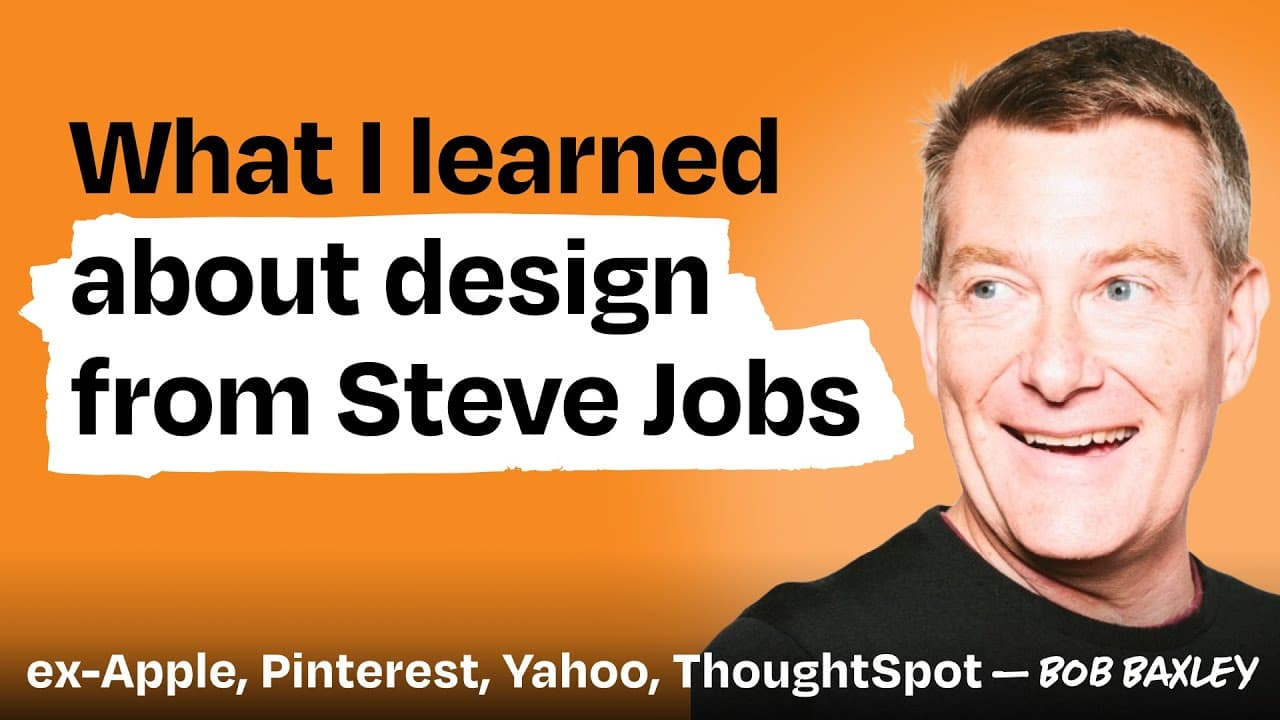
Great product design begins by imagining a desirable future and taking concrete steps to make it real. Product teams have a moral obligation to reduce the frustration created by everyday digital interactions, while companies must embed design values in their culture from the beginning, preserve those values during transitions, and adapt their behaviors to each organization.
Transcript
Almost everyone living in a modern economy now is going to have hundreds of interactions with a phone or with a computer. And unfortunately, a lot of those interactions are not going to be great. We have an obligation as product people to put that emotional energy back into people's lives. You actually have a really unique perspective on just... Read More
Key Insights
- Design is the practice of imagining a future worth living in and taking deliberate steps to make it real. This definition treats design as an active process of shaping outcomes, rather than decorating a product after its essential decisions have already been made.
- Software makers have a moral obligation to reduce frustration because people in modern economies experience hundreds of daily interactions with phones and computers. Poor interactions consume emotional energy, while thoughtfully made products can return some of that energy to people's lives.
- A design-led company is not necessarily designer-led. Design leadership means that product quality, customer care, and thoughtful decision-making are embedded throughout the organization, rather than placing designers above engineering, product, or other functions in the corporate hierarchy.
- Design culture must exist in a company's foundational DNA because Baxley has never seen it successfully added after the fact. A genuine commitment to design shapes decisions, behavior, standards, and even small operational details across the entire organization.
- Apple's enduring achievement is its culture of continuous improvement. Baxley describes an organization where people repeatedly asked how their work could become slightly better, applying that mindset to major technology products, the checkout experience, the cafeteria, and even a reinvented pizza box.
- Strong corporate cultures shape behavior far beyond formal processes. Employees internalize standards, communication habits, and assumptions so deeply that moving directly into another powerful culture can create friction, even when their underlying values remain valuable and relevant.
- Successful cultural transitions preserve values while changing behaviors. Baxley recommends retaining qualities such as attention to detail, product excellence, and commitment to users, then learning how those qualities can be expressed appropriately within the norms of the new organization.
- Baxley's Pinterest experience shows that directness and intense debate are culturally dependent behaviors. He brought an Apple-style approach of fighting hard while caring about colleagues, but that behavior did not fit Pinterest's culture at the time, causing him to bounce off the organization.
Install to Summarize YouTube Videos and Get Transcripts
Explore YouTube Video Summarizer or Get YouTube Transcript Extractor
Questions & Answers
Q: What is product design according to Bob Baxley?
Product design is the act of imagining the future people want to live in and then taking the practical steps needed to make that future real. This definition emphasizes intention and execution together. Design is therefore not limited to producing screens or prototypes. It guides decisions about what should exist, how it should work, and how it should affect people's lives.
Q: Why do software makers have a moral obligation to build better products?
Software makers have a moral obligation because people living in modern economies may have hundreds of interactions with phones and computers, and many of those interactions are frustrating. Each poor experience consumes attention and emotional energy. Product teams can reduce that burden by building thoughtful, reliable interactions that return emotional energy to users instead of repeatedly taking it away.
Q: What does it mean for a company to be design-led?
A design-led company makes design values part of how the whole organization thinks and acts. It does not mean that designers control the company or outrank other disciplines. Product quality, customer care, attention to detail, and thoughtful decision-making must influence work across functions. Baxley argues that this orientation must be present in the company's foundational DNA rather than added later.
Q: How did Apple's culture encourage better product design?
Apple's culture encouraged people throughout the company to ask how whatever they were working on could become a little better. That expectation applied not only to products such as the online store and App Store, but also to ordinary organizational experiences, including reception, checkout systems, the cafeteria, and a reinvented pizza box. Continuous improvement became a shared behavior across the company.
Q: Why can former Apple employees struggle at other companies?
Former Apple employees can struggle because Apple's powerful culture deeply shapes their standards, communication style, and everyday behavior. Other companies may hire them for values associated with Apple, including attention to detail, product excellence, and devotion to users, but may not respond well to Apple-specific behaviors. Moving successfully requires separating durable values from habits that only worked in the previous environment.
Q: How should someone adapt when moving between strong company cultures?
Someone moving between strong cultures should preserve the values that made their previous work effective while recalibrating how those values are expressed. Baxley recommends keeping commitments such as customer care and product excellence, then studying the new organization's norms before acting. A gap between roles can also provide time to shed old habits and enter the next culture with greater flexibility.
Q: Why did Bob Baxley describe his Pinterest role as unsuccessful?
Baxley said he bounced off Pinterest's culture because he arrived expecting to behave as he had at Apple. His Apple approach was direct, intense, and willing to fight hard over the work while still caring about colleagues. Pinterest operated differently at the time. He did not sufficiently recalibrate his behavior, even though the product values motivating that behavior remained important.
Q: Why should product teams delay drawing or prototyping ideas?
Baxley recommends waiting as long as possible before drawing a picture or creating a prototype. The description presents this as a counterintuitive product-design lesson, linking it to the broader practice of improving craft and decision-making. Delaying visual representation gives a team more time to examine the intended future and discuss the underlying idea before a concrete artifact begins directing attention.
Summary & Key Takeaways
-
Bob Baxley defines design as imagining the future people want to inhabit and then taking the steps required to make it real. Because modern life includes hundreds of interactions with phones and computers, product teams should treat reducing frustration and restoring emotional energy as a moral obligation, not merely a business preference.
-
Apple demonstrates how product excellence can become an organizational habit rather than a function owned only by designers. Its culture continually asked how every detail could become better, from major products to cafeteria packaging. Baxley argues that such design leadership must exist in a company's foundational DNA because it cannot simply be grafted on later.
-
Baxley's difficult transition from Apple to Pinterest illustrates why successful behavior in one strong culture may fail in another. New employers may value the principles someone brings, such as attention to detail and customer care, without welcoming the same communication style. Effective transitions require time, recalibration, humility, and culturally appropriate expression of durable values.
Read in Other Languages (beta)
Share This Summary 📚
Summarize YouTube Videos and Get Video Transcripts with 1-Click
Try YouTube Summary with ChatGPT & Claude or YouTube Transcript Generator
Explore More Summaries from Lenny's Podcast 📚




Summarize YouTube Videos and Get Video Transcripts with 1-Click
Try YouTube Summary with ChatGPT & Claude or YouTube Transcript Generator