What Are Ultra-High Energy Cosmic Rays and Their Origins?
TL;DR
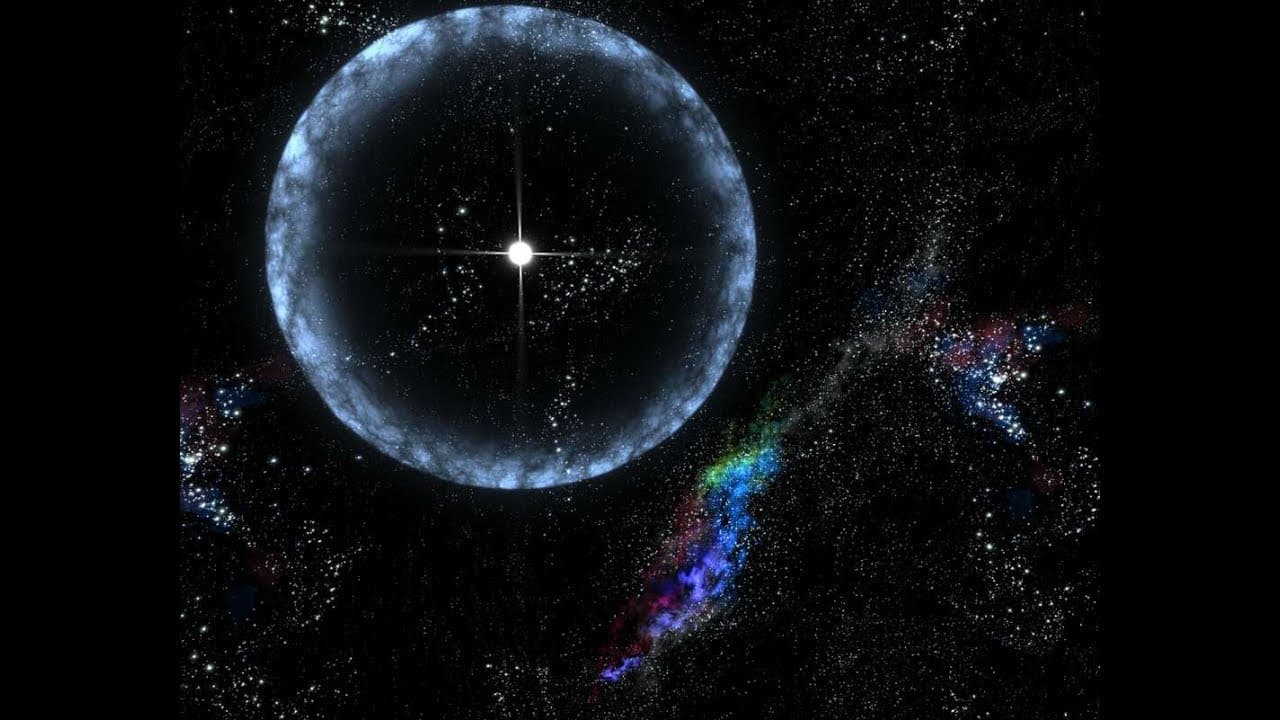
Ultra-high energy cosmic rays are atomic nuclei traveling at extreme speeds, with energies millions of times greater than those produced in particle accelerators. Their origins may be linked to processes involving dark matter decay near black holes or the transition of neutron stars into quark stars, but their exact source remains a mystery.
Transcript
Our universe is full of mysterious phenomena that often make physicists scratch their heads. I like to cover those topics on this channel, usually in the form of weird stars or interesting planets, in other words large objects. But mysteries in science can also come in small packages, this particular one being a single atomic nucleus. But it wasn't... Read More
Key Insights
- ✋ Ultra-high energy cosmic rays challenge physicists' understanding of particle acceleration, as they possess energies millions of times greater than what can be achieved in particle accelerators.
- 🙌 The rarity of these cosmic rays makes their study challenging, with only a few detected since 1991.
- ✋ Possible sources for ultra-high energy cosmic rays involve abnormal states of matter, such as dark matter or strange matter.
- 🥺 Dark matter decay near black holes may lead to the creation of high energy particles interacting with normal matter.
- 🤩 Strange matter, a hypothetical form of matter composed of quarks, could potentially be generated during the transition from neutron stars to quark stars.
- 🏑 Understanding the properties and behaviors of dark matter and strange matter remains an ongoing challenge in the field of physics.
- ✋ The exact origin of ultra-high energy cosmic rays is likely to remain mysterious for a long time due to the complex nature of theoretical physics and astronomy.
Install to Summarize YouTube Videos and Get Transcripts
Explore YouTube Video Summarizer or Get YouTube Transcript Extractor
Questions & Answers
Q: What is the significance of the ultra-high energy cosmic ray detected in 1991?
The extreme energy of this cosmic ray puzzled scientists due to its equivalent kinetic energy to a baseball traveling at 60 miles per hour, and it remains unclear how matter can be accelerated to such speeds.
Q: What are some suggested sources for ultra-high energy cosmic rays?
Possible sources include spinning black holes, pulsars, neutron stars, and abnormal states of matter like dark matter decay or the combustion of neutron stars into quark stars.
Q: How do normal cosmic rays differ from ultra-high energy cosmic rays in terms of composition?
While normal cosmic rays are typically composed of protons or helium nuclei, recent evidence suggests that ultra-high energy cosmic rays may consist of iron nuclei, adding to the mystery surrounding their origins.
Q: What is the role of dark matter in the hypothesis for the origin of ultra-high energy cosmic rays?
The decay of a heavy particle of dark matter, resulting in the production of high energy cosmic rays, is proposed in one hypothesis, but due to the elusive nature of dark matter, the mechanics of this process remain largely unknown.
Summary & Key Takeaways
-
On October 15, 1991, a single atomic nucleus was detected traveling at an extreme speed, equivalent to a baseball traveling at 60 miles per hour, challenging scientists with its energy.
-
These ultra-high energy cosmic rays remain rare, with recent studies proposing Ursa Major as a potential source and the possibility of them being iron nuclei.
-
Hypothesized mechanisms for the origin of these cosmic rays involve abnormal states of matter, such as dark matter decay or the combustion of neutron stars into quark stars.
Read in Other Languages (beta)
Share This Summary 📚
Summarize YouTube Videos and Get Video Transcripts with 1-Click
Try YouTube Summary with ChatGPT & Claude or YouTube Transcript Generator
Explore More Summaries from John Michael Godier 📚



Summarize YouTube Videos and Get Video Transcripts with 1-Click
Try YouTube Summary with ChatGPT & Claude or YouTube Transcript Generator