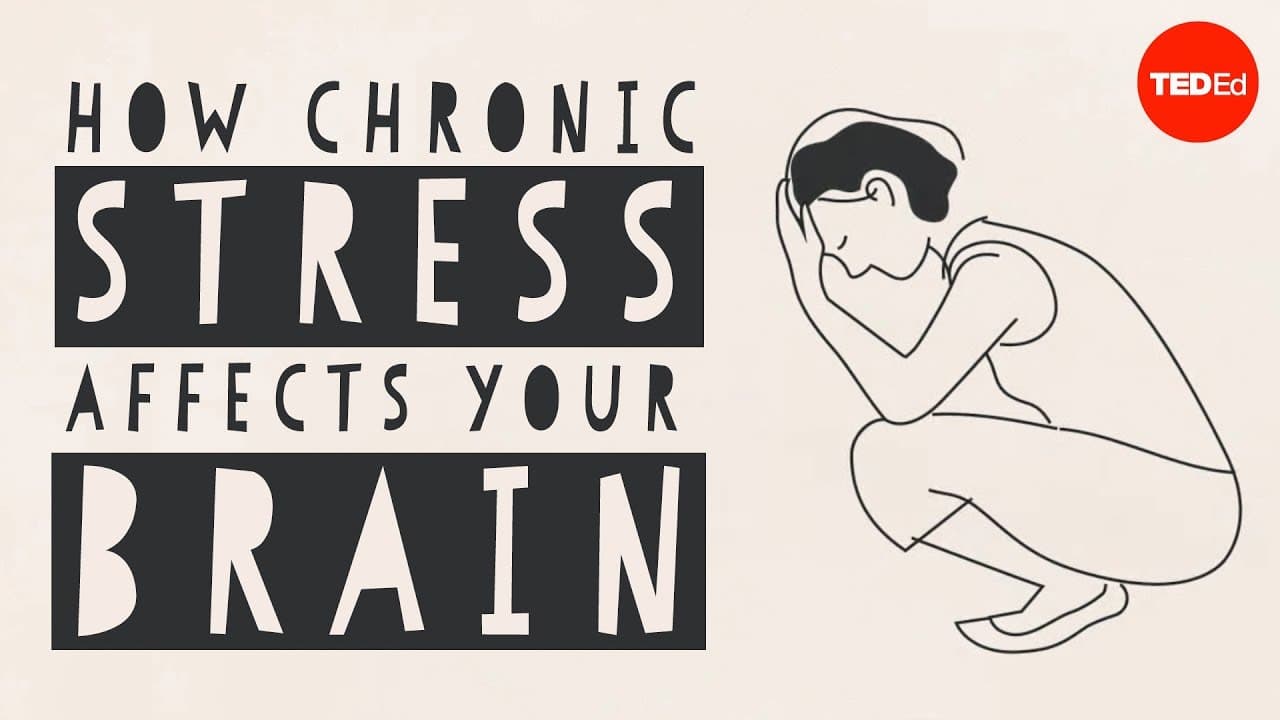
How stress affects your brain - Madhumita Murgia
TL;DR
Chronic stress negatively alters brain function, impacting memory and cognitive abilities due to elevated cortisol levels, which can shrink brain regions and hinder learning. However, the effects can be reversed through lifestyle changes like exercise and meditation, which improve memory and reduce stress.
Transcript
Are you sleeping restlessly, feeling irritable or moody, forgetting little things, and feeling overwhelmed and isolated? Don't worry. We've all been there. You're probably just stressed out. Stress isn't always a bad thing. It can be handy for a burst of extra energy and focus, like when you're playing a competitive sport, or have to speak in publ... Read More
Key Insights
- 🧠 Chronic stress can alter brain structure and function, impacting memory and cognitive abilities negatively.
- 🥺 Cortisol released during stress can lead to the shrinking of the brain and hinder the hippocampus' ability to regulate stress.
- 🛟 Epigenetic changes from stress can affect future generations, influencing how individuals respond to stress throughout life.
- 🧠 Exercise and meditation are effective in reversing the effects of chronic stress on the brain, improving memory, and reducing stress levels.
- 🧠 The impact of chronic stress on the brain is reversible with lifestyle changes like exercise and meditation.
- 🥺 Neglectful parenting can lead to increased sensitivity to stress in offspring due to epigenetic changes.
- 🧠 Cortisol wreaks havoc on the brain by affecting neural connections and shrinking brain regions associated with cognition and behavior.
Install to Summarize YouTube Videos and Get Transcripts
Explore YouTube Video Summarizer or Get YouTube Transcript Extractor
Questions & Answers
Q: How does chronic stress affect the brain?
Chronic stress can cause the brain to shrink in size, impairing memory, learning, and mental functions due to the high levels of cortisol released during stressful situations.
Q: What impact does cortisol have on brain function?
Cortisol can lead to the loss of neural connections, shrinkage of the prefrontal cortex, and decreased production of new brain cells, affecting behaviors like concentration, decision-making, and social interaction.
Q: How do epigenetic changes from stress affect future generations?
Epigenetic changes resulting from stress in one generation can be passed down to subsequent generations, impacting how individuals respond to stress and affecting gene expression without altering the genetic code directly.
Q: What are effective ways to reverse the effects of chronic stress on the brain?
Exercise and meditation are powerful tools to combat the impact of chronic stress on the brain by reducing stress levels, increasing hippocampal size, and improving memory and cognitive abilities.
Summary
This video explores the effects of chronic stress on the brain, highlighting how it can change brain structure, function, and even DNA. It explains the role of the hypothalamus pituitary adrenal axis in the body's stress response and the release of cortisol. Chronic stress causes increased activity in the amygdala and deteriorates the hippocampus, leading to difficulty in stress control and learning. Additionally, stress can shrink the brain and inhibit the prefrontal cortex, affecting concentration, decision-making, judgment, and social interaction. The video also discusses the inheritability of epigenetic changes caused by maternal stress. However, it offers hope by suggesting that exercise and meditation can reverse the negative impact of cortisol on the brain, improving memory and reducing stress.
Questions & Answers
Q: How does chronic stress affect the brain?
Chronic stress can change the structure and function of the brain. It increases the activity level and number of neural connections in the amygdala, the brain's fear center. Additionally, it deteriorates the hippocampus, which is responsible for learning, memory, and stress control. The shrinkage of the prefrontal cortex, the brain region involved in concentration, decision-making, judgment, and social interaction, is another consequence of chronic stress.
Q: What is the role of the hypothalamus pituitary adrenal axis in stress response?
The hypothalamus pituitary adrenal (HPA) axis is a series of interactions between endocrine glands in the brain and on the kidney that controls the body's reaction to stress. When the brain detects a stressful situation, the HPA axis is activated, releasing a hormone called cortisol. Cortisol primes the body for instant action and prepares it to respond to stress.
Q: How does cortisol affect the brain?
While cortisol is essential for short-term bursts of energy and focus, high levels of cortisol over long periods of time wreak havoc on the brain. Chronic stress leads to increased cortisol levels, which cause changes in the brain. The excessive cortisol results in the loss of synaptic connections between neurons and the shrinking of the prefrontal cortex. It also affects the hippocampus, leading to deterioration of electric signals and inhibiting stress control.
Q: How does chronic stress affect learning and memory?
Chronic stress can make it harder to learn and remember things. The deterioration of the hippocampus, which is responsible for learning and memory, affects the brain's ability to process and retain information. This can result in difficulties in learning and memory recall.
Q: Can chronic stress lead to mental health issues?
Yes, chronic stress can set the stage for more serious mental problems, such as depression and eventually Alzheimer's disease. The changes in brain structure and function caused by chronic stress can contribute to the development of these conditions. However, it is important to note that chronic stress is not the sole cause of these mental health issues; it is a contributing factor.
Q: How does nurturing behavior in rats affect stress response?
An experiment involving mother rats and their pups showed that nurturing behavior plays a role in determining how the pups respond to stress later in life. Pups of nurturing moms develop more cortisol receptors, which dampen the stress response and make them less sensitive to stress. In contrast, pups of negligent moms have fewer cortisol receptors and become more sensitive to stress throughout their lives.
Q: Are the effects of stress inheritance?
Yes, the experiment involving mother rats revealed that the epigenetic changes caused by one mother rat's nurturing behavior were passed down to many generations of rats after her. Epigenetic changes affect gene expression without directly altering the genetic code and can have inheritable effects. This suggests that the impact of maternal stress can be passed down through generations.
Q: How can the negative effects of cortisol on the brain be reversed?
Exercise and meditation are powerful ways to reverse the negative impact of cortisol on the brain. Both activities decrease stress levels and increase the size of the hippocampus, thereby improving memory. Engaging in regular exercise and practicing meditation involving deep breathing and mindfulness can help individuals regain control over their stress and protect their brain health.
Q: What are some other ways to manage stress?
Aside from exercise and meditation, there are various other strategies to manage stress. These can include engaging in hobbies or activities that bring joy and relaxation, practicing deep breathing exercises, getting adequate sleep, maintaining social connections, seeking support from loved ones or professionals, and managing time effectively. It is important to find techniques that work best for each individual in reducing and managing stress.
Q: What is the overall message of the video?
The video aims to highlight the negative effects of chronic stress on the brain while also offering hope and solutions. It emphasizes that stress is a normal part of life but becoming overwhelmed and allowing it to persist can have detrimental consequences for brain health. By understanding how stress affects the brain and engaging in stress-reducing activities like exercise and meditation, individuals can regain control over their stress and protect their brain from the long-term impact of chronic stress.
Takeaways
Chronic stress can have significant negative effects on the brain, including changes in brain structure, function, and even DNA. It can lead to increased fear and diminished control over stress responses. However, individuals can take steps to manage and reverse these effects. Exercise and meditation are powerful tools that can decrease stress levels and improve memory by increasing the size of the hippocampus. By taking proactive measures to manage stress and protect brain health, individuals can ensure a better quality of life and reduce the risk of mental health issues associated with chronic stress.
Summary & Key Takeaways
-
Chronic stress alters brain structure and function, impacting memory, learning, and mental health.
-
Cortisol, released during stress, can shrink the brain and hinder cognitive abilities.
-
Ways to combat the effects of chronic stress include exercise and meditation to improve memory and reduce stress levels.
Read in Other Languages (beta)
Share This Summary 📚
Summarize YouTube Videos and Get Video Transcripts with 1-Click
Try YouTube Summary with ChatGPT & Claude or YouTube Transcript Generator
Explore More Summaries from TED-Ed 📚




Summarize YouTube Videos and Get Video Transcripts with 1-Click
Try YouTube Summary with ChatGPT & Claude or YouTube Transcript Generator