What Is Ultrasonic Soldering and How Does It Work?
TL;DR
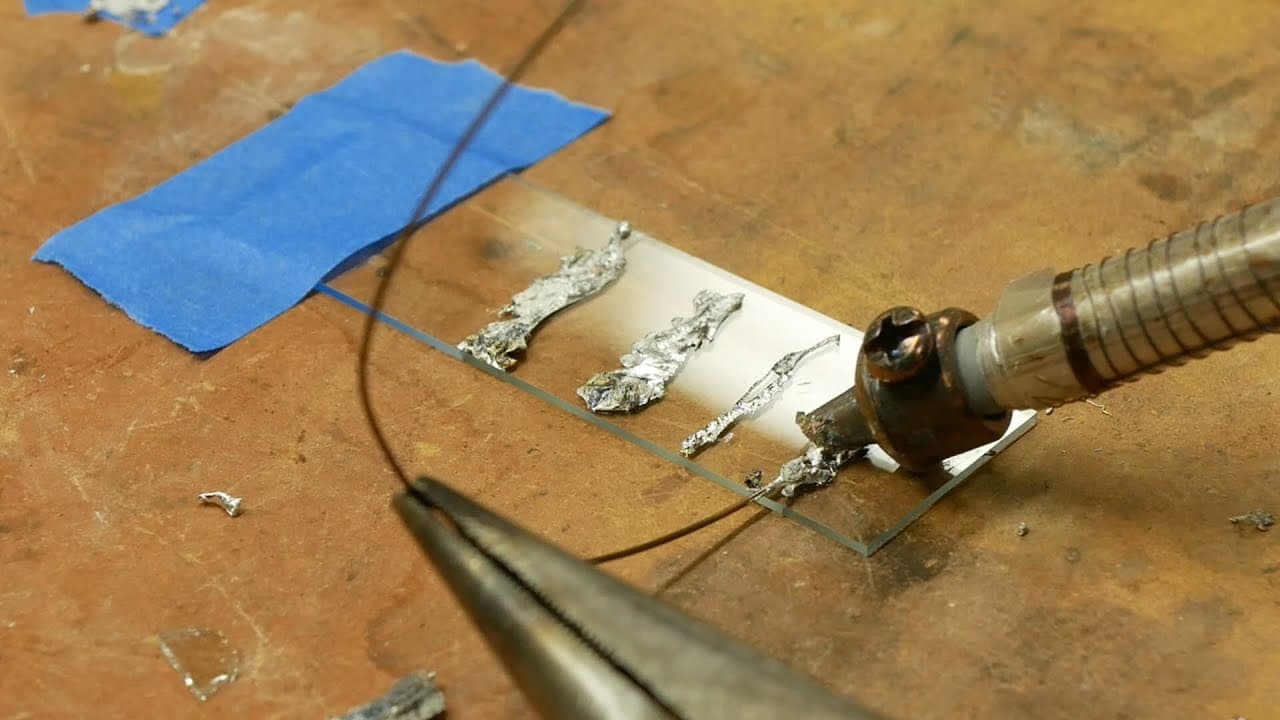
Ultrasonic soldering is a technique that bonds metals and non-metals using specialized active solders and ultrasonic energy. This method relies on chemical reactions between the solder and surface oxides, enabling strong connections, even with challenging materials like titanium and ceramics. It offers applications in electronics and materials science but is best suited for low-stress situations due to the softness of the solder.
Transcript
today on applied science i'm going to show you this technique of ultrasonic soldering this lets you bond all kinds of unusual metals to non-metals such as copper to silicon or aluminum to nickel or phosphor bronze to glass pretty much any reasonable metal or ceramic or glass can be bonded with this technique so in today's video i'm going to show yo... Read More
Key Insights
- ☢️ Conventional soldering relies on metallic bonding, but ultrasonic soldering relies on chemical reactions between active solder and materials' oxides.
- ☢️ Active solders are not widely available and must be obtained directly from the manufacturers.
- 🤩 The key ingredients in active solder alloys, such as titanium and cerium, enable bonding to non-metals and protect against oxidation, respectively.
- 💪 Ultrasonic mechanical energy enhances surface contact between the solder and materials, ensuring a strong bond.
- 🤘 Ultrasonic soldering has various applications, such as bonding ito-coated glass, attaching unusual alloy wires, and bonding metals with metal oxides and nitrides.
- ✋ Ultrasonic soldering is not suitable for high-stress applications, as the solder is relatively soft.
- 👶 The process of ultrasonic soldering is relatively new and continues to be explored and refined.
- 🤘 Next steps include discussing the induction furnace and the process of creating metal alloys.
Install to Summarize YouTube Videos and Get Transcripts
Explore YouTube Video Summarizer or Get YouTube Transcript Extractor
Questions & Answers
Q: How does ultrasonic soldering differ from conventional soldering?
Ultrasonic soldering is distinct from conventional soldering methods because it relies on a chemical reaction between the active solder and the materials' oxides, rather than metallic bonding. This allows for soldering to non-metals and highly reactive metals.
Q: Where can active solders be obtained?
Active solders are not readily available through typical distributors. They are usually manufactured by only a few companies globally. Obtaining active solders involves contacting the manufacturers directly, who may provide more information on how to acquire them.
Q: What are the key ingredients in active solder alloys?
The key ingredients in active solder alloys include tin, silver, copper, titanium (in small amounts), and trace amounts of cerium and gallium. Titanium enables bonding to non-metals, while cerium acts as a protective layer to prevent oxidation.
Q: What is the purpose of ultrasonic mechanical energy in the soldering process?
Ultrasonic energy is crucial in ultrasonic soldering as it increases surface contact between the solder and the materials, allowing for effective bonding. It helps overcome surface tension and enhances the bond's strength by creating a reaction layer between the metals and non-metals.
Summary & Key Takeaways
-
Ultrasonic soldering is a technique that enables the bonding of metals and non-metals, such as copper to silicon or aluminum to nickel.
-
The process relies on specialized solder alloys, known as active solders, that undergo a chemical reaction with the base materials to create a strong bond.
-
Ultrasonic energy is used to increase the surface contact between the solder and the materials, ensuring effective bonding.
Read in Other Languages (beta)
Share This Summary 📚
Summarize YouTube Videos and Get Video Transcripts with 1-Click
Try YouTube Summary with ChatGPT & Claude or YouTube Transcript Generator
Explore More Summaries from Applied Science 📚
Summarize YouTube Videos and Get Video Transcripts with 1-Click
Try YouTube Summary with ChatGPT & Claude or YouTube Transcript Generator