How to Learn English Vocabulary for Conversation
TL;DR
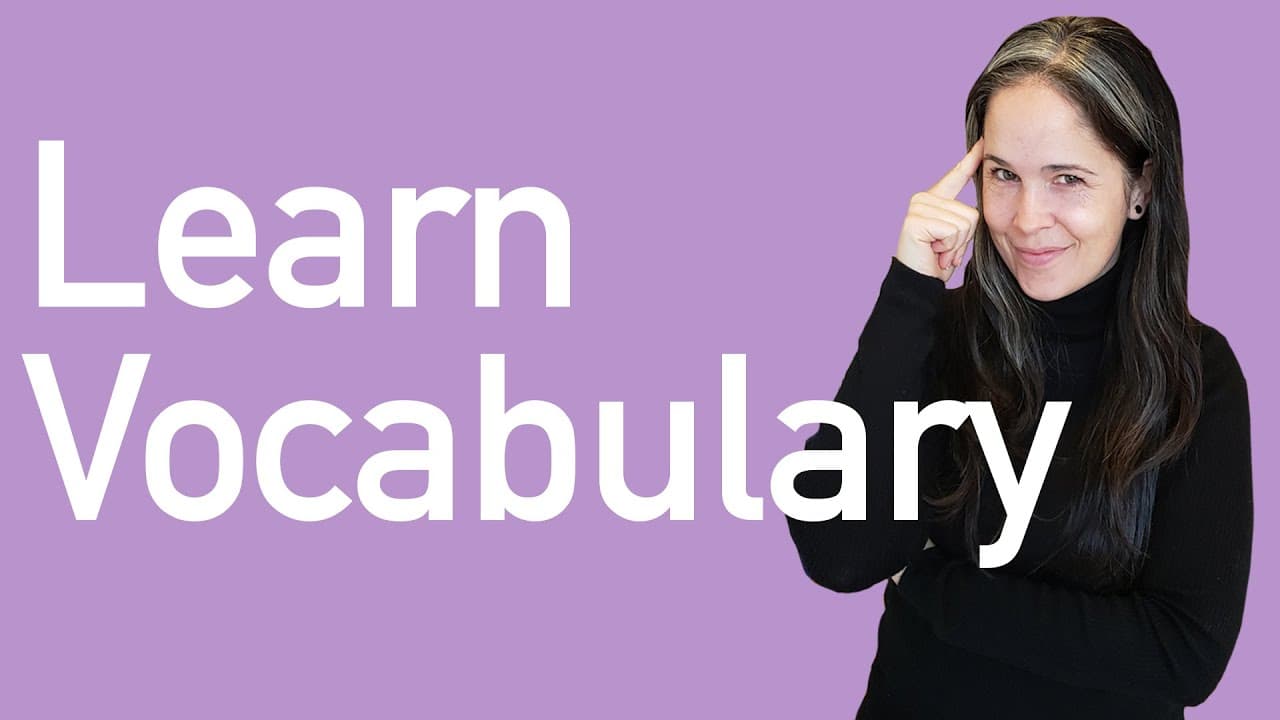
Build conversational vocabulary by studying useful words through simple English definitions, pronunciation practice, varied example sentences, and authentic clips, without relying on translation. Starting with Academic Word List terms such as analysis, approach, area, assessment, and assume can strengthen everyday expression while also supporting TOEFL and IELTS preparation.
Transcript
One of the most frequent questions I’m asked is, Rachel, how can I improve my vocabulary? Some people are focused on test prep and some people simply want to be able to express themselves in conversation. To improve your vocabulary in a helpful way, you not only need to be using a good method but you need to be using the right words. In this video ... Read More
Key Insights
- Effective vocabulary development requires both a useful learning method and appropriate word selection. The lesson combines Academic Word List terms with English definitions, pronunciation work, related grammatical forms, example sentences, and authentic clips so learners can develop a practical understanding of words used in conversation.
- English-only definitions can help learners understand vocabulary as English rather than as translations from another language. The recommended method avoids translating dictionaries and instead uses simple explanations plus enough contextual examples to support comprehension and encourage the learner to think directly in English.
- The Academic Word List provides vocabulary beyond the 2,000 most common English words. Its terms can add sophistication to conversational language, appear in everyday life, newspapers, and television, and support preparation for the TOEFL and IELTS exams.
- Analysis is a noun meaning a close study of something or an explanation of its nature and meaning. It has four syllables with stress on the second syllable, while the related verb analyze has three syllables with stress on the first. Its plural is analyses, ending with an eez sound.
- Approach can describe moving physically closer, coming nearer to an event or goal, or a way of thinking about and dealing with something. The related adjective approachable describes someone who is friendly, easy to talk to, or easy to deal with.
- Area is a noun that can identify part of a larger space, the amount of space inside a shape, or a field of study. Examples include an area near a pool, the Bay Area, the area of a circle, and an area of expertise such as mathematics.
- Assessment is a noun meaning the act of making a judgment about something, while assess is its verb form. An assessment can measure students' understanding, express a judgment about a problem, evaluate someone's situation, or identify what action may be appropriate.
- Assume is a verb meaning to think something is true or probably true without actually knowing it. It can also mean beginning a position or responsibility, as in assuming the role of director. The word has two syllables, with stress on the second syllable.
Install to Summarize YouTube Videos and Get Transcripts
Explore YouTube Video Summarizer or Get YouTube Transcript Extractor
Questions & Answers
Q: How can I learn English vocabulary for conversation?
Study useful words through simple English definitions rather than translating them into your first language. Practice each word's pronunciation, stress, grammatical forms, meanings, and example sentences. Then listen to authentic clips that use the word in different contexts. This combination helps build a fuller understanding, supports thinking in English, and makes the vocabulary more useful for everyday expression.
Q: Why should I study vocabulary without translating it?
Studying definitions entirely in English helps you understand new vocabulary as English words instead of treating them as equivalents of words in another language. Simple definitions and several contextual examples can provide enough information to grasp meaning directly. The method is designed to reduce mental translation and help you develop the habit of thinking in English during conversation.
Q: What is the Academic Word List useful for?
The Academic Word List contains vocabulary that can help learners prepare for the TOEFL and IELTS exams while expanding conversational ability. It does not include words from the list of the 2,000 most common English words, so it represents a more advanced level. Its terms also appear in everyday life, newspapers, television, and other common contexts.
Q: What does analysis mean, and how is it pronounced?
Analysis means a close study of something that examines its parts, details, relationships, nature, and meaning. It is a four-syllable noun pronounced with stress on the second syllable, and its first vowel is a schwa. The related verb is analyze, which has three syllables and first-syllable stress. The plural is analyses, pronounced with an eez ending.
Q: How is the word approach used in English?
Approach can mean moving physically closer, as when a train approaches a station. It can describe coming nearer to a time, event, or goal, such as approaching the holidays or a fundraising target. It can also mean a way of thinking about or dealing with a subject, including someone's approach to stress, cooking, life, or dying.
Q: What are the different meanings of area?
Area can mean a section or part of a larger physical space, such as the area beside a pool or an area within a country. It can identify a broader region, including the Bay Area or the tri-state area around New York City. It also means the space inside a shape or a particular field of study.
Q: What is an assessment, and how is it used?
An assessment is the act of making a judgment about something, and assess is the related verb. A school assessment can indicate how well students understand concepts. Someone can also give an assessment of a problem, reach a fair or reasonable conclusion, or evaluate a person's situation and ability to rebuild after a natural disaster.
Q: What does assume mean in English?
Assume usually means believing that something is true or probably true without actually knowing whether it is true. A person might assume that a test will be difficult or assume that someone will be honest, then later discover what is actually true. Assume can also mean beginning a job, position, or responsibility, such as assuming the role of director.
Summary & Key Takeaways
-
A practical vocabulary method combines the right word selection with English-only study. Instead of looking up translations, learners use simple definitions, pronunciation demonstrations, grammatical forms, and multiple examples to understand each term directly in English. This approach is intended to develop conversational expression, comprehension, and the habit of thinking without translating.
-
The lesson selects five terms from the Academic Word List: analysis, approach, area, assessment, and assume. These words are beyond the 2,000 most common English words, but they still appear in everyday life, newspapers, and television. They are also useful for learners preparing for the TOEFL or IELTS exams.
-
Each word is examined through stress, vowel sounds, mouth movements, meanings, related forms, and sample sentences. YouGlish clips then show how speakers use the vocabulary in authentic contexts. Examples include cost-benefit analysis, an approach to stress, a geographic area, a fair assessment, and assuming something is true without knowing it for certain.
Read in Other Languages (beta)
Share This Summary 📚
Summarize YouTube Videos and Get Video Transcripts with 1-Click
Try YouTube Summary with ChatGPT & Claude or YouTube Transcript Generator
Explore More Summaries from Rachel's English 📚




Summarize YouTube Videos and Get Video Transcripts with 1-Click
Try YouTube Summary with ChatGPT & Claude or YouTube Transcript Generator