How to Pronounce the AW Vowel in American English
TL;DR
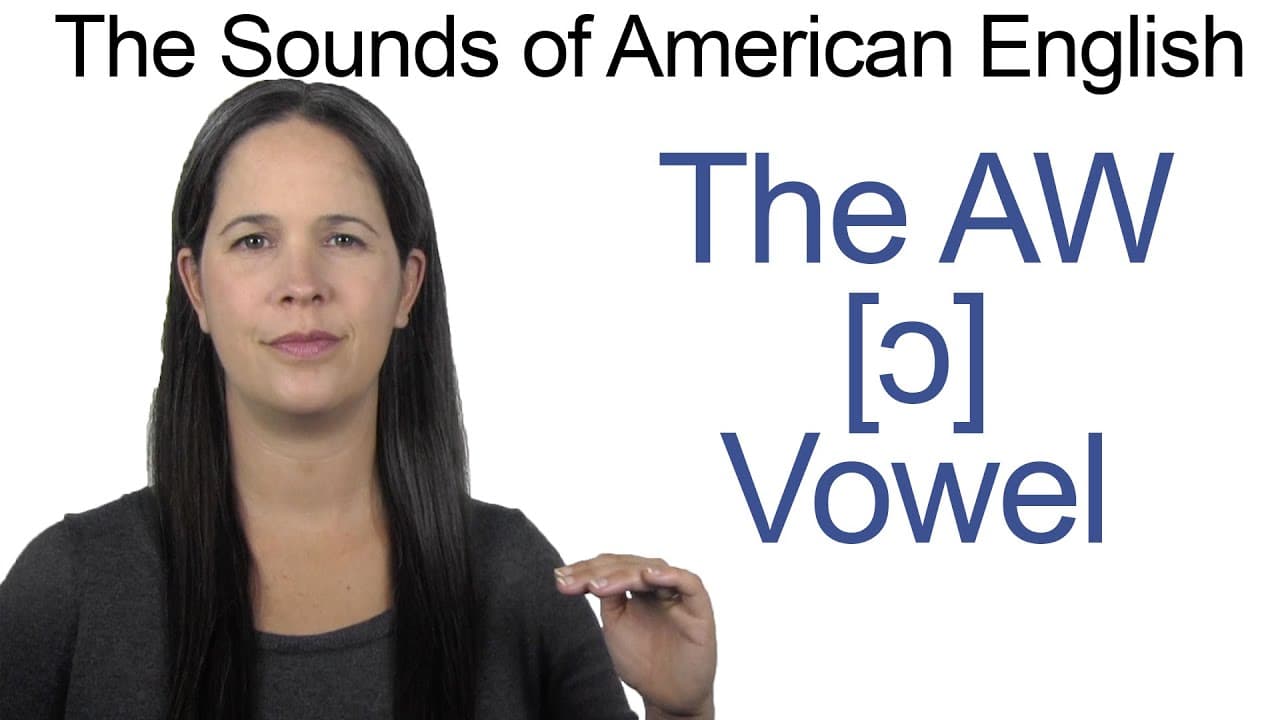
Pronounce the AW vowel by dropping the jaw, pulling the tongue back without touching anything, and slightly flaring the lips. Keep stressed AW sounds longer and more fully shaped, reduce the movement in unstressed syllables, and blend the vowel with a stronger backward and upward tongue position when it comes before R.
Transcript
In this American English pronunciation video, we’re going to learn how to pronounce the AW as in LAW vowel. This vowel sound, when pure, is quite similar to the AH as in FATHER vowel. In some areas of the United States, we don’t even make this sound. We always use the AH as in FATHER sound instead. Also, when this vowel is followed by the R consona... Read More
Key Insights
- The pure AW vowel is made by dropping the jaw, shifting the tongue backward, keeping the tongue tip free from contact, and flaring the lips slightly. These coordinated movements create the mouth position demonstrated for AW as in “law.”
- The AW vowel is similar to the AH vowel when pronounced in its pure form. The clearest visible difference is that AW uses flared lips and a retracted tongue, while AH keeps the lips and cheeks completely relaxed.
- The cheeks can help shape the AW vowel by moving inward and slightly forward. This technique encourages the subtle lip flare that separates AW from the more relaxed mouth position used for the AH vowel.
- A stressed AW vowel has an up-down shape of stress and uses a fuller mouth position. In “saw,” the jaw drops, the lips flare, and the tongue shifts backward while the vowel remains longer than an unstressed version.
- An unstressed AW vowel is lower in pitch, quieter, flatter, and shorter than a stressed AW. Because less time is available, the jaw drops less, the lips remain more relaxed, and the tongue does not retract as far.
- The word “on” can contain a very quick unstressed AW vowel because it functions as an unstressed function word. The tongue holds the vowel position only briefly before its tip flips upward to form the following N.
- A following R changes the AW vowel by blending the vowel position with the R position. The lips flare and round more, while the tongue pulls farther backward and moves slightly upward, as demonstrated in “core” and “sore.”
- The AW vowel before R uses less jaw opening than a pure AW vowel. In “quarter,” the modified vowel also has stronger lip rounding and greater backward and upward tongue movement than the pure vowel shown for comparison.
Install to Summarize YouTube Videos and Get Transcripts
Explore YouTube Video Summarizer or Get YouTube Transcript Extractor
Questions & Answers
Q: How do you pronounce the AW vowel in American English?
To pronounce the pure AW vowel, drop the jaw, shift the tongue backward, and keep the tongue tip from touching anything. Flare the lips slightly instead of leaving them fully relaxed. It may help to draw the cheeks inward and move them a little forward. The combined jaw, tongue, lip, and cheek movements create the AW sound heard in “law” and “saw.”
Q: What is the difference between the AW and AH vowels?
The pure AW vowel is quite similar to the AH vowel, but their mouth positions differ. For AW, the tongue pulls backward and the lips flare slightly. For AH, the lips and cheeks remain completely relaxed. Thinking about the cheeks moving inward and slightly forward can help create AW and keep it distinct from the relaxed AH position.
Q: What mouth position produces the pure AW vowel?
The pure AW mouth position combines a dropped jaw, slightly flared lips, and a tongue that shifts backward. The tip of the tongue remains free and does not touch any part of the mouth. The cheeks may also move inward and slightly forward. These movements should work together rather than occurring as separate stages of the pronunciation.
Q: How does stress change the AW vowel?
A stressed AW vowel has an up-down stress shape and uses a fuller mouth position, as demonstrated in “saw.” An unstressed AW is lower in pitch, quieter, flatter, and shorter. Since the unstressed vowel lasts less time, the jaw drops less, the lips are more relaxed, and the tongue does not move backward as much.
Q: How is the AW vowel pronounced in the word “on”?
In “on,” the AW vowel can be unstressed because “on” is a function word, and function words are unstressed in the example. The vowel is extremely quick, so the tongue does not take a complete stressed position. It remains in place only briefly before the tongue tip flips upward to produce the following N sound. The word can also use the AH vowel.
Q: Why does AW sound different before the R consonant?
AW changes before R because the mouth position for the vowel blends with the position required for the following consonant. The lips flare and round more, while the tongue pulls farther backward and rises slightly. The jaw also drops less than it does for a pure AW. This modified pronunciation is demonstrated in “core,” “sore,” and “quarter.”
Q: How do you pronounce AW in words such as “core” and “sore”?
In “core” and “sore,” prepare for the following R while producing the AW vowel. Flare and round the lips more than for pure AW, move the tongue farther backward and slightly upward, and use less jaw opening. These adjustments blend the AW and R positions, creating a modified vowel rather than the pure AW heard in “saw.”
Q: Which words can be used to practice the AW vowel?
The practice words provided are “boss,” “long,” “runoff,” “lifelong,” “login,” “wrong,” and “daughter.” The lesson also demonstrates a pure stressed AW in “saw,” an unstressed AW in “on,” and an AW modified by R in “core,” “sore,” and “quarter.” Repeating these examples helps compare stressed, unstressed, and R-modified mouth positions.
Summary & Key Takeaways
-
The pure AW vowel is produced with a dropped jaw, a tongue that shifts back, and lips that flare slightly. The tongue tip does not touch anything. Bringing the cheeks inward and slightly forward can help distinguish AW from the AH vowel, where the lips and cheeks remain relaxed.
-
Stress changes both the sound and the visible mouth position of AW. A stressed AW has an up-down vocal shape and a fuller articulation, as in “saw.” An unstressed AW is shorter, quieter, lower, and flatter, with less jaw opening, lip movement, and backward movement of the tongue.
-
A following R modifies the AW vowel because the two mouth positions blend together. The lips flare and round more, the jaw drops less, and the tongue moves farther back and slightly upward. This modified sound appears in words such as “core,” “sore,” and “quarter.”
Read in Other Languages (beta)
Share This Summary 📚
Summarize YouTube Videos and Get Video Transcripts with 1-Click
Try YouTube Summary with ChatGPT & Claude or YouTube Transcript Generator
Explore More Summaries from Rachel's English 📚

![English Sounds - L [l] Consonant - How to make the L [l] Consonant thumbnail](/_next/image?url=https%3A%2F%2Fi.ytimg.com%2Fvi%2FFP0jHNoFqWo%2Fhqdefault.jpg&w=750&q=75)




Summarize YouTube Videos and Get Video Transcripts with 1-Click
Try YouTube Summary with ChatGPT & Claude or YouTube Transcript Generator