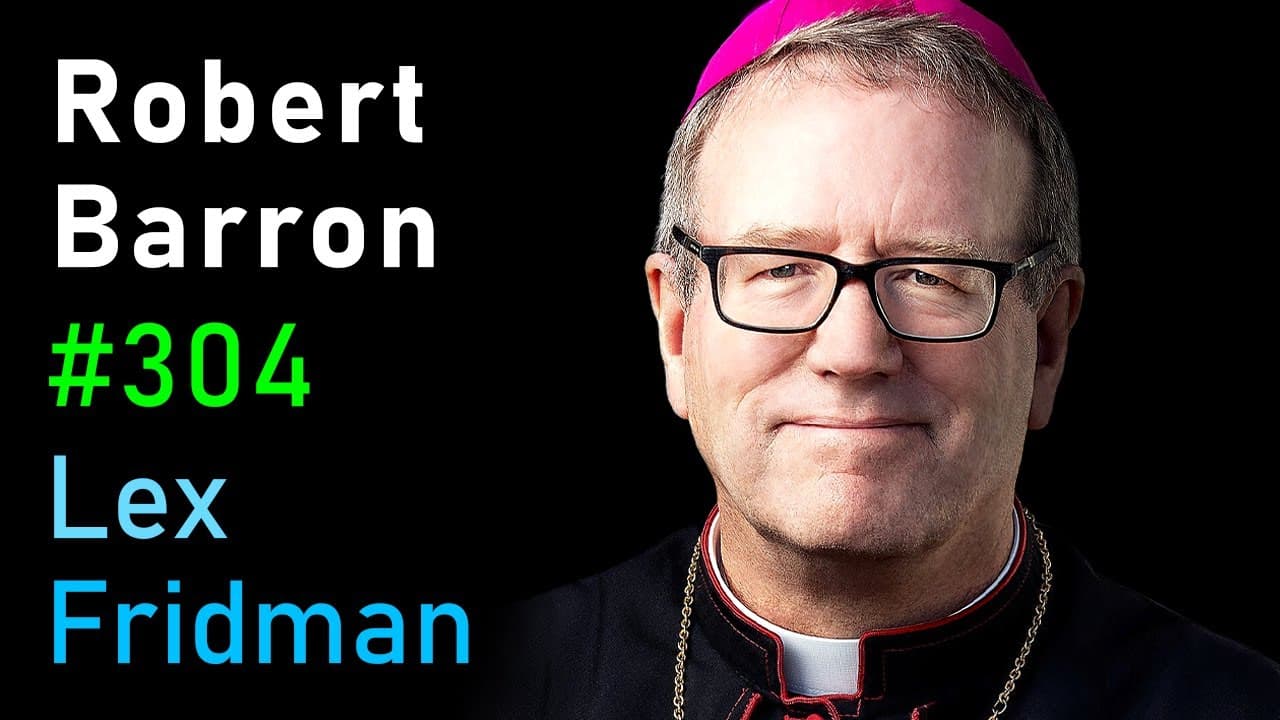
Bishop Robert Barron: Christianity and the Catholic Church | Lex Fridman Podcast #304
TL;DR
Bishop Robert Barron defines God as the subsistent act of being, emphasizing that He transcends worldly entities. Key aspects of faith include philosophical reasoning and the divine nature of love, which involves willing the good of others as a fundamental Christian principle.
Transcript
when we're beyond good and evil you know and all that's left is the will to power then why are we surprised that the powerful rise and that they use the power less for their purposes when we forget ideas like equality and rights which are grounded in god why are we surprised that death camps follow the following is a conversation with bishop robert... Read More
Key Insights
- ❓ God is beyond any worldly entity or being, and the language used to describe Him is both philosophically precise and gnomic.
- ❓ Faith involves a sense of darkness beyond reason and the willingness to surrender to the presence of God.
- ❓ The belief in the incarnation of God is a distinctive aspect of Christianity, as it signifies the divinization of humanity and the redemption of all creation.
- 🥰 Love is a central principle in Christianity, and it involves willing the good of the other as other and being detached from worldly success.
- ❓ The challenges of human nature, including issues like sexual abuse, should be addressed with transparency and accountability within the Church.
- 🥰 Celibacy in the priesthood is seen as a path of love and a way to redirect energies towards prayer, ministry, and a mystical anticipation of heavenly love.
Install to Summarize YouTube Videos and Get Transcripts
Explore YouTube Video Summarizer or Get YouTube Transcript Extractor
Questions & Answers
Q: Who is God according to Catholicism?
According to Catholicism, God is the subsistent act of to be itself, beyond all worldly entities, and the unique reality in which essence and existence coincide.
Q: Can we comprehend or visualize God?
While we can't fully comprehend God, we can approximate our understanding through metaphysical analysis and philosophical reasoning. Our knowledge of God begins in ordinary experience and can be deepened through faith.
Q: What does it mean to believe in God?
Believing in God involves a journey of faith and an openness to God's action in our lives. It requires moving beyond our ego and being willing to surrender to the mysterious and transformative presence of God.
Q: What are the key pillars of Christianity?
The key pillars of Christianity include the belief in the incarnation of God, the redemption of all things through Christ, and the importance of love as the ultimate metric for a good life.
Key Insights:
- God is beyond any worldly entity or being, and the language used to describe Him is both philosophically precise and gnomic.
- Faith involves a sense of darkness beyond reason and the willingness to surrender to the presence of God.
- The belief in the incarnation of God is a distinctive aspect of Christianity, as it signifies the divinization of humanity and the redemption of all creation.
- Love is a central principle in Christianity, and it involves willing the good of the other as other and being detached from worldly success.
- The challenges of human nature, including issues like sexual abuse, should be addressed with transparency and accountability within the Church.
- Celibacy in the priesthood is seen as a path of love and a way to redirect energies towards prayer, ministry, and a mystical anticipation of heavenly love.
- The problem of evil and suffering is a complex theological question, and understanding it requires trust in God's greater plan and surrendering to His wisdom. Trust is the key to overcoming the arrogance of questioning God's reasons behind suffering.
Summary
In this video conversation, Bishop Robert Barron discusses various aspects of the Catholic faith and Christianity. He delves into topics such as the nature of God, the meaning of faith, the importance of love, and the role of the church. Barron also talks about the seven deadly sins, the Trinity, and the pitfalls of power and wealth within religious institutions.
Questions & Answers
Q: Who is God according to Catholicism?
According to Bishop Robert Barron, God, as defined by Thomas Aquinas, is the subsistent act of to be itself. God's essence and existence coincide, and God's nature is to be. Unlike beings in the world, God is beyond being and cannot be found in the world.
Q: Can we comprehend and visualize God if God is outside of our world?
While we cannot fully comprehend or visualize God, Bishop Barron explains that we can gesture toward a transcendent reality through metaphysical analysis and philosophical reasoning. The language used to describe God is analogical, meaning it is not the same as the language used to describe things in the world. God's essence and existence coincide, and through theological language and metaphors, we can make some statements and theorize about God.
Q: What does it mean to believe in God and have faith?
Bishop Barron says that faith is not simply about irrational beliefs or personal opinions. Authentic faith is a darkness beyond reason and a recognition of our limitations in understanding God. It is the acceptance that God's action comes first, and our knowledge begins in this world but can be transcended through metaphysical analysis and philosophical reasoning. Faith is about embracing the mystery and being open to God's presence.
Q: What are the pillars of Christianity?
According to Bishop Barron, the pillars of Christianity are the belief in God, the incarnation of Jesus Christ, and the understanding of the Trinity. The belief in God as a unique reality beyond being is fundamental to Christianity. The incarnation is the unique and essential claim that God became human in Jesus Christ. The Trinity refers to the relationship between the Father, Son, and Holy Spirit, which embodies the idea that God is love.
Q: What are the seven deadly sins, and why are they crucial to Christianity?
The seven deadly sins, as described by Bishop Barron, are pride, envy, anger, sloth, avarice, gluttony, and lust. Pride is considered the deadliest sin because it involves the collapsing inward of the self, like a black hole. All other sins flow from pride. The significance of the seven deadly sins lies in their opposition to love and the struggle to overcome them to live a virtuous life.
Q: What is the role of the Catholic Church?
The Catholic Church, according to Bishop Barron, is the mystical body of Jesus. It is not just an organization but an organism, a living and interconnected community of baptized believers gathered around Christ. While the Church has institutional elements, it exists as an organic unity symbolized by the Pope, bishops, and pastors, who embody and draw together the unity of the Church.
Q: What is the role of the Pope and the hierarchy within the Church?
The Pope symbolizes and embodies the unity of the entire Church, while bishops and pastors symbolize the unity of their respective dioceses and parishes. They are personal symbols of unity rather than organizational figures. The hierarchical structure serves to defend the Church against predators and bring back those who have strayed too far. However, the human element within the Church is prone to corruption and misuse of power, which is a constant struggle.
Q: What are Bishop Barron's views on the prosperity gospel and the corrupting influence of money and power?
Bishop Barron expresses his dislike for the prosperity gospel, which promotes the idea that financial prosperity is a sign of God's favor. He believes that the true Gospel focuses on love, humility, and the unity of the community. He acknowledges that power and wealth can corrupt heads of religious institutions, emphasizing the perennial issue of pride. Barron highlights that the mission of the church is not about material success but about becoming fully alive in love and friendship with God.
Summary & Key Takeaways
-
Bishop Robert Barron presents a deep analysis of the nature of God, describing Him as the subsistent act of to be itself, beyond any worldly entity or being.
-
He emphasizes that faith involves a metaphysical analysis and philosophical reasoning to comprehend a reality transcendent to our experience.
-
Barron delves into the concept of love as the key pillar of Christianity, and the importance of willing the good of others as an act of love.
Read in Other Languages (beta)
Share This Summary 📚
Summarize YouTube Videos and Get Video Transcripts with 1-Click
Try YouTube Summary with ChatGPT & Claude or YouTube Transcript Generator
Explore More Summaries from Lex Fridman Podcast 📚




Summarize YouTube Videos and Get Video Transcripts with 1-Click
Try YouTube Summary with ChatGPT & Claude or YouTube Transcript Generator