How to Research Ideas with NotebookLM in 2026
TL;DR
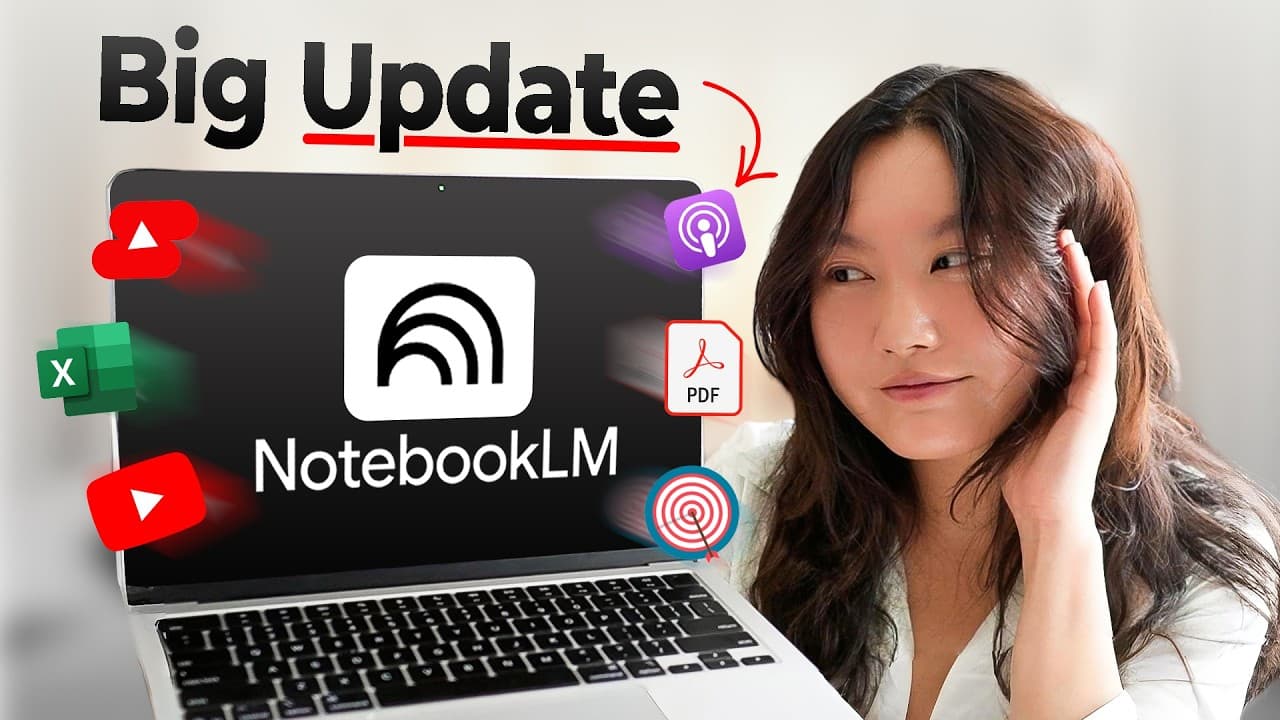
Start by grounding NotebookLM in trustworthy, relevant sources, then give it explicit criteria for the decision you need to make. Featured notebooks provide curated material, while custom notebooks can combine AI-discovered sources, pasted research, and industry-specific evidence to compare ideas, identify market gaps, and produce practical outputs such as documents, sheets, slides, infographics, podcasts, and videos.
Transcript
Notebook LM is on a completely new level now. Since the last video I made about Notebook LM over 10 months ago, it's now able to make docs, sheets, slides, infographics, in all sorts of styles, podcasts, and videos. >> If your target is to generate a reliable $20,000 in monthly recurring revenue. >> But it's actually way more than this. It's like G... Read More
Key Insights
- NotebookLM is a source-grounded research and learning tool that can now create documents, sheets, slides, infographics, podcasts, and videos in multiple styles. Its usefulness extends beyond content generation because users can question collections of evidence and develop decisions from the responses.
- Featured notebooks are curated collections created with researchers and companies. They provide immediate access to topics such as global forecasts, health, home buying, studying, and literature, while also allowing users to open included sources and read the original material.
- Source quality is the foundation of a useful NotebookLM result. The presenter emphasizes that a notebook's answers depend on its supplied material, so verified, high-quality sources are essential when using the output for business, health, investing, or other decisions.
- Detailed prompts are more useful when they state concrete constraints. The business example specifies a bootstrapped B2C model, no venture capital, eventual automation, no employees, at least $20,000 in monthly profit, a one-year timeline, and the founder's coding and AI capabilities.
- NotebookLM identifies a premium niche B2C AI micro-SaaS as a possible fit for the stated criteria. The proposed strategy favors charging higher amounts to fewer customers, supporting the goal of operating a profitable business without building a large team.
- The suggested market gaps include a GLP-1 adherence companion, a privacy-first California sober and microdosing log, a vertical microdrama generation tool, and an AI agent learning sandbox. Each concept connects a described trend or problem with a specific consumer product.
- Custom notebooks can combine AI-discovered web sources with manually pasted information. The demonstrated workflow asks NotebookLM to find material about solopreneur, lifestyle business, and micro-SaaS evaluation, imports the results, and then adds the previously generated business concepts as a separate source.
- Industry-specific research strengthens idea evaluation by supplementing broad startup and validation guidance. After importing general sources, the presenter asks for deeper material on each proposed industry so the final comparison can reflect both business-building principles and the conditions surrounding each market.
Install to Summarize YouTube Videos and Get Transcripts
Explore YouTube Video Summarizer or Get YouTube Transcript Extractor
Questions & Answers
Q: How do you start researching with NotebookLM?
Start with either a featured notebook or a new custom notebook. In a featured notebook, inspect the supplied sources, open original articles when needed, and ask a focused question. For custom research, create a notebook, ask NotebookLM to find relevant sources, review the themes and links it returns, import useful material, and add your own pasted information before beginning detailed analysis.
Q: Why are sources important in NotebookLM?
Sources are important because the notebook's responses are based on the material supplied to it. The presenter treats source quality as the central factor determining whether an answer is useful and trustworthy. Featured collections can help because they are created with researchers and companies, but users can still inspect individual sources and open original articles before relying on a conclusion.
Q: How can NotebookLM help evaluate a business idea?
NotebookLM can compare a business concept against explicit founder goals, operational constraints, and research about the market. The demonstrated prompt defines the desired customer type, funding approach, automation potential, staffing limit, profit goal, timeline, and available technical skills. The user then adds general validation sources and industry-specific material so the notebook can evaluate each proposed opportunity with broader evidence.
Q: What criteria were used to find a solo business opportunity?
The requested business had to be a bootstrapped lifestyle operation rather than a venture-capital-backed company. It needed to begin as a B2C offering, become increasingly automated, avoid requiring employees, and target at least $20,000 in monthly profit within a one-year timeline. The prompt also stated that the founder could code, create software, and use or build with AI.
Q: What business ideas did NotebookLM suggest?
NotebookLM suggested four consumer-oriented AI concepts in the shown response. These were a daily GLP-1 adherence and muscle companion, a privacy-first California sober and microdosing journey log, a no-code tool for generating vertical microdrama episodes from text, and an educational sandbox where graduates could visually build, chain, test, and deploy AI agents for business use cases.
Q: How do you add AI-discovered sources to NotebookLM?
Create a notebook and describe the research material you need in the source discovery prompt. In the demonstration, the request asks for sources that can help evaluate solopreneur, lifestyle business, and micro-SaaS ideas. NotebookLM returns key themes and a collection of sources. After reviewing whether they appear relevant, click import to populate the notebook with those materials for later questioning and comparison.
Q: How can information be moved from a featured notebook to a custom notebook?
The demonstrated workaround is to ask the featured notebook to restate the original criteria and generated ideas together in detail. Copy that response, return to the custom notebook, select the option to add a source, paste the material, remove any unnecessary section, and save it under a descriptive name such as business ideas. The transcript notes that featured notebooks cannot be cloned directly.
Q: Why add industry-specific sources after general startup research?
Industry-specific sources provide context that broad guidance about bootstrapping, validation, and micro-SaaS selection may not contain. The presenter first imports general material for evaluating solo businesses, then requests deeper sources for every industry represented by the proposed ideas. Combining both layers is intended to support a more informed final comparison of which opportunity is most suitable to build.
Summary & Key Takeaways
-
NotebookLM's featured notebooks offer collections created with researchers and companies, covering subjects such as health, home buying, studying, business, and global forecasts. Because notebook responses are based on the included material, the presenter recommends examining source quality first and opening original articles when necessary before trusting or applying the generated conclusions.
-
The business research demonstration begins with detailed constraints: a bootstrapped B2C lifestyle business, no venture capital, eventual automation, no employees, at least $20,000 in monthly profit, a one-year timeline, and access to coding and AI skills. NotebookLM uses these requirements to propose several premium AI micro-SaaS opportunities for evaluation.
-
A custom notebook can be populated by asking NotebookLM to find relevant sources, importing the results, and adding pasted material from another notebook. The presenter supplements general startup and validation sources with industry-specific research, labels sources for clarity, and uses the combined evidence to investigate which proposed business idea appears most suitable to build.
Read in Other Languages (beta)
Share This Summary 📚
Summarize YouTube Videos and Get Video Transcripts with 1-Click
Try YouTube Summary with ChatGPT & Claude or YouTube Transcript Generator
Explore More Summaries from Tina Huang 📚



Summarize YouTube Videos and Get Video Transcripts with 1-Click
Try YouTube Summary with ChatGPT & Claude or YouTube Transcript Generator