Why Was the Abbey of Saint-Denis Rebuilt?
TL;DR
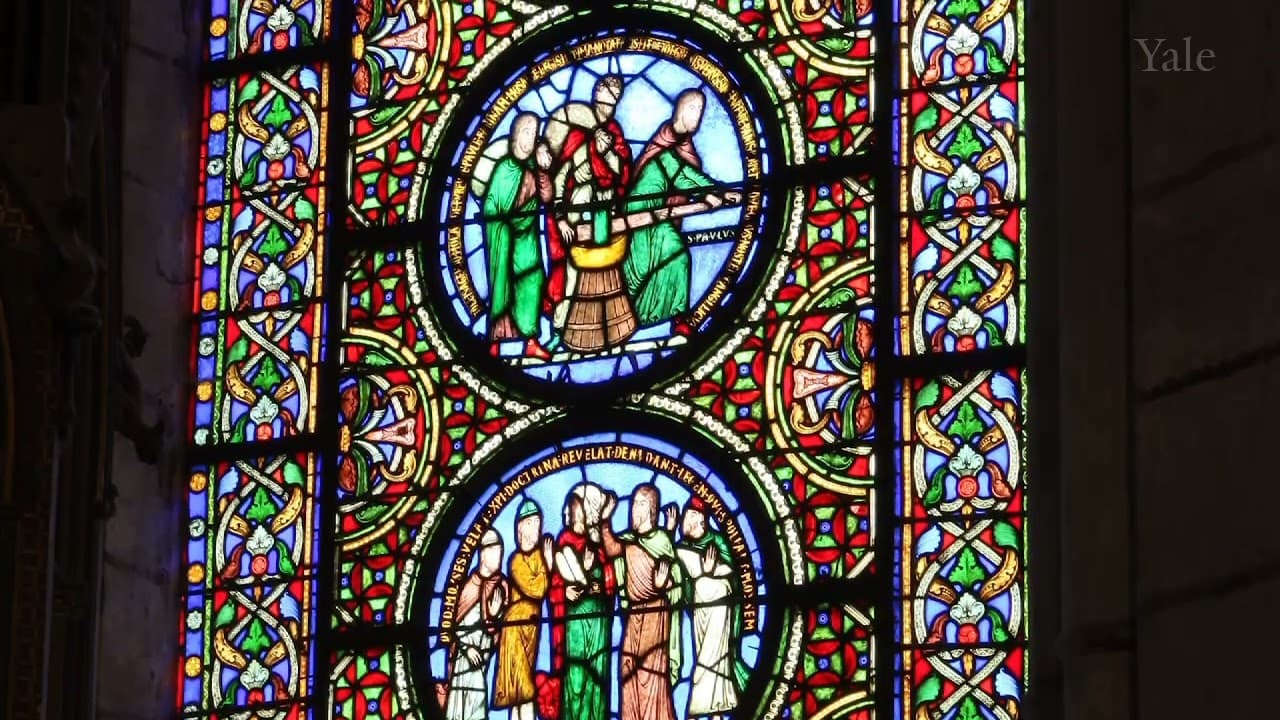
Saint-Denis was rebuilt for both spiritual and practical reasons: Abbot Suger believed he was fulfilling God's mission, while the old church was too small and insecure for large crowds and valuable relics. Its Gothic design united Roman, pagan, seasonal, and biblical imagery, turning the building into a bridge between past and future and a teaching tool for people who could not read.
Transcript
Let us think for a minute about the reasons for building Saint-Denis. Were they spiritual or were they worldly? Suger was convinced that he was fulfilling God's mission in building Saint-Denis in the Gothic style, the proof being such miracles as the location of suitable materials and their transport to the construction site. But there were also wh... Read More
Key Insights
- Saint-Denis was rebuilt for spiritual and material reasons. Suger believed the Gothic project fulfilled God's mission, but he also recognized that the old church was too small and insecure to manage feast-day crowds or protect valuable relics from theft.
- Suger's confidence in the project was reinforced by events he understood as miracles. The discovery of suitable construction materials and their successful transport to Saint-Denis served as evidence, in his view, that the reconstruction carried divine approval.
- Western Europe's return to peace and order encouraged renewed building, cultural activity, and intellectual life. Suger participated in this mid-12th-century wave of church construction and in the wider revival sometimes described as the Renaissance of the Middle Ages.
- Suger's guiding formula was that recollection of the past is the promise of the future. This outlook challenged an earlier fixation on history as something oriented entirely toward the past, with no visible future after centuries of disorder.
- Saint-Denis is a Janus-faced building because it looks backward and forward simultaneously. Suger sought to harmonize the old church with the new, joining Romanesque precedents and references to ancient Rome with the emerging Gothic cathedral.
- The west facade's triple-portal entrance was modeled on the Arch of Constantine. Roman emperors passed through such arches in triumph before being received as divine powers, and the same three-part entrance design later appeared at Yale's Hall of Graduate Studies.
- Pagan and seasonal imagery appears beside the church entrances. Zodiac figures include Taurus, Aries, Pisces, Libra, Scorpio, and Sagittarius, while the labors of the months portray activities such as filling a cask, butchering a pig, and enjoying a December feast.
- The wise and foolish virgins transform the cathedral doorway into a teaching tool. Their full and empty oil vessels illustrate Matthew 25 and warn entrants to remain prepared because they cannot know when judgment will arrive or when the door will close.
Install to Summarize YouTube Videos and Get Transcripts
Explore YouTube Video Summarizer or Get YouTube Transcript Extractor
Questions & Answers
Q: Why was the Abbey of Saint-Denis rebuilt?
The Abbey of Saint-Denis was rebuilt for intertwined spiritual and practical reasons. Abbot Suger believed that constructing it in the Gothic style fulfilled God's mission, and he treated the discovery and transport of suitable materials as confirming miracles. At the same time, the old church was too small and insecure for feast-day crowds, creating dangerous congestion and opportunities for thieves to steal valuable relics.
Q: How did Abbot Suger connect the past with the future?
Suger connected the past with the future through his formula that recollection of the past is the promise of the future. Rather than rejecting inherited traditions, he sought to harmonize the old church with the new construction. Saint-Denis therefore looks back toward Romanesque churches, ancient Rome, pagan symbols, and biblical history while using those traditions within a forward-looking Gothic cathedral.
Q: Why is Saint-Denis described as a Janus-faced building?
Saint-Denis is described as Janus-faced because it looks backward and forward at the same time. Its architecture remembers Romanesque churches and ancient Roman monuments, while its reconstruction represents a new Gothic direction. The image also connects with January and with Janus, whose name is identified as the etymological root of both January and the Latin word for door.
Q: How did the Arch of Constantine influence Saint-Denis?
The Arch of Constantine supplied a precedent for the three-portal entrance on the west facade of Saint-Denis. Triumphant Roman emperors passed through such an arch on their way to being received as divine powers. Romanesque and Gothic churches adopted this triple-entry arrangement, and the design later appeared at Yale's Hall of Graduate Studies, characterized as a cathedral of learning.
Q: Why are zodiac signs shown on the doors of Saint-Denis?
The zodiac signs demonstrate how Saint-Denis looks beyond Christian sources toward pagan symbols and the natural cycle of the seasons. The north portal jambs display Taurus, Aries, Pisces, Libra, Scorpio, and Sagittarius. These figures share the facade with the labors of the months, showing how Suger incorporated imagery from the secular and pagan past into the cathedral's larger historical vision.
Q: What do the labors of the months represent at Saint-Denis?
The labors of the months represent recurring seasonal activities and the natural passage of the year. January appears as a two-faced man looking backward and forward. September shows two men filling a cask, November depicts a man butchering a pig over a barrel, and December presents a couple enjoying a holiday feast indoors beside the fire.
Q: What do the wise and foolish virgins teach at Saint-Denis?
The wise and foolish virgins teach that people must remain prepared because they do not know when judgment will come. The wise virgins appear with vessels full of oil and are admitted to the marriage feast. The foolish virgins have empty vessels and encounter a closed door. Their placement beside the cathedral entrance makes the doorway itself part of the warning.
Q: How did cathedral sculpture teach people who could not read?
Cathedral sculpture presented biblical narratives visually, allowing people who could not read to understand religious lessons. At Saint-Denis, the wise and foolish virgins appear on opposite sides of the central doorway with full or empty oil vessels. The arrangement translates the parable from Matthew 25 into visible instruction about readiness, judgment, admission, and exclusion from the house of God.
Summary & Key Takeaways
-
Abbot Suger understood the reconstruction of Saint-Denis as a divine mission, with the discovery and transport of suitable materials interpreted as miraculous confirmation. Practical concerns were equally important. The existing church could not safely accommodate feast-day crowds, and the resulting disorder exposed its valuable relics to a heightened risk of theft.
-
The abbey emerged from a broader renewal that followed centuries of invasions and unrest after Charlemagne's death in 814. Suger expressed this new outlook through the idea that recollecting the past promised the future. His cathedral consequently preserved older architectural traditions while redirecting them toward a forward-looking Gothic form.
-
The west facade combines several historical and religious traditions. Its triple portals recall the Arch of Constantine, while zodiac signs and monthly labors represent pagan and seasonal cycles. Sculptures of the wise and foolish virgins communicate a Christian warning about judgment, preparation, and the consequences of finding the door closed.
Read in Other Languages (beta)
Share This Summary 📚
Summarize YouTube Videos and Get Video Transcripts with 1-Click
Try YouTube Summary with ChatGPT & Claude or YouTube Transcript Generator
Explore More Summaries from YaleCourses 📚



Summarize YouTube Videos and Get Video Transcripts with 1-Click
Try YouTube Summary with ChatGPT & Claude or YouTube Transcript Generator