Why is U.S. semiconductor worker shortage growing?
TL;DR
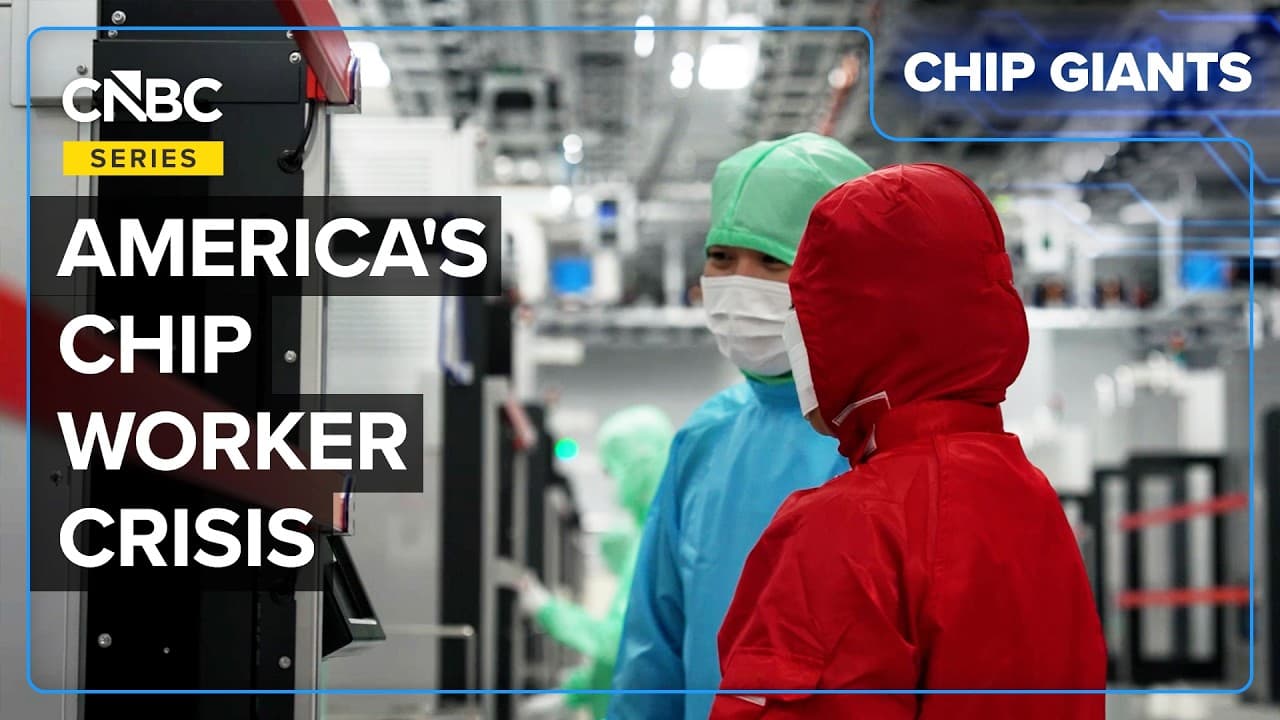
The video reports a looming U.S. shortage of semiconductor workers, with estimates up to 157,000 by the decade’s end and key bottlenecks in manufacturing, packaging, and manpower. It highlights Purdue and Arizona State University building programs to train students for chip engineering, and details efforts by Samsung, TSMC, Intel, Micron, and SK Hynix to recruit in the U.S. and abroad. The focus is on creating a domestic talent pipeline through education and industry partnerships.
Transcript
When it comes to making enough chips for AI, bottlenecks abound. A global memory shortage, limited capacity on manufacturing and packaging lines, and manpower. In the U.S. especially, there isn't enough of it. That's why Purdue, an engineering powerhouse for more than 150 years, now has a lab where students train on some of the world's most ... Read More
Key Insights
- The U.S. faces a potential shortfall of semiconductor workers by the end of the decade, with up to 157,000 positions affected and a need for hundreds of skilled workers each year for several years.
- Education is identified as the primary solution, with Purdue and ASU expanding chip programs and hands-on training to produce industry-ready graduates who can operate complex equipment.
- Technology leaders like Samsung, SK Hynix, Intel, TSMC, and Micron are actively building or expanding U.S. fabs, creating demand for workers across engineering, technician, and supply chain roles.
- Universities are partnering with industry to offer internships, scholarships, and guaranteed interviews, aiming to fast track talent into new facilities such as memory packaging fabs in Indiana and Texas.
- Labor mobility and visa policies are highlighted as barriers, with the industry seeking faster ways to onboard foreign talent when domestic pipelines lag.
- There is a push to make chip careers more attractive to students and the general public by marketing the industry and showcasing its advanced, high-tech nature.
- Hands-on training is emphasized as more effective than purely theoretical studies, with Purdue and ASU models showing how practical labs prepare students for real-world chip fabrication tasks.
- Environmental and national security considerations are driving policy support for domestic chip manufacturing and workforce development, reinforcing urgency to fill openings quickly.
Install to Summarize YouTube Videos and Get Transcripts
Explore YouTube Video Summarizer or Get YouTube Transcript Extractor
Questions & Answers
Q: A real search query question about the video (e.g. 'How to...', 'What is...', 'Why does...', 'When should...'). Question 1
What is causing the U.S. semiconductor worker shortage and how is it expected to evolve by 2030? The video explains that bottlenecks in manufacturing, packaging capacity, and manpower, combined with a history of overseas production, are contributing to a potential shortfall of up to 157,000 workers by the end of the decade. It also notes that demand from AI and new fabs will require hundreds of skilled people annually for several years, making a robust domestic pipeline essential.
Q: Question 2
How are universities responding to the shortage in semiconductor talent? The report highlights Purdue and Arizona State University as leading programs building hands-on chip training centers and investing in chip degrees to prepare students for complex equipment used in memory and logic fabs. These initiatives include lab facilities, partnerships with industry, and scholarships or pathways to employment in the field.
Q: Question 3
What role do major chip companies play in addressing the talent gap? The video shows Samsung, SK Hynix, TSMC, Intel, and Micron actively engaging in U.S. hiring efforts, sponsoring training labs, offering internships, and creating education programs. They are building or expanding U.S. fabs and coordinating with universities to recruit graduates into engineering and technician roles.
Q: Question 4
Why is hands-on training considered crucial for semiconductor education? The transcript argues that practical lab experience mirrors real foundry tasks, enabling students to operate the equipment used in advanced memory and logic facilities. Purdue and ASU illustrate this by offering cleanroom labs, foundry-like training, and direct pipelines to industry positions.
Q: Question 5
What incentives are used to attract workers to semiconductor roles in the U.S.? The video mentions competitive pay ranges for engineers and technicians, internships, scholarships, and partnerships with universities. It also notes corporate and government pushes to recruit U.S. workers, including training facilities and guaranteed interviews from some employers.
Q: Question 6
What challenges exist in bringing foreign talent into the U.S. semiconductor sector? The report points to visa processes and costs, describing visa fees as potential barriers that could hinder timely staffing of new fabs, even as companies seek to fill roles with international talent when domestic pipelines lag.
Q: Question 7
How are educational institutions expanding to support workforce development beyond universities? The story covers community colleges and tech centers, with Micron funding training centers at Boise State and expanding apprenticeships across multiple states. It also discusses K-12 and even elementary education as ways to spark early interest in chip careers.
Q: Question 8
What is the strategic goal behind the U.S. push to expand chip manufacturing and the workforce? The aim is to ensure the United States remains a leader in AI by building a domestic talent pipeline, supporting new fabs, and reducing reliance on overseas manufacturing by creating sustained, scalable education and training programs aligned with industry demand.
Summary & Key Takeaways
-
Semiconductor jobs are expanding in the United States as big players build new fabs and invest in domestic production. Training pipelines are being strengthened at Purdue, ASU, and other institutions to prepare students for advanced roles in memory and logic chips.
-
Companies are ramping up recruitment in the U.S. and abroad, offering competitive salaries and internships, and government and industry leaders are pressuring for faster domestic talent development to reduce reliance on foreign labor.
-
Education and industry partnerships are central to addressing shortages, with programs, scholarships, and apprenticeships designed to feed a steady stream of skilled workers into U.S. semiconductor manufacturing and packaging facilities.
Read in Other Languages (beta)
Share This Summary 📚
Summarize YouTube Videos and Get Video Transcripts with 1-Click
Try YouTube Summary with ChatGPT & Claude or YouTube Transcript Generator
Explore More Summaries from CNBC 📚




Summarize YouTube Videos and Get Video Transcripts with 1-Click
Try YouTube Summary with ChatGPT & Claude or YouTube Transcript Generator