What Causes Acid Rain and How Was It Addressed?
TL;DR
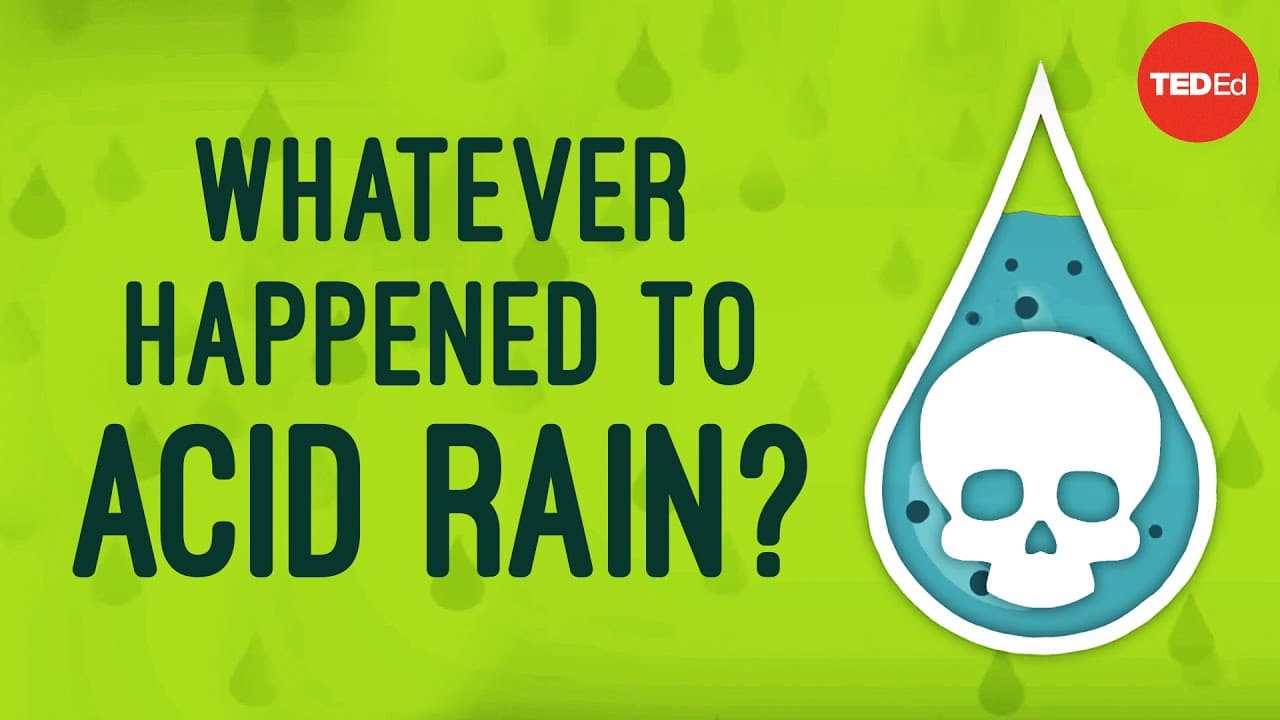
Acid rain is caused by pollutants like sulfur dioxide and nitrogen oxides, which significantly damage ecosystems and infrastructure. The implementation of a cap and trade system in the U.S. effectively reduced sulfur dioxide emissions, leading to a decline in acid rain and demonstrating the power of science-driven environmental policy.
Transcript
In 1963, scientists studying Hubbard Brook Experimental Forest in New Hampshire made a shocking discovery. Their most recent rainfall samples were nearly 100 times more acidic than usual. At these levels, additional downpours of acid rain would destroy the region’s marine and arboreal ecosystems in a matter of decades. Urgently sharing their findi... Read More
Key Insights
- 🥺 Acid rain, caused by pollutants like oxides of nitrogen and sulfur dioxide, led to significant environmental damage.
- 🧠 The cap and trade system effectively regulated emissions, reducing sulfur dioxide pollution and mitigating the effects of acid rain.
- 🥺 International efforts following the US and Canada's lead have helped reduce acid rain globally.
- 🧠 Scientific consensus, efficient technology, and policy intervention were crucial in combating acid rain.
- 🧠 Acid rain's decline demonstrates the success of policies that prioritize environmental protection.
- 😀 Countries like Russia, India, and China still face challenges due to reliance on high-sulfur coal.
- 🧠 Restoring ecosystems affected by acid rain requires reintroducing essential organisms.
Install to Summarize YouTube Videos and Get Transcripts
Explore YouTube Video Summarizer or Get YouTube Transcript Extractor
Questions & Answers
Q: What caused the acidity in the rain discovered by the scientists in 1963?
The acidity in the rain was caused by oxides of nitrogen and sulfur dioxide from pollution, dramatically increasing the pH levels and leading to acid rain.
Q: How did companies initially respond to the evidence linking acid rain to air pollution?
Companies initially denied responsibility and cast doubt on the research, lobbying against pollution regulations to protect their profits and influence.
Q: How did the cap and trade system help in reducing sulfur dioxide emissions?
The cap and trade system set limits on total sulfur dioxide emissions, allowing power plants to trade allowances and incentivizing emission reductions through economic flexibility.
Q: What were the significant environmental impacts of acid rain?
Acid rain led to the acidification of lakes and streams, crop and forest damage, soil degradation, and even corrosion of human structures made of stone or metal.
Summary & Key Takeaways
-
In 1963, scientists found acid rain 100 times more acidic than usual, threatening ecosystems.
-
Oxides of nitrogen and sulfur dioxide from pollution caused acid rain, damaging nature and structures.
-
Cap and trade system regulated sulfur dioxide emissions effectively, reducing pollution and mitigating acid rain effects.
Read in Other Languages (beta)
Share This Summary 📚
Summarize YouTube Videos and Get Video Transcripts with 1-Click
Try YouTube Summary with ChatGPT & Claude or YouTube Transcript Generator
Explore More Summaries from TED-Ed 📚





Summarize YouTube Videos and Get Video Transcripts with 1-Click
Try YouTube Summary with ChatGPT & Claude or YouTube Transcript Generator