What Are the Impacts of TSMC's New Arizona Chip Fab?
TL;DR
TSMC's new Arizona chip fabrication plant represents a $65 billion investment aimed at advancing U.S. semiconductor production. Despite production delays, it is set to commence with 4-nanometer chip production by 2025, addressing supply chain vulnerabilities and reducing reliance on Taiwan. The facility also incorporates sustainable practices, including water recycling, to mitigate environmental impact.
Transcript
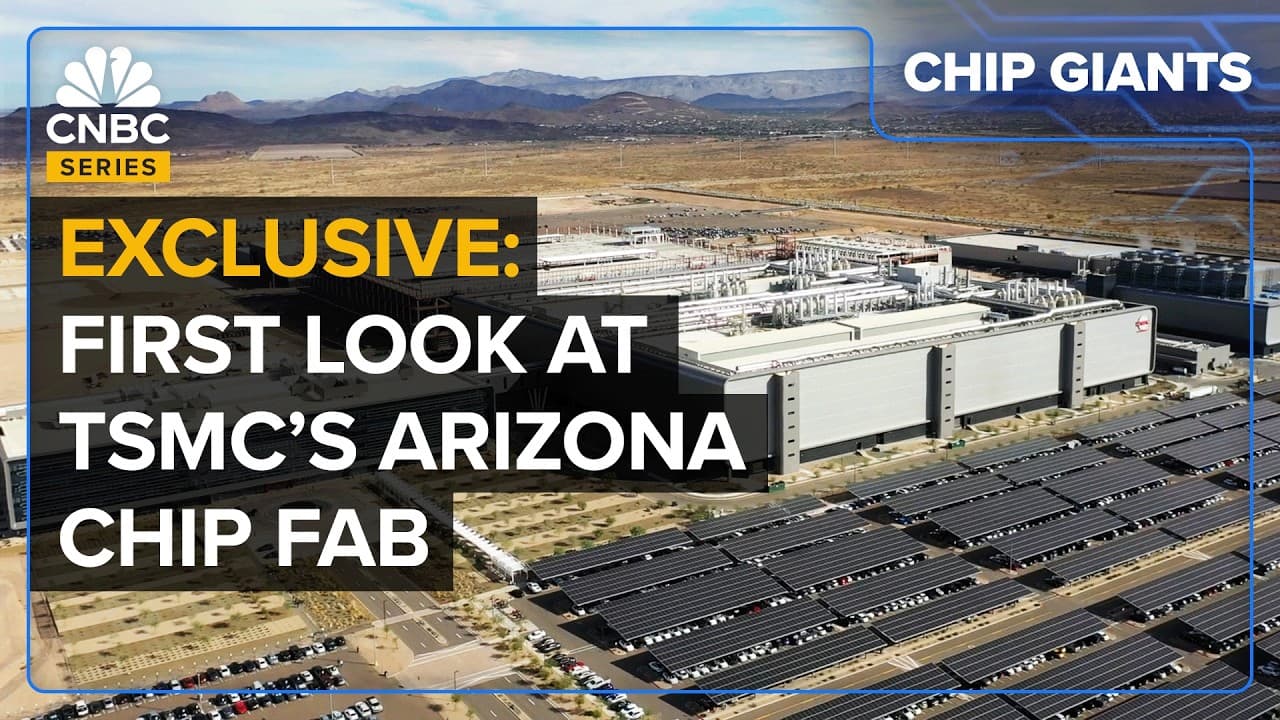
On 1,100 acres in the middle of the Arizona desert. Only one set of buildings rises above the horizon as far as the eye can see. We started construction well before the CHIPS Act came along, and that's in April of '21. This recently completed 3. 5-million-square-foot building is Taiwan Semiconductor Manufacturing Company's f... Read More
Key Insights
- TSMC's Arizona plant is the most advanced chip fabrication site in the U.S., marking a significant milestone for domestic chip production.
- The facility, covering 1,100 acres, represents a $65 billion investment and is set to produce 4-nanometer chips by 2025.
- The CHIPS Act is crucial for funding, with TSMC receiving $6.6 billion to support its U.S. operations amidst political and economic challenges.
- TSMC's expansion in the U.S. is driven by the need for supply chain diversification and reducing dependency on Taiwan for advanced chips.
- The Arizona fab faces challenges such as delays in production, high construction costs, and the need for skilled labor in the U.S.
- TSMC is implementing sustainable practices, including water recycling, to manage the environmental impact of its operations in Arizona.
- The global semiconductor supply chain remains vulnerable, highlighted by geopolitical tensions and natural disasters affecting production.
- TSMC's strategic partnerships, such as with Apple, highlight the demand for advanced chips and the importance of U.S. manufacturing capabilities.
Install to Summarize YouTube Videos and Get Transcripts
Explore YouTube Video Summarizer or Get YouTube Transcript Extractor
Questions & Answers
Q: What is the significance of TSMC's new Arizona fab?
TSMC's Arizona fab is significant as it represents the most advanced chip manufacturing facility on U.S. soil, marking a major step towards domestic production of advanced semiconductors. This move is crucial for supply chain diversification, reducing dependence on Taiwan, and addressing national security concerns related to chip availability.
Q: How does the CHIPS Act support TSMC's operations in the U.S.?
The CHIPS Act provides financial support to semiconductor companies to encourage domestic manufacturing. TSMC received $6.6 billion from the CHIPS Act, which helps offset the high costs of constructing and operating advanced chip fabs in the U.S. This funding is vital for TSMC to establish a strong foothold in the American semiconductor market.
Q: What challenges does TSMC face with its Arizona fab?
TSMC faces several challenges with its Arizona fab, including delays in production timelines, high construction costs, and the need for skilled labor. The company must also navigate regulatory hurdles and ensure sustainable practices, such as water recycling, to manage the environmental impact of its operations in the arid Arizona climate.
Q: Why is supply chain diversification important for TSMC?
Supply chain diversification is crucial for TSMC to mitigate risks associated with geopolitical tensions and natural disasters that could disrupt chip production. By expanding operations in the U.S., TSMC aims to ensure a stable supply of advanced semiconductors, meeting the demand from major customers like Apple and enhancing global supply chain resilience.
Q: What role does sustainability play in TSMC's Arizona operations?
Sustainability is a key focus for TSMC's Arizona operations, particularly in managing the environmental impact of chip manufacturing. The company is implementing water recycling systems to reduce water consumption and minimize waste. These efforts are critical in the water-scarce Arizona region, aligning with TSMC's commitment to sustainable industrial practices.
Q: How does TSMC's Arizona fab impact the global semiconductor industry?
TSMC's Arizona fab strengthens the U.S. position in the global semiconductor industry by increasing domestic production of advanced chips. This development reduces reliance on Asian manufacturing hubs and enhances supply chain security. The fab's output will support major tech companies, contributing to technological innovation and economic growth in the semiconductor sector.
Q: What are the economic implications of TSMC's investment in Arizona?
TSMC's $65 billion investment in Arizona has significant economic implications, creating jobs and boosting local economies. The fab's construction and operation generate demand for skilled labor and support industries, contributing to regional development. Additionally, the plant's output will enhance the competitiveness of U.S.-based tech companies by providing a reliable supply of advanced semiconductors.
Q: How does TSMC plan to address the skilled labor shortage in the U.S.?
To address the skilled labor shortage, TSMC is actively recruiting engineers from U.S. universities and training them in advanced semiconductor manufacturing. The company has also brought experts from Taiwan to share their knowledge and experience. These efforts aim to build a skilled workforce capable of operating TSMC's advanced manufacturing technologies in the U.S.
Summary & Key Takeaways
-
TSMC's new Arizona chip fab is a $65 billion investment, marking a significant step for advanced chip manufacturing in the U.S. Despite delays, pilot production has begun, with full production expected by 2025. The plant is crucial for supply chain diversification and reducing dependency on Taiwan.
-
The CHIPS Act provides essential funding, with TSMC receiving $6.6 billion to support its U.S. operations. The plant faces challenges such as high construction costs and a need for skilled labor. TSMC aims to produce 4-nanometer chips, with Apple as a significant customer.
-
TSMC's Arizona facility emphasizes sustainability, implementing water recycling to minimize environmental impact. The global semiconductor supply chain remains vulnerable to geopolitical tensions and natural disasters, highlighting the importance of domestic production capabilities and strategic partnerships with companies like Apple.
Read in Other Languages (beta)
Share This Summary 📚
Summarize YouTube Videos and Get Video Transcripts with 1-Click
Try YouTube Summary with ChatGPT & Claude or YouTube Transcript Generator
Explore More Summaries from CNBC 📚






Summarize YouTube Videos and Get Video Transcripts with 1-Click
Try YouTube Summary with ChatGPT & Claude or YouTube Transcript Generator