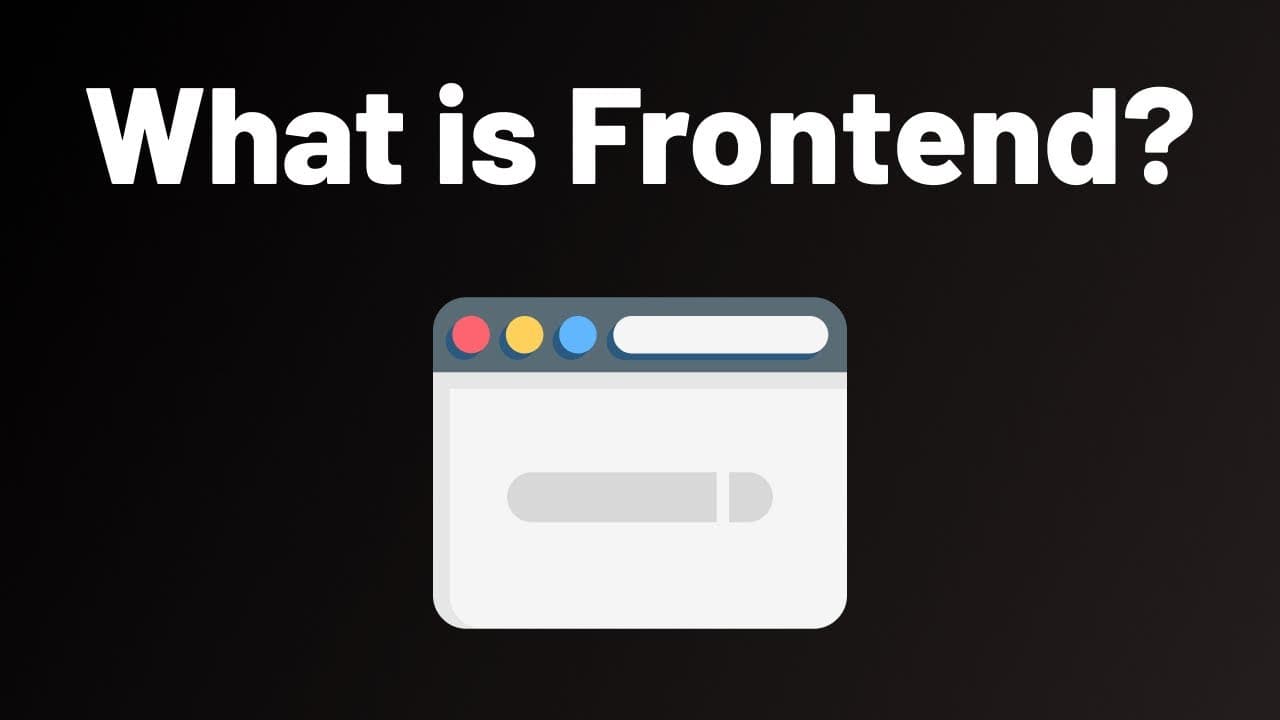
What is frontend web development and its tech stack?
TL;DR
Frontend web development covers HTML, CSS, and JavaScript plus tools that organize and optimize code, such as bundlers and transpilers, and it explains how the page becomes interactive using the DOM and JavaScript frameworks. It also shows how CSS preprocessors and frameworks speed up styling, and how frontend talks to backends via HTTP requests.
Transcript
Every website can be split up into two parts: the frontend and the backend. The frontend is all the visual stuff you see on the web page: the images, the text, the buttons, and the backend is what saves and manages your data, for example your amazon order history. In this video I'm going to explain all the technologies that are used in the front en... Read More
Key Insights
- The frontend covers visible page elements such as images, text, and buttons, while the backend handles data storage and retrieval like order history.
- HTML is used to add content to a web page, which creates the structure of the UI that users interact with.
- CSS styles a web page by controlling colors, sizes, and spacing to improve appearance and readability.
- JavaScript makes pages interactive by updating the DOM in response to user actions or data changes.
- A JavaScript framework provides a nicer way to build pages by managing DOM updates, reducing repetitive direct DOM manipulation.
- A bundler gathers multiple JavaScript files into one before deployment, simplifying load and maintainability.
- A transpiler adds features to JavaScript and then converts it to standard JavaScript that browsers can run.
- CSS preprocessing and frameworks, like Sass and Bootstrap, help organize and reuse styles across a project.
- HTTP communication between frontend and backend can be done using techniques like XMLHttpRequest, fetch, or axios to send data to servers.
- More videos from this channel:
- More from this channel: SuperSimpleDev
Install to Summarize YouTube Videos and Get Transcripts
Explore YouTube Video Summarizer or Get YouTube Transcript Extractor
Questions & Answers
Q: How does HTML contribute to the frontend, and why is it essential?
HTML provides the content and structure of a web page, defining elements such as text, images, and buttons that users see. It is essential because without HTML there would be no visible UI to interact with, and it serves as the foundation upon which CSS styles and JavaScript interactivity are applied to create a usable frontend experience.
Q: What role does CSS play in frontend development?
CSS is used to style a web page, controlling colors, sizes, spacing, and layout to make content visually appealing and usable. It separates presentation from content, enabling easier adjustments and theming, and works with features like preprocessors and frameworks to improve organization and speed up styling across a project.
Q: Why is JavaScript central to frontend interactivity?
JavaScript enables interactivity by updating the page in response to user actions through the DOM. It allows actions like clicking or typing to change text, show or hide content, and fetch data from a server, turning a static page into a dynamic application.
Q: What is the DOM and why does it matter?
The Document Object Model is a representation of the web page that JavaScript manipulates to reflect changes in the UI. It matters because direct DOM manipulation can be repetitive and hard to manage, so frameworks provide higher level abstractions to keep code maintainable while updating the UI efficiently.
Q: How do JavaScript frameworks improve frontend development?
Frameworks provide organized patterns for building user interfaces, handling state, and updating the DOM in a predictable way. They reduce repetitive code, improve maintainability, and offer ready-made components and tooling that speed up development and help scale projects more reliably.
Q: What is a bundler and what problem does it solve?
A bundler combines multiple JavaScript files into a single file that can be loaded by the browser, simplifying deployment and improving load performance. It helps organize code across files and modules, making large projects easier to manage and faster to run.
Q: What is a transpiler and why is it used in frontend workflows?
A transpiler transforms advanced or extended JavaScript syntax into standard JavaScript that browsers can execute. This allows developers to use newer language features while ensuring compatibility across different browsers, supporting smoother development and broader accessibility.
Q: How do CSS preprocessors and frameworks fit into frontend tooling?
CSS preprocessors extend CSS with features like variables and nesting, and combined with bundlers they allow organizing styles into multiple files that are compiled into a single CSS file. Frameworks provide ready-to-use styles and components to speed up UI development and ensure consistent design across pages.
Summary & Key Takeaways
-
Frontend development splits a web page into visible content and data management, using HTML for structure, CSS for style, and JavaScript for interactivity. The DOM enables dynamic updates, and frameworks simplify code maintenance. Bundlers and transpilers organize and convert code for browser compatibility, while CSS preprocessors and frameworks speed styling. HTTP methods connect frontend actions to backend services.
-
The video explains major frontend technologies including HTML, CSS, JavaScript, and popular frameworks, plus tooling like bundlers, transpilers, and preprocessors. It shows how the DOM is manipulated to update the page, how bundlers combine files, how transpilers enable advanced syntax, and how AJAX patterns like XMLHttpRequest, axios, and fetch send data to servers.
-
Finally, the guide emphasizes building a frontend ecosystem with tooling and patterns, and signals that a separate backend video will cover server-side concepts, while inviting viewers to engage and learn more about the subject matter.
Read in Other Languages (beta)
Share This Summary 📚
Summarize YouTube Videos and Get Video Transcripts with 1-Click
Try YouTube Summary with ChatGPT & Claude or YouTube Transcript Generator
Explore More Summaries from SuperSimpleDev 📚



Summarize YouTube Videos and Get Video Transcripts with 1-Click
Try YouTube Summary with ChatGPT & Claude or YouTube Transcript Generator