How Does Protein Intake Affect Healthy Aging?
TL;DR
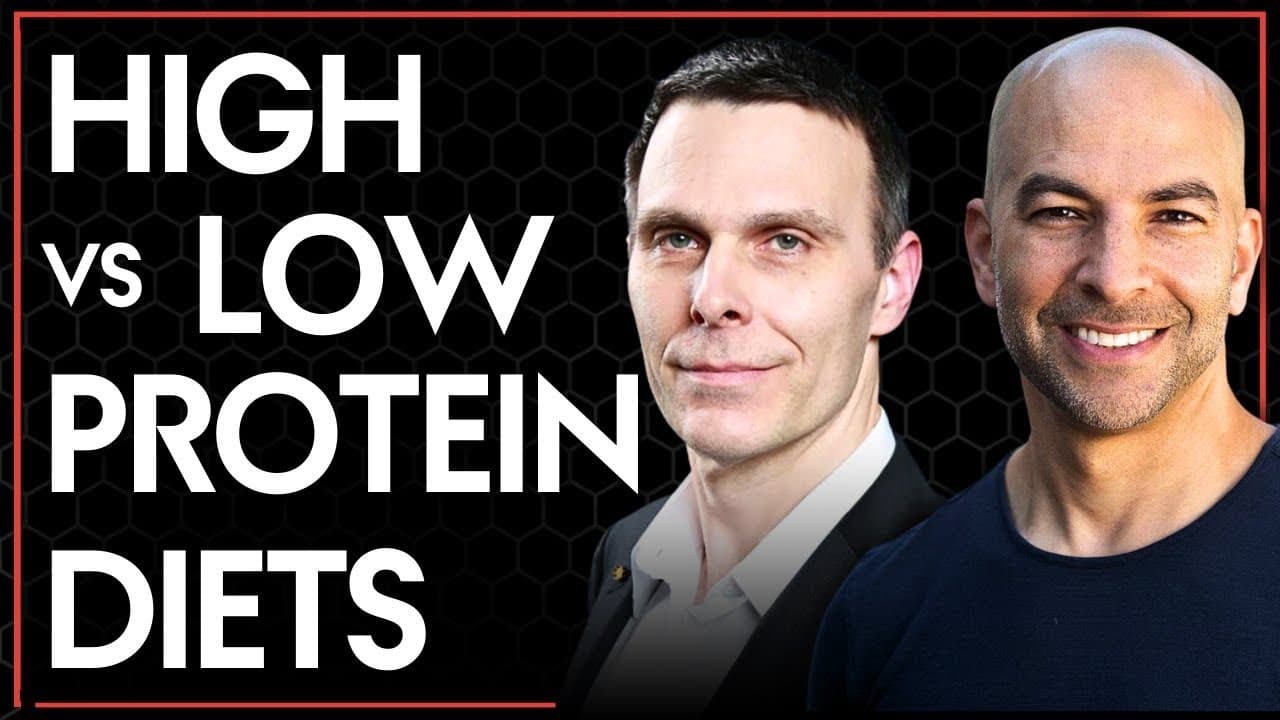
Higher protein intake, especially when paired with hypertrophy training, appears important for preserving muscle during aging. Mouse longevity studies produce conflicting results, and their low-protein findings may not translate directly to humans, who face major consequences from sarcopenia and osteoporosis. The discussed epidemiological evidence suggests lower protein may favor mortality before 65, while higher protein becomes favorable afterward.
Transcript
more protein versus less protein activating rap mtor in a way that is counterproductive I think it can I think there I think there are probably certain certainly cases where it can again you know I don't I don't know that anybody has really carefully done that study in mice there there was a study it's a really interesting study by Steve Simpson an... Read More
Key Insights
- Mouse longevity results are not explained by protein intake alone. Many diets associated with longer life were relatively low in protein, but the diet producing the longest absolute lifespan contained about 40 percent protein and was not calorically restricted.
- The relationship among macronutrients, energy expenditure, metabolism, and lifespan remains poorly understood. The discussed nutritional geometry research suggests that broad predictions about high or low protein can miss interactions among protein, carbohydrates, fats, and total caloric intake.
- Human responses to protein restriction may differ substantially from mouse responses. Kaeberlein's interpretation is that mice may tolerate very low protein without experiencing some of the muscle-related consequences observed clinically in people, although he identifies this conclusion as an intuition rather than a proven fact.
- Muscle is an important sink for glucose in humans. Attia argues that having larger, metabolically healthy muscles supports glucose tolerance and glucose homeostasis, while being under-muscled can contribute to serious metabolic consequences, including the distinction between having diabetes and not having diabetes.
- Sarcopenia and osteoporosis are major structural problems in later life. Attia estimates that at least 80 percent of people older than 75 may experience consequences from one or both conditions, while acknowledging that this estimate would require a dedicated population analysis.
- Protein intake can support muscle maintenance, but training greatly strengthens its effect. Studies comparing the recommended dietary allowance with roughly twice that amount reportedly show meaningful differences, yet the combination of protein and hypertrophy training produces a larger effect than protein alone.
- Lower protein intake was associated with reduced all-cause mortality before about age 65 in the epidemiological study discussed. After 65, the relationship reversed, with people consuming more protein showing lower all-cause mortality, making age central to interpreting the findings.
- Mortality effects later in life can outweigh similar relative effects earlier because mortality rises nonlinearly with age. Kaeberlein's own modeling suggested that the net benefit of higher protein might begin near age 50, although the published model placed the crossover sometime in the 60s.
Install to Summarize YouTube Videos and Get Transcripts
Explore YouTube Video Summarizer or Get YouTube Transcript Extractor
Questions & Answers
Q: How does protein intake affect longevity and healthy aging?
Protein intake appears to have different implications across age, species, and functional priorities. Some mouse diets associated with longer life were low in protein, but the longest absolute lifespan occurred with a diet containing about 40 percent protein. In humans, higher protein can help preserve muscle, particularly with hypertrophy training, and may become more favorable for all-cause mortality later in life.
Q: Why might low-protein mouse studies not apply directly to humans?
Mice may tolerate very low protein without developing the same consequences seen in aging people. Kaeberlein presents this as an intuition based on available data and observations, not as a proven conclusion. Human aging commonly involves sarcopenia, osteoporosis, declining muscle mass, and reduced activity, while animal studies, including primate studies, do not necessarily examine settings where those problems become similarly consequential.
Q: Why is muscle mass important for metabolic health during aging?
Muscle serves as a major sink for glucose and supports the body's ability to tolerate glucose and maintain glucose homeostasis. Attia argues that larger, metabolically healthy muscles can materially affect whether a person develops diabetes. Being under-muscled can therefore create metabolic problems in addition to reducing strength, mobility, activity, and the ability to function independently later in life.
Q: Does eating more protein preserve muscle without exercise?
Protein alone can make some difference in muscle maintenance, according to the studies recalled in the discussion. Comparisons between the recommended dietary allowance and roughly twice that amount reportedly show significant differences. However, the effect is not nearly as large as the response obtained when higher protein intake is paired with hypertrophy training, which supplies the stimulus needed for muscle protein synthesis.
Q: What happens to muscle and activity after age 75?
Attia observes that muscle mass and activity levels fall dramatically around age 75, although it is difficult to determine which decline drives the other. He estimates that at least 80 percent of people older than 75 may experience consequences from sarcopenia, osteoporosis, or both. These conditions can undermine physical function even when cancer or other diseases are absent.
Q: When might higher protein become favorable for mortality?
The epidemiological study discussed identified about age 65 as the point around which the association changed. Lower protein was linked with lower all-cause mortality before that age, while higher protein was linked with lower mortality afterward. The published modeling reportedly placed the cumulative crossover sometime in the 60s, whereas Kaeberlein's independent modeling suggested that it might occur closer to age 50.
Q: Why can later-life mortality effects outweigh earlier effects?
Mortality is relatively low earlier in adulthood and rises nonlinearly at older ages. Consequently, a reduction in mortality later in life can have a greater absolute impact than the same relative change earlier. Attia argues that this pattern could favor maintaining a higher-protein strategy throughout life, but Kaeberlein notes that the conclusion still depends on the relative sizes of the benefits and detriments.
Q: What did the mouse macronutrient study find about protein?
The nutritional geometry study examined many diets with different proportions of the three macronutrients and attempted to control caloric intake. Most diets associated with the longest mouse lifespans were toward the low end for protein. However, the single diet producing the longest absolute lifespan contained about 40 percent protein and was available without caloric restriction, making a simple low-protein conclusion difficult to defend.
Summary & Key Takeaways
-
Research comparing high- and low-protein diets does not establish one universally optimal strategy for longevity. Mouse experiments found that many of the longest-lived groups consumed relatively little protein, yet the diet producing the longest absolute lifespan contained about 40 percent protein and was provided without caloric restriction, complicating simple conclusions.
-
Human aging introduces practical concerns that animal longevity studies may not capture adequately. Insufficient muscle is associated with impaired glucose handling, while sarcopenia and osteoporosis can severely limit activity and independence in later life. Preserving physical function may therefore matter as much as avoiding individual diseases or maximizing lifespan alone.
-
The epidemiological study discussed found an age-dependent relationship between protein and mortality. Lower protein intake appeared favorable before about age 65, while higher intake appeared favorable afterward. Kaeberlein's separate modeling placed the crossover closer to age 50, although definitions, relative effects, and inaccessible underlying data created substantial uncertainty.
Read in Other Languages (beta)
Share This Summary 📚
Summarize YouTube Videos and Get Video Transcripts with 1-Click
Try YouTube Summary with ChatGPT & Claude or YouTube Transcript Generator
Explore More Summaries from Peter Attia MD 📚


Summarize YouTube Videos and Get Video Transcripts with 1-Click
Try YouTube Summary with ChatGPT & Claude or YouTube Transcript Generator