What Is Conscious Leadership and How Does It Work?
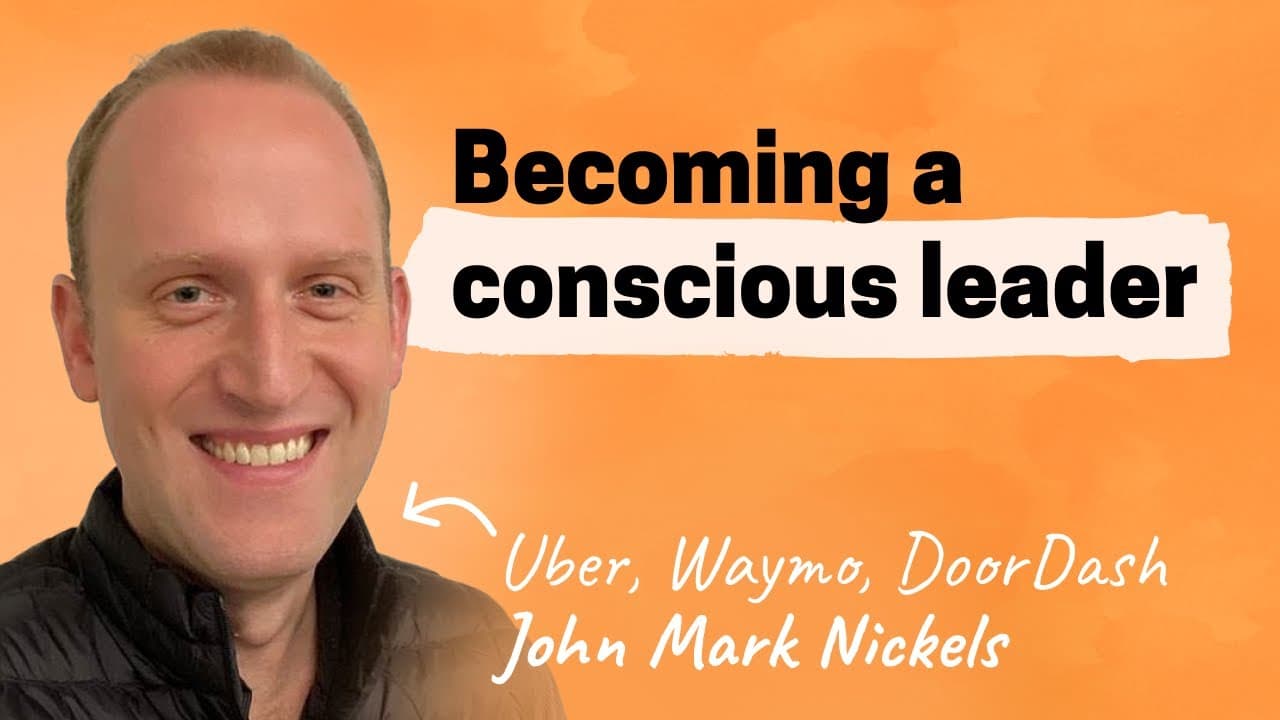
TL;DR
Conscious leadership means becoming aware of your beliefs, biases, emotions, and influence, then taking responsibility for how you affect others. Strong leaders create space for quieter voices, account for power imbalances, manage stress through inner work, and choose priorities by considering what their future selves will value, including meaningful relationships rather than marginal improvements at work.
Transcript
Get clear on your objective function, and one way that I've gotten clear on it is trying to think about it from future me because five years from now, I'm not going to give a if I made the presentation slightly better, but I'm going to care a lot about what kind of relationship I have with my daughters, and that means that the next action, ... Read More
Key Insights
- Conscious leadership is the practice of becoming aware of personal beliefs, biases, emotions, and influence, then accepting responsibility for their effects. It applies beyond formal management because every person influences family members, partners, communities, colleagues, and society through everyday choices and behavior.
- Leadership is broadly defined as having influence in the world, not holding a managerial title. Under this definition, everyone participates in leadership because people continually shape one another through how they communicate, make decisions, vote, support relationships, and show up within their communities.
- Inherited belief systems often operate without conscious examination. Ideas received from parents, churches, or communities can remain unquestioned and later create conflict, so conscious leadership involves exploring one's interior world and recognizing the background assumptions that guide reactions and decisions.
- Soft leadership is strengthened by listening and creating space rather than always presenting the loudest or most polished argument. Nickels still sees value in guiding a meeting's narrative, but his approach evolved toward hearing others first and avoiding the need to win every discussion immediately.
- Seniority creates power dynamics that can suppress honest disagreement. When a senior leader dismisses an idea, junior colleagues may hesitate to challenge that judgment, so experienced leaders must remain mindful of their disproportionate influence and deliberately invite other perspectives before stating their own conclusions.
- Fear can produce results through carrots and sticks, but it can also push talented people into reactive behavior. Nickels observed highly capable specialists arguing from what he calls the lizard brain, showing that exceptional technical intelligence does not prevent stress from damaging collaboration.
- Meditation and inner work can provide a response to intense professional and personal stress. Nickels began exploring these practices while building Uber Pool, adjusting to a move from Chicago to San Francisco, raising his firstborn daughter, and feeling overwhelmed by demanding weekly product reviews.
- Future-self thinking can clarify priorities by separating enduring values from short-term professional details. Nickels expects to care far more about his relationship with his daughters than marginal improvements to a presentation, so today's repeated actions should reflect the relationships and life outcomes he ultimately values.
Install to Summarize YouTube Videos and Get Transcripts
Explore YouTube Video Summarizer or Get YouTube Transcript Extractor
Questions & Answers
Q: What is conscious leadership?
Conscious leadership means becoming more aware of one's interior world, including inherited beliefs, personal biases, emotions, and habitual reactions, then taking responsibility for one's influence. Because leadership is defined as influence rather than formal authority, the practice applies to everyone. It concerns how people affect colleagues, children, partners, communities, and society through their choices and everyday behavior.
Q: How can leaders practice conscious leadership at work?
Leaders can practice conscious leadership by noticing how their position affects a room, inviting other people to speak first, and resisting the urge to win every argument immediately. They should examine the assumptions and emotions shaping their reactions, make room for follow-up discussions, and accept responsibility for how their words influence participation, disagreement, and decision-making across the team.
Q: Why should senior leaders let junior colleagues speak first?
Senior leaders carry positional influence that can make junior colleagues reluctant to disagree. If a senior person declares that an idea is poor, others may withhold contrary views even when they have valuable evidence. Letting junior colleagues speak first creates space for perspectives that might otherwise disappear and helps prevent hierarchy from determining the discussion before genuine evaluation occurs.
Q: Are soft skills important in product leadership?
Soft skills are important because product leadership requires more than polished slides, technical reasoning, or being the loudest person in a meeting. Listening, recognizing power imbalances, managing emotional reactions, and creating room for other voices can improve collaboration. Nickels describes his own evolution from trying to win arguments toward guiding discussions with greater awareness and restraint.
Q: How did stress lead JM Nickels to meditation and inner work?
Nickels began exploring meditation and inner work during a highly stressful period at Uber. He was a junior product manager building Uber Pool, attending demanding weekly reviews, caring for a six-month-old firstborn daughter, and adjusting after moving from Chicago to San Francisco. Feeling close to snapping motivated him to search for a healthier way to handle pressure.
Q: What leadership lesson came from Uber's early culture?
Uber's early culture showed Nickels both the energy of an ambitious mission and the limitations of fear-based management. He valued the bold transportation vision, future-focused product work, and lessons from stressful product reviews. At the same time, he saw that carrots and sticks could produce results while driving people toward defensive, reactive behavior rather than thoughtful, conscious collaboration.
Q: How can future-self thinking improve decision-making?
Future-self thinking clarifies an objective function by asking which outcomes will still matter years later. Nickels contrasts making a presentation slightly better with building a strong relationship with his daughters. Because today's actions accumulate into future relationships and life outcomes, this perspective helps direct attention toward durable priorities instead of allowing immediate work pressure to dominate every choice.
Q: Why does awareness of mortality affect leadership priorities?
Awareness that life will end can make priorities feel more concrete and urgent. Nickels argues that people often live as though they will continue forever, moving through work, vacations, meals, and ordinary routines without confronting that limit. Mindfulness of mortality punctuates reality and encourages leaders to reconsider whether their daily actions support the relationships and values they truly care about.
Summary & Key Takeaways
-
JM Nickels defines leadership as influence rather than management authority, making everyone a leader in some part of life. Consciousness adds awareness of inherited beliefs, personal biases, and inner reactions. Conscious leadership therefore requires people to examine those forces and accept responsibility for how their behavior shapes colleagues, families, communities, and the wider world.
-
Nickels describes evolving from a leader who prioritized polished presentations and winning arguments into one who listens more carefully and lets others speak first. Seniority creates power imbalances that can discourage junior colleagues from disagreeing. Effective leadership therefore includes recognizing positional influence, creating psychological space, and allowing important decisions to continue beyond a single meeting.
-
Stress during Uber's rapid growth pushed Nickels toward meditation and inner work. While building Uber Pool, he faced demanding reviews, major personal changes, and the pressures of caring for his first child. The experience showed him that even highly capable teams can fall into reactive conflict when fear and stress overwhelm thoughtful collaboration.
Read in Other Languages (beta)
Share This Summary 📚
Summarize YouTube Videos and Get Video Transcripts with 1-Click
Try YouTube Summary with ChatGPT & Claude or YouTube Transcript Generator
Explore More Summaries from Lenny's Podcast 📚






Summarize YouTube Videos and Get Video Transcripts with 1-Click
Try YouTube Summary with ChatGPT & Claude or YouTube Transcript Generator