How Does the ICT Weekly Scalping Setup Work? Review for 11/25/17
TL;DR
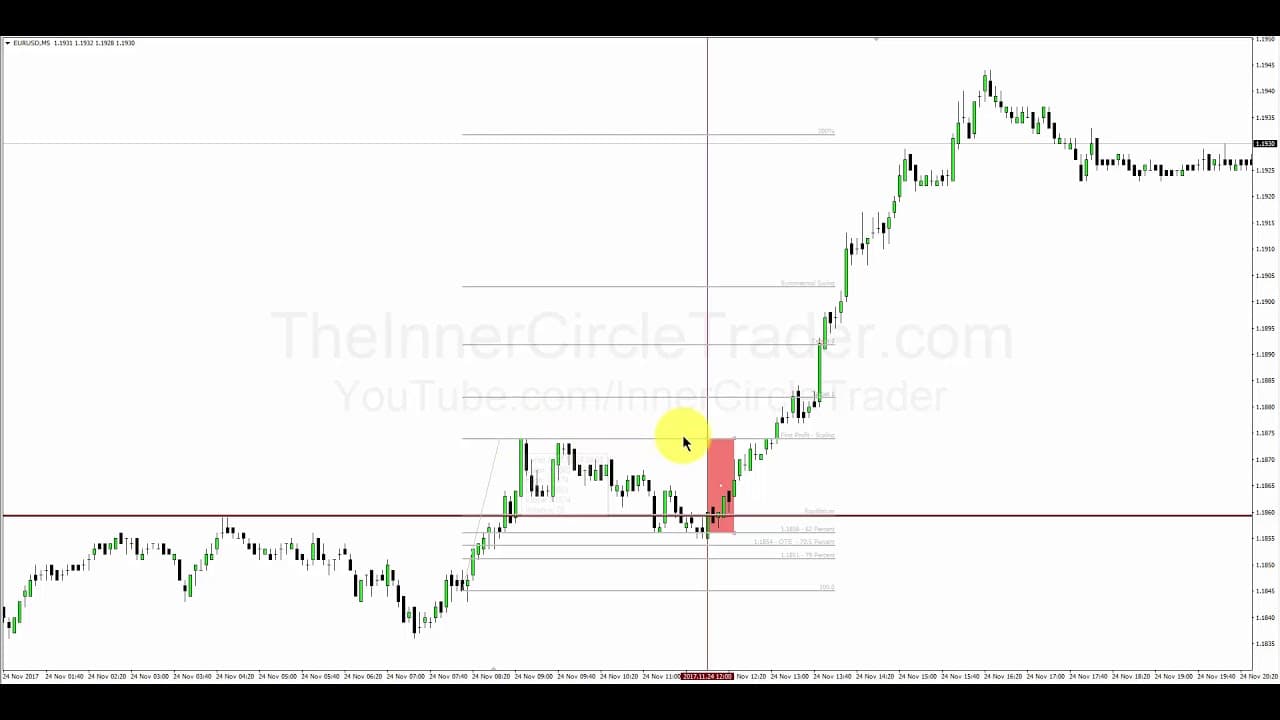
The ICT weekly scalping setup uses the daily chart to establish directional bias, then lower time frames to locate a short-term entry targeting prior highs or lows. In the reviewed euro-dollar example, a broken swing high and a subsequently formed swing low created a bullish framework before analysis moved to the hourly and 15-minute charts. Read on for the complete setup sequence, timing criteria, and reasons to avoid weak conditions.
Transcript
the mooring folks we're gonna take a couple examples from last action using the scalping method that I've taught you all right so before we begin we go to our daily chart and we look at the fiber first and I'm gonna put my little tools here so you guys can use this as a means of determining your bias all right so I have three tools here it's a down... Read More
Key Insights
- Scalping involves identifying swing highs and lows to determine market bias.
- Daily charts are used to establish a bullish or bearish bias.
- Lower timeframes, like hourly charts, are used for finding entry points.
- Waiting for swing highs to break and form swing lows is crucial.
- Optimal trade entries are found post 7:00 a.m. New York time.
- Scalping aims for 20-30 pip gains, considered a scalp in forex.
- Risk management involves risking a maximum of 2% per trade.
- Consistent practice on demo accounts is recommended before live trading.
Install to Summarize YouTube Videos and Get Transcripts
Explore YouTube Video Summarizer or Get YouTube Transcript Extractor
Questions & Answers
Q: How does the ICT weekly scalping setup work?
Start on the daily chart and identify a swing high or swing low that price has broken. After a broken swing high, wait patiently for a swing low to form, then use previous-day highs and older highs to frame a bullish scalp on a lower time frame.
Q: How is directional bias determined for the ICT scalping method?
Directional bias is defined from swing structure on the daily chart. In the euro example, price broke a swing high and later formed a swing low, showing strength and establishing a bullish bias.
Q: Which charts are used to find an ICT scalp?
The process begins on the daily chart to establish the framework and directional bias. The analysis then moves to the hourly chart to locate liquidity and the 15-minute chart to inspect the price action for a suitable entry.
Q: What price levels frame a bullish scalping setup?
After a swing high is broken and a swing low forms, the setup focuses on previous-day highs and older highs. These levels represent the liquidity above price that a bullish move may target.
Q: When should the New York scalping setup form?
The described system looks for its setup after 7:00 a.m. New York time. A setup that forms during the London open kill zone does not meet the system’s New York timing criteria.
Q: When should a trader avoid taking the scalp?
Avoid the trade when price moves sideways in a tight consolidation without a clear impulsive swing and retracement. The reviewed example treats that condition as unsuitable because it does not provide the structure needed for an optimal trade entry.
Q: Why does patience matter in this scalping method?
After a swing high breaks, the trader must wait for a swing low to form instead of forcing an immediate trade. The method emphasizes waiting for its defined conditions rather than changing strategies simply because no trade appears that day.
Q: What is the purpose of the 11/25/17 ICT Weekly Scalping Setup Review?
The review demonstrates a foundational ICT scalping approach through recent euro-dollar price action. It isolates a small, repeatable segment of price action, daily bias, lower-time-frame structure, liquidity targets, and a properly timed entry, for continued weekly study.
Summary & Key Takeaways
-
Scalping in forex trading requires identifying swing highs and lows to set a market bias. This bias, established on daily charts, guides traders to find setups on lower timeframes like hourly or 15-minute charts. The focus is on consistency and patience, avoiding daily trades, and aiming for 20-30 pip gains.
-
The method involves waiting for swing highs to break and form swing lows, then looking for optimal trade entries, especially post 7:00 a.m. New York time. Traders are advised to risk no more than 2% per trade and practice on demo accounts to build consistency before moving to live trading.
-
Successful scalping depends on understanding market bias, using daily charts for trend determination, and executing trades on lower timeframes. Emphasis is placed on consistent practice, risk management, and patience to achieve sustainable trading results without seeking daily trades.
Read in Other Languages (beta)
Share This Summary 📚
Summarize YouTube Videos and Get Video Transcripts with 1-Click
Try YouTube Summary with ChatGPT & Claude or YouTube Transcript Generator
Explore More Summaries from The Inner Circle Trader 📚



Summarize YouTube Videos and Get Video Transcripts with 1-Click
Try YouTube Summary with ChatGPT & Claude or YouTube Transcript Generator