How Should You Run a Product Review? | Lenny & Friends Summit 2024
TL;DR
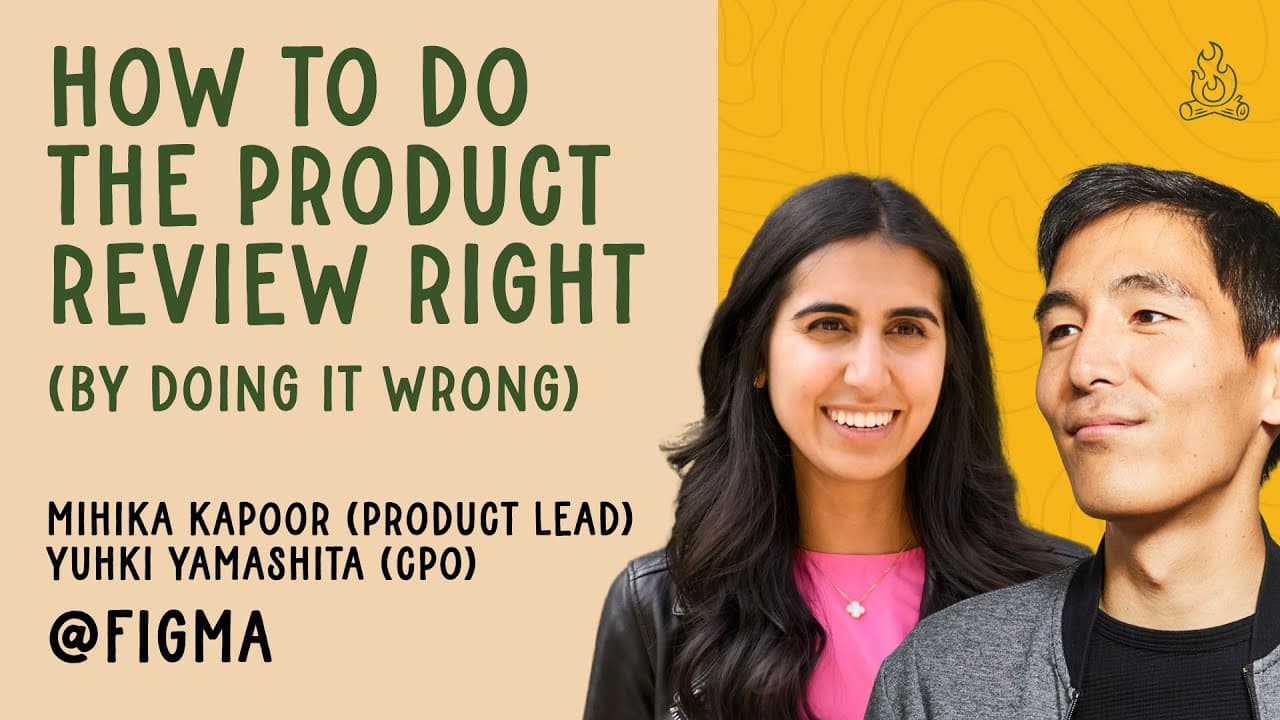
A strong product review leads with the recommendation or most consequential proposal, using the discussion to build trust and win over key stakeholders rather than merely secure a decision. Presenting the punchline early helps reviewers evaluate the framing, reveal disagreement, and focus attention where it matters. Read on for practical ways to structure the review, improve slide headings, and identify misalignment.
Transcript
hello Lenny con I'm Mika I'm a product lead at figma and the founding PM for figma slides and I'm Yuki and I lead the product team at figma and today we are so excited to be chatting with you about how to do the product review right by actually doing it a little bit wrong specifically we're super excited to take you behind the scenes and give you b... Read More
Key Insights
- The most important outcome of a product review is building trust and winning over key stakeholders, not simply making a decision between competing options. Decisions may still occur, but treating them as the only purpose overlooks the relationship and alignment created through a well-directed discussion.
- Executive requests for the deck link can signal a desire to see the recommendation immediately. When reviewers scroll ahead while the presenter supplies context, they may be looking for the conclusion needed to judge whether the preceding problems, goals, and principles support the proposed direction.
- Early requests for agreement often produce silence because participants lack enough information to evaluate the framing. Reviewers may hesitate to endorse problems, goals, or principles before seeing the recommendation, since apparently reasonable framing can still lead to a conclusion they do not support.
- The punchline should appear within the first 20% of the deck or the first five minutes of the review. This gut check prevents background material from consuming the meeting and gives participants enough time to react to the consequential or controversial parts of the proposal.
- Strong negative reactions can be useful when they happen early because they reveal what requires attention. Presenting controversial material near the beginning encourages active participation and allows the group to spend the review investigating disagreement instead of discovering it during the final minutes.
- Opinionated slide headings make the review easier to scan and understand. A heading should communicate the conclusion or point of view rather than use a generic label such as audience, helping distracted participants quickly recover the argument and rejoin the discussion.
- An alignment widget identifies where participants are most misaligned before discussion time is allocated. Soliciting everyone's opinions helps the product manager focus the conversation on areas of genuine disconnect instead of spending equal time on topics that already have broad support.
- Memorable internal language can help a proposal spread through a company. Figma's slides initiative used the name Flides to create curiosity and support for a bottom-up effort, and the term became attached to work streams, animations, layouts, and informal Friday greetings.
Install to Summarize YouTube Videos and Get Transcripts
Explore YouTube Video Summarizer or Get YouTube Transcript Extractor
Questions & Answers
Q: How should a product review begin?
Begin with the recommendation, controversial proposal, or other consequential conclusion instead of a long sequence of background slides. Revealing the punchline early gives reviewers a reason to engage and leaves more time to investigate strong reactions or disagreement.
Q: What is the most important outcome of a product review?
The most important outcome is building trust and winning over key stakeholders, not just making a decision. A decision may still result, but presenters should also use the review to demonstrate judgment and direct attention toward the areas that need discussion.
Q: Why should product managers avoid lengthy context setting?
Lengthy context setting can cause reviewers to tune out, multitask, or search the deck for the recommendation. Problems, goals, and principles may sound reasonable yet still lead to a recommendation that participants do not support.
Q: Why do executives sometimes skip to the end of a product review deck?
Executives may skip ahead because they want to see the actual recommendation before evaluating the setup. At Figma, Mika learned that Dylan's request for the file link could mean that he wanted to find the conclusion immediately.
Q: Why can asking for alignment early create awkward silence?
Participants may not yet know what their agreement would imply because they have not seen the final recommendation. They can accept the framing in principle while worrying that it leads to the wrong conclusion, so they may prefer to look ahead before committing.
Q: How can slide headings improve a product review?
Slide headings should communicate a conclusion or point of view rather than merely label a topic. Opinionated headings make the argument easier to scan and help distracted participants recover the thread of the discussion.
Q: How can teams identify disagreement during a product review?
Teams can use an alignment widget to collect participants' opinions and expose where their views diverge. The product manager can then focus the conversation on genuine disconnect instead of allocating equal time to areas that already have broad support.
Q: How did memorable language help Figma's slides proposal?
Figma's slides initiative used the internal name Flides to create curiosity and support for a bottom-up effort. The name spread into work streams, animations, layouts, and informal Friday greetings, helping the proposal become part of company conversation.
Summary & Key Takeaways
-
Product reviews can feel broken when executives skip ahead, take control of the material, or disengage during lengthy setup. These behaviors often indicate that reviewers want the actual recommendation first. A successful review should help the presenter direct attention toward the areas that need discussion while building trust with key stakeholders.
-
Traditional review structures place background, problems, goals, and principles before solutions and recommendations. This gradual buildup can bury the most consequential proposal until the meeting is nearly over. Starting with the punchline creates engagement earlier, reveals strong reactions, and leaves more time to examine the assumptions or choices that produce disagreement.
-
Clear, opinionated headings and alignment widgets make reviews easier to navigate. Headings should state conclusions instead of merely naming topics, while alignment widgets reveal where participants disagree. Memorable internal names can also generate curiosity and support, as Figma's temporary name for its slides product spread across teams and became part of company language.
Read in Other Languages (beta)
Share This Summary 📚
Summarize YouTube Videos and Get Video Transcripts with 1-Click
Try YouTube Summary with ChatGPT & Claude or YouTube Transcript Generator
Explore More Summaries from Lenny's Podcast 📚




Summarize YouTube Videos and Get Video Transcripts with 1-Click
Try YouTube Summary with ChatGPT & Claude or YouTube Transcript Generator