How Does the JSOW-C Strike Hardened Bunkers?
TL;DR
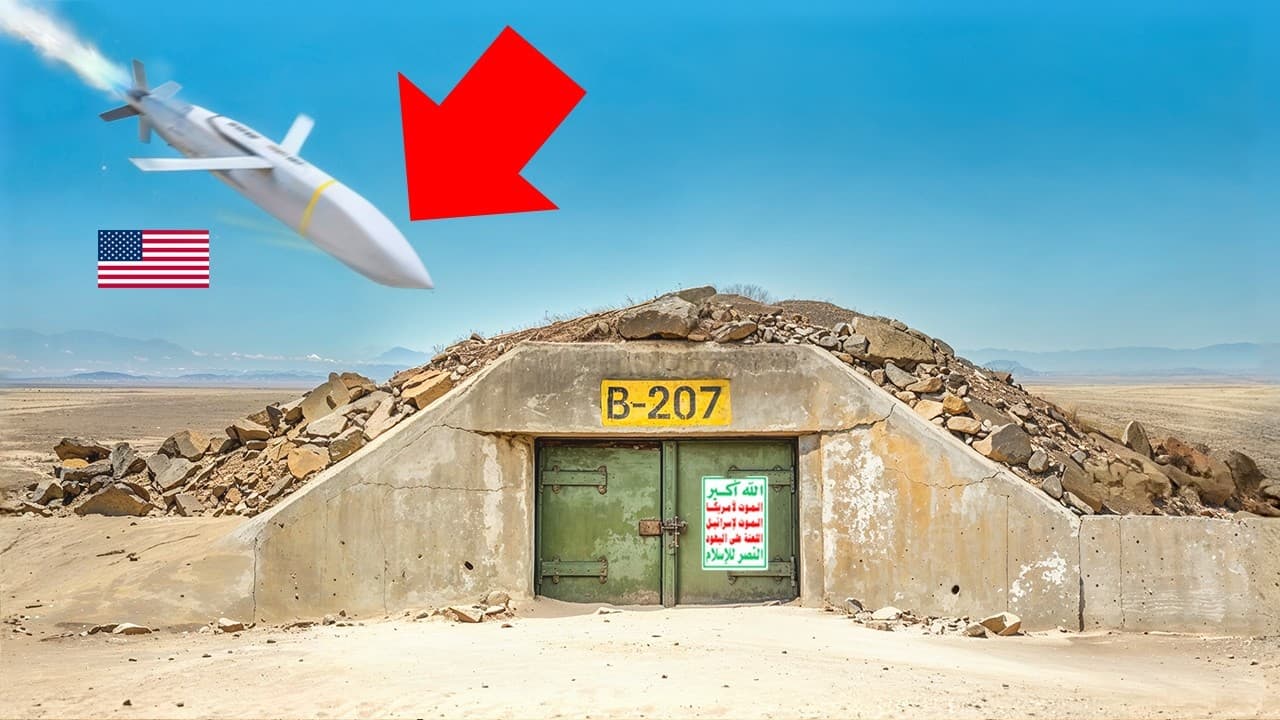
The JSOW-C defeats hardened targets by using a shaped charge to open a narrow channel before its main explosive charge detonates inside. Its combined GPS, inertial, infrared, and Link 16 systems support accurate stand-off attacks, while carrier-based refueling allows F-18 formations to conduct repeated missions across widely separated targets without depending on Air Force tankers.
Transcript
This is the JSOWC, where a Navy carrier strike group turns precision into punishment. The Houthis never saw it coming until everything started exploding at once. On March 28th, F-18s from the USS Harry S. Truman punched deep into Yemen in a coordinated multi-wave blitz. And all of it was made possible by this new precision weapon. The success of th... Read More
Key Insights
- The JSOW-C is a stand-off precision weapon that allows F-18 crews to attack from outside the immediate reach of Houthi air defenses. Its high-altitude launch profile lets it glide toward a pre-plotted target while the launching aircraft remains farther from defended areas.
- The BROACH warhead is a two-stage system built to attack hardened structures. A shaped charge in the nose first creates a narrow opening through protective material, and the larger main charge follows into that channel before detonating within the target.
- The shaped charge works by collapsing a thin metal liner into a concentrated stream of superheated material. According to the transcript, this jet can penetrate up to 3 ft of solid steel or 6 ft of reinforced concrete before the main explosive charge arrives.
- The JSOW-C uses blended GPS and inertial navigation during its flight. GPS establishes the planned course, while accelerometers and a ring laser gyroscope track movement and orientation, allowing the weapon to continue navigating if satellite guidance becomes unavailable or jammed.
- The imaging infrared seeker provides terminal target recognition by comparing observed terrain with a reference image uploaded before launch. It can identify residual heat, distinguish different target types, and adjust the aim point when the intended target has shifted slightly.
- Link 16 enables operators to update a JSOW-C after launch through an encrypted, jam-resistant connection. Controllers can transmit new coordinates, change the desired impact point, or redirect the weapon toward another target without requiring the launching pilot to make another attack pass.
- Buddy refueling extends the operational reach of carrier-based F-18 formations. A tanker-configured Super Hornet transfers fuel through a trailing hose and basket, allowing other aircraft to strike farther away, remain airborne longer, and return with a safer fuel margin.
- Carrier strike operations depend on coordination beyond the weapon itself. The described campaign required target preparation, rapid aircraft rearming, repeated launches, airborne refueling, synchronized formations, and careful recovery planning to attack widely separated sites throughout the day.
Install to Summarize YouTube Videos and Get Transcripts
Explore YouTube Video Summarizer or Get YouTube Transcript Extractor
Questions & Answers
Q: How does the JSOW-C penetrate a hardened bunker?
The JSOW-C uses a two-stage BROACH warhead. Its nose-mounted shaped charge detonates on contact and collapses a metal liner into a concentrated stream that cuts through steel, rebar, reinforced concrete, or similar protection. The main charge then follows through the newly created channel and detonates inside, directing the weapon's destructive effect beyond the bunker exterior.
Q: What guidance systems does the JSOW-C use?
The JSOW-C combines GPS, inertial navigation, an imaging infrared seeker, and Link 16. GPS and inertial navigation guide it along a pre-programmed route, while the infrared seeker compares the visible target area with stored reference imagery near impact. Link 16 adds the ability for controllers to revise coordinates, change the aim point, or assign another target during flight.
Q: How can the JSOW-C navigate when GPS is jammed?
The weapon's inertial navigation system continues tracking its speed, direction, and orientation when GPS is denied. The transcript describes a system using a ring laser gyroscope and accelerometers, which does not require continuous satellite reception. GPS normally helps establish the flight path, but inertial measurements allow the weapon to remain close to that planned course when jamming interrupts the signal.
Q: Why does the JSOW-C use an imaging infrared seeker?
The imaging infrared seeker improves terminal accuracy and helps the weapon recognize the intended target rather than relying only on stored coordinates. It scans the area, compares the scene with a reference image uploaded by planners, and detects features such as residual generator heat. If the target has moved slightly, the seeker can correct the weapon's final aim point.
Q: How does Link 16 change a JSOW-C target after launch?
Link 16 provides an encrypted, jam-resistant digital connection between the weapon and airborne controllers. Through that connection, operators can send revised coordinates, select a different impact point, or redirect the weapon to another target discovered after launch. The transcript presents this capability as useful against mobile command posts and other time-sensitive targets that may leave their original locations.
Q: How does buddy refueling extend an F-18 mission?
A tanker-configured F-18 carries a centerline buddy refueling pod with a trailing hose and basket. The receiving aircraft approaches from behind, extends its nose-mounted probe, and connects with the basket while both jets maintain close formation. Transferred fuel increases mission reach, loiter time, and the safety margin for returning to the carrier without relying on an Air Force tanker.
Q: What are the risks of F-18 buddy refueling?
The tanker role adds drag, reduces speed, and limits the amount of ordnance the donating aircraft can carry. Refueling also demands precise formation flying because the aircraft remain close together while moving at high speed. A contact error can damage the receiving probe or tear away the drogue, so the added range comes with operational and handling risks.
Q: What made the carrier strike operation possible?
The operation depended on coordinated target planning, multiple strike formations, precision weapons, rapid rearming, onboard refueling, and repeated carrier launches. F-18 crews attacked hardened facilities, communications sites, power infrastructure, military bases, boats, and ammunition depots across separated regions. The description emphasizes that advanced guidance mattered alongside flight-deck preparation, logistics, teamwork, and the ability to adapt as conditions changed.
Summary & Key Takeaways
-
F-18s from the USS Harry S. Truman conducted coordinated waves of attacks against headquarters, storage sites, airfield facilities, communications infrastructure, power systems, bases, boats, and ammunition depots. The account emphasizes rapid rearming, precise mission planning, and repeated sorties as central features of the carrier strike group's operation over Yemen.
-
The JSOW-C combines stand-off range with a BROACH warhead designed for hardened structures. Its initial shaped charge penetrates protective material and creates a channel for the main charge. The transcript says this sequence produces lethal blast pressure and thousands of high-velocity fragments after the weapon breaches steel, reinforced concrete, or rock-protected facilities.
-
Guidance comes from blended GPS and inertial navigation, an imaging infrared seeker, and Link 16 connectivity. These systems let the weapon follow a planned route, operate when GPS is disrupted, compare the target area with stored imagery, refine its terminal aim, and receive new coordinates or target assignments after launch.
Read in Other Languages (beta)
Share This Summary 📚
Summarize YouTube Videos and Get Video Transcripts with 1-Click
Try YouTube Summary with ChatGPT & Claude or YouTube Transcript Generator
Explore More Summaries from Beyond Military 📚


Summarize YouTube Videos and Get Video Transcripts with 1-Click
Try YouTube Summary with ChatGPT & Claude or YouTube Transcript Generator