How to Address Androgenic Hair Loss Naturally
TL;DR
Addressing androgenic hair loss requires improving the follicle environment while correcting insulin resistance, which the transcript identifies as a major driver of excess DHT. The proposed approach combines microneedling, red or near-infrared light, rosemary oil, vitamin D3, zinc, natural 5-alpha-reductase inhibitors, and nutrient-rich foods that support circulation, mitochondria, inflammation control, and hair growth.
Transcript
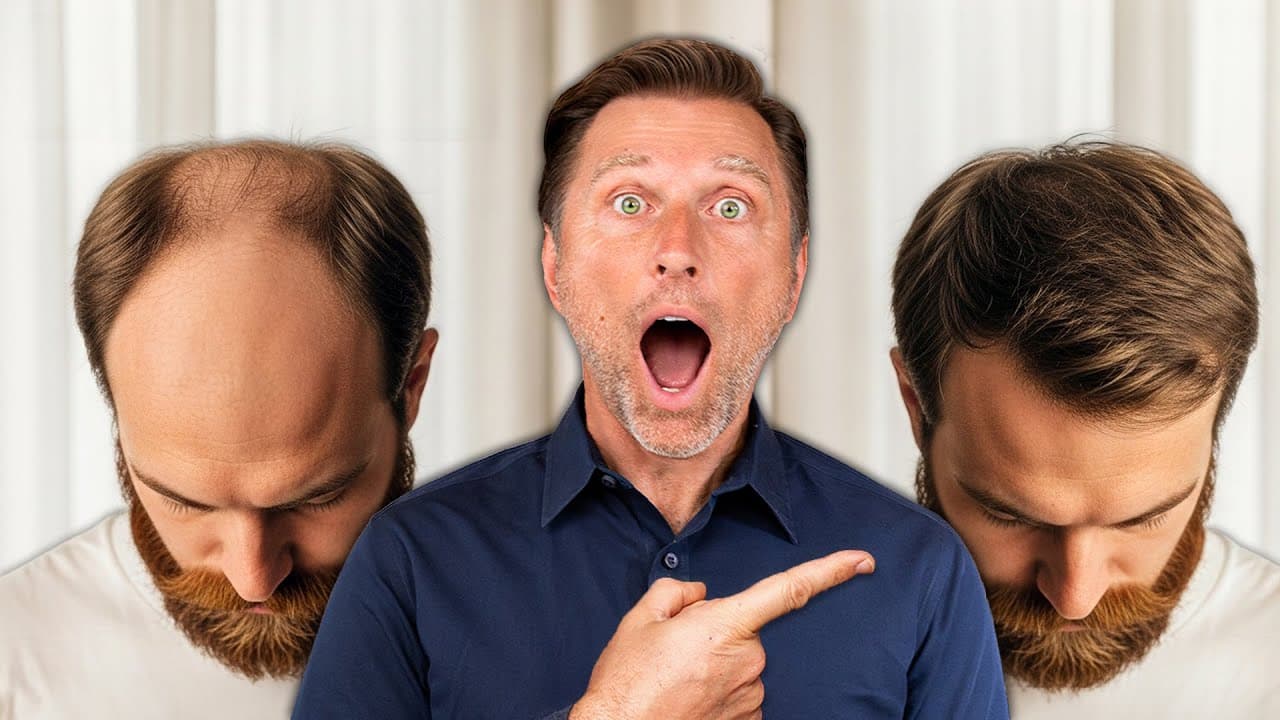
Today we're going to talk about how to reverse hair loss. And I'm also going to get into the number one best meal if you want to grow your hair. The most common cause of hair loss is androgenic. And I'm going to explain what that is, but that involves a pattern baldness where if it's a man, they're going to actually lose their hair on the top right... Read More
Key Insights
- Androgenic hair loss is described as patterned baldness affecting the top of the scalp in men and causing more generalized thinning in women. The transcript connects this pattern to DHT activity and changes within the environment surrounding each hair follicle.
- A hair follicle is the specialized environment surrounding a hair, not the hair itself. It functions like a small factory that supports growth and requires substantial oxygen, healthy mitochondria, sufficient energy, and suitable local tissue conditions to remain productive.
- Excess DHT is presented as a cause of impaired hair growth, reduced scalp oxygen, inflammation, and scar-tissue formation. As this process progresses, the follicle becomes less functional, hair stops growing, and the affected scalp may develop a smooth, shiny appearance.
- Insulin resistance is identified as the strongest driver of elevated DHT beyond aging and genetic sensitivity. According to the transcript, it increases expression of the enzyme that converts testosterone into DHT and impairs the liver's ability to regulate testosterone effectively.
- Microneedling works by mechanically opening and stimulating scalp tissue. The proposed benefits include increasing oxygen access, breaking up scar tissue, initiating repair, and reactivating stem cells within the follicle environment, similar to loosening soil so water and oxygen can enter.
- Red or near-infrared light therapy is presented as a method for restoring mitochondrial activity within follicles. The transcript specifies wavelengths between 630 and 850 nm and argues that improved mitochondrial energy gives follicle cells more capacity to support new hair growth.
- Rosemary oil is described as a natural treatment that improves scalp circulation through its phytonutrients. The transcript also attributes reduced DHT, lower inflammation, and mitochondrial protection to rosemary oil, making it a multipurpose addition to the proposed hair-restoration strategy.
- Liver, onions, sauerkraut, and pumpkin seeds form the recommended hair-supporting meal. Liver supplies heme iron and trace minerals, onions provide quercetin, sauerkraut supports the gut and supplies phytonutrients, and pumpkin seeds provide minerals while helping inhibit 5-alpha-reductase.
Install to Summarize YouTube Videos and Get Transcripts
Explore YouTube Video Summarizer or Get YouTube Transcript Extractor
Questions & Answers
Q: What causes androgenic hair loss according to the transcript?
Androgenic hair loss is attributed to excessive DHT and deterioration of the hair-follicle environment. The transcript says excess DHT reduces hair growth and oxygen availability while increasing inflammation and scar tissue. Aging, genetics, greater enzyme activity, sensitive DHT receptors, and insulin resistance can contribute. Insulin resistance is identified as the strongest driver beyond age and inherited sensitivity.
Q: How does insulin resistance contribute to hair loss?
Insulin resistance is said to increase expression of the enzyme that converts testosterone into DHT. It also affects the liver's ability to buffer or control testosterone, leaving more free testosterone available for conversion into DHT. Higher DHT then contributes to reduced oxygen, inflammation, scarring, and impaired growth within the hair-follicle environment.
Q: Why is the hair follicle important for regrowing hair?
The hair follicle is described as the living environment around a hair, containing the biological machinery needed for growth. It requires substantial oxygen and mitochondrial energy. Transplantation must move the follicle rather than an isolated hair because the follicle functions like soil supporting a root. Restoring this ecosystem is therefore presented as essential for meaningful regrowth.
Q: How can microneedling support hair regrowth?
Microneedling mechanically opens and stimulates the scalp. According to the transcript, this can help oxygen enter the tissue, break down scar tissue, initiate a repair response, and reactivate stem cells at the cellular level. The process is compared with breaking up compacted soil so that water, oxygen, and seeds can enter and support new growth.
Q: How does red light therapy help hair follicles?
Red or near-infrared light therapy is presented as a way to restore underperforming mitochondria deep inside hair follicles. The transcript recommends light within a wavelength range of 630–850 nm. By stimulating mitochondria to produce more energy, the treatment is intended to give follicle cells the energy required to repair tissue and grow hair.
Q: Why is rosemary oil recommended for hair loss?
Rosemary oil is recommended because its phytonutrients are said to improve scalp circulation, reduce DHT, lower inflammation, and protect mitochondria. Improved circulation may increase oxygen delivery to follicles, while the other effects address several parts of the damaging follicle environment. The transcript presents rosemary oil as a natural option that can somewhat mimic the circulation-related action of Rogaine.
Q: Which nutrients and natural inhibitors are suggested for hair growth?
Zinc and vitamin D are identified as the two most important nutrients for stimulating hair-related stem cells or growth factors. The transcript recommends 10,000 IU of vitamin D3 daily and approximately 30 or 40 milligrams of zinc. It also lists saw palmetto, pumpkin seed oil, EGCG from green tea, peppermint oil, and zinc as natural 5-alpha-reductase inhibitors.
Q: What meal is recommended to support hair growth?
The recommended meal combines liver, onions, sauerkraut, and pumpkin seeds. Liver supplies bioavailable heme iron, zinc, copper, selenium, and other trace minerals. Onions provide quercetin for inflammation control. Sauerkraut is described as supporting the gut while supplying vitamin C and many phytonutrients. Pumpkin seeds contribute magnesium, trace minerals, and natural 5-alpha-reductase inhibition.
Summary & Key Takeaways
-
Androgenic hair loss is presented as a process involving excess DHT, reduced oxygen, inflammation, and scar tissue around hair follicles. The transcript identifies insulin resistance, aging, increased enzyme activity, and heightened hormone-receptor sensitivity as contributing factors, while emphasizing that improving the entire follicle environment is more important than targeting DHT alone.
-
The proposed restoration strategy combines internal and external measures. Correcting insulin resistance addresses the suggested underlying driver, while microneedling mechanically stimulates the scalp. Red or near-infrared light is intended to support mitochondrial energy, and rosemary oil is recommended to improve circulation, reduce inflammation, protect mitochondria, and decrease DHT.
-
Vitamin D3 and zinc are identified as important nutrients for stimulating hair-related stem cells and growth factors. Suggested natural 5-alpha-reductase inhibitors include saw palmetto, pumpkin seed oil, EGCG from green tea, peppermint oil, and zinc. A supporting meal combines liver, onions, sauerkraut, and pumpkin seeds for minerals and phytonutrients.
Read in Other Languages (beta)
Share This Summary 📚
Summarize YouTube Videos and Get Video Transcripts with 1-Click
Try YouTube Summary with ChatGPT & Claude or YouTube Transcript Generator
Explore More Summaries from Dr. Eric Berg DC 📚
Summarize YouTube Videos and Get Video Transcripts with 1-Click
Try YouTube Summary with ChatGPT & Claude or YouTube Transcript Generator