TCD1304-based spectrometer - Part 2
TL;DR
The video discusses improvements to a spectroscope and PCB design for better performance.
Transcript
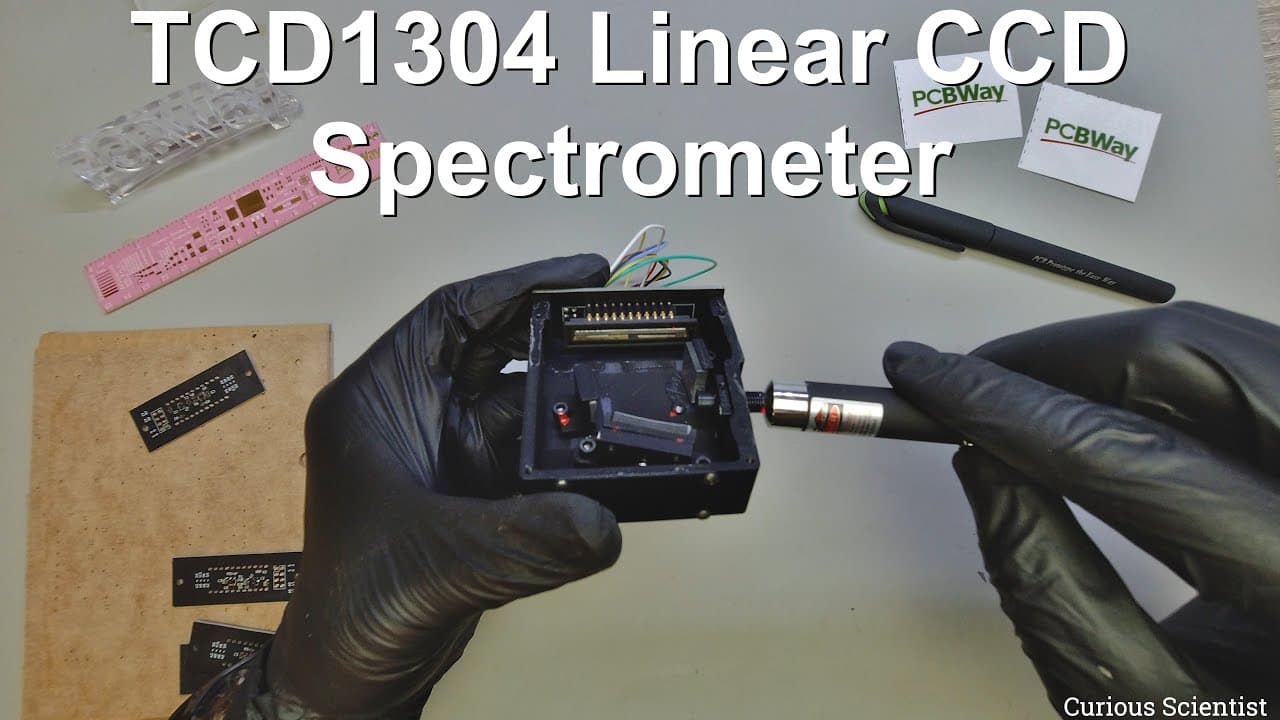
this video is sponsored by pcba welcome everyone in this video i'm going to continue the video on my spectroscope so previously i showed you that i was able to assemble a spectroscope and make it work in a rudimentary way so i calibrated it by using two lasers and then i measured the wavelengths of different leds but then i concluded that the const... Read More
Key Insights
- 👷 The speaker noted the importance of precise calibration and design when constructing a reliable spectrometer that can accurately measure wavelengths.
- 🙂 They emphasized that proper software and data handling are critical for effectively analyzing the light spectra captured by the CCD.
- 🖤 Designing PCBs with specific finishes, such as matte black, plays a significant role in optical applications to prevent unwanted interference.
- 📽️ Future projects will extend beyond the current spectrometer, exploring various applications for the CCD system.
- 😑 The use of simulation and pre-assembly setups allows for a more intuitive and efficient design process during electronics assembly.
- 🎨 The improvements made to the PCB design indicate ongoing learning and adaptation in the maker community, contributing to better project outcomes.
- 🔇 The speaker’s engagement with sponsors like PCBway highlights the collaboration between hobbyists and manufacturers in the electronics landscape.
Install to Summarize YouTube Videos and Get Transcripts
Explore YouTube Video Summarizer or Get YouTube Transcript Extractor
Questions & Answers
Q: What issues did the speaker encounter with the original spectroscope design?
The primary issue was the misalignment of the CCD in the optical casing, resulting in instability and inability to secure the optical arrangement. This led to reflections that could interfere with measurements. The speaker recognized the need for a more precise design that would minimize light interference, prompting a redesign of the PCB.
Q: Why was a matte black PCB chosen for this project over a shiny one?
A matte black PCB was selected to reduce any stray light and reflections inside the spectroscope enclosure. The speaker explained that reflections from a shiny surface can interfere with sensitive measurements of light, and using a matte finish helps ensure that stray reflections do not compromise the accuracy of data collected.
Q: How does the calibration process for the spectroscope work as explained in the video?
Calibration involves exposing the CCD to lasers of known wavelengths and observing the peak intensity at specific pixel locations. By recording these points and creating a mathematical relationship, the speaker can convert pixel values into corresponding wavelengths, allowing for accurate spectral measurements in future experiments.
Q: What did the video reveal about the speaker's software for capturing CCD data?
The new software allows the user to set an integration time and includes features like averaging multiple exposures and saving the data in manageable formats. The interface displays a real-time graph of the data, which the speaker demonstrates by moving various objects in front of the CCD, showcasing the software’s accuracy and performance in capturing light peaks.
Summary & Key Takeaways
-
The speaker reviews the assembly progress of their spectroscope, showcasing previous designs and identifying issues with CCD alignment that affected performance.
-
The new PCB made with a matte finish aims to minimize reflection and enhance the spectroscope’s functionality, providing detailed instructions for assembly and calibration.
-
The author demonstrates effective software for data capture from the spectroscope, highlighting its capability to detect wavelengths from lasers and discussing future project plans.
Read in Other Languages (beta)
Share This Summary 📚
Summarize YouTube Videos and Get Video Transcripts with 1-Click
Try YouTube Summary with ChatGPT & Claude or YouTube Transcript Generator
Explore More Summaries from Curious Scientist 📚
![Building a Peltier cooler-based cooling box - First iteration, improvements [Part 2/6] thumbnail](/_next/image?url=https%3A%2F%2Fi.ytimg.com%2Fvi%2F0YlNw0EGnzI%2Fhqdefault.jpg&w=750&q=75)

Summarize YouTube Videos and Get Video Transcripts with 1-Click
Try YouTube Summary with ChatGPT & Claude or YouTube Transcript Generator