Sam Altman: How Do You Start a Startup in the AI Era?
TL;DR
Startups should use AI to move faster, pursue ambitious problems, and prepare for capabilities that are not yet economical or possible. Sam Altman says a small team can now produce in weeks what recently required about a year, while startups gain an advantage as costs and cycle times fall. Read on for his advice about exponential progress, shifting markets, and learning to operate amid chaos.
Transcript
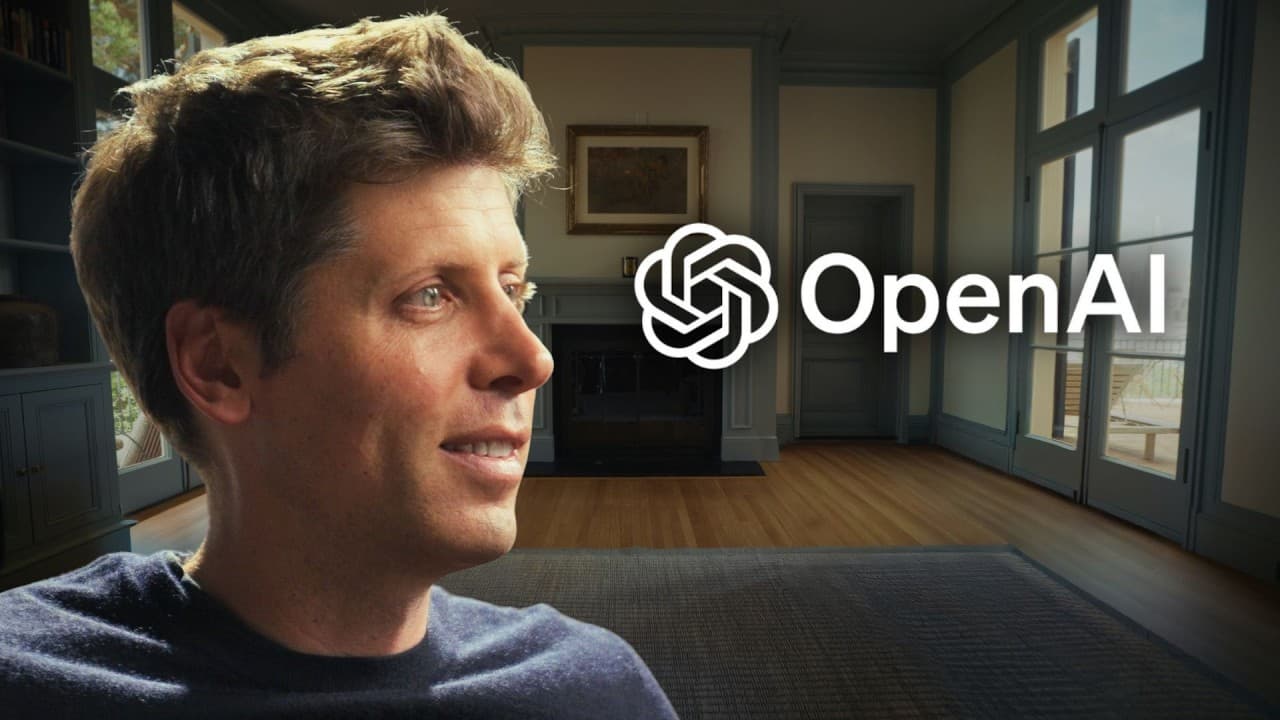
Today I'm sitting down with Sam Alman, the co-founder of OpenAI. A long time ago, you talked or did a talk at Stanford focused on how to start a startup. What is the biggest thing that has kind of shifted over the past like 10 years since you initially did those talks? >> Clearly AI uh and what is possible to do now with a small team of people has ... Read More
Key Insights
- AI significantly accelerates startup growth, allowing small teams to achieve more in less time.
- The competitive landscape for startups is rapidly evolving, requiring constant adaptation and innovation.
- Exponential growth is a key concept for understanding both AI development and startup success.
- Operating effectively in chaotic environments is a crucial skill for founders.
- The invention of the joint-stock company was pivotal in aligning incentives and enabling large-scale innovation.
- AI's potential for decentralization poses a counterbalance to risks of authoritarian control.
- Maintaining communication and alignment with core suppliers is essential for meeting ambitious timelines.
- Strategic focus and willingness to pivot are critical when pursuing high-impact goals.
Install to Summarize YouTube Videos and Get Transcripts
Explore YouTube Video Summarizer or Get YouTube Transcript Extractor
Questions & Answers
Q: How should founders start a startup in the AI era?
Founders should take advantage of what small teams can now build quickly with AI and pursue ambitious ideas enabled by the new tools. They should also plan for smarter or cheaper models that could make currently impossible or uneconomical products viable in 2 or 4 years.
Q: What has changed most about startups over the past 10 years?
Sam Altman identifies AI as the biggest change because it expands what a small team can accomplish and how quickly it can work. It has also raised the competitive standard: a startup operating like a 10-week-old company from 10 years ago would now be in bad shape.
Q: How much faster can startups build products with AI?
Altman describes meeting a startup that was about 2 weeks old and had rebuilt an office productivity suite around AI using documents, presentations, and spreadsheets. He felt that the same project would recently have required about a year of work.
Q: Why do startups benefit when markets and technology are changing quickly?
Startups have a major inherent advantage when the ground is shifting, costs are falling rapidly, and development cycle times are shrinking. Because these changes are occurring across many areas at once, Altman considers this an unusually fertile time to start companies.
Q: Should every startup build AI agents for an enterprise vertical?
Altman says applying current AI agents to an enterprise vertical can work in many cases, although the market will be very competitive. He doubts these companies will generally become the era’s most successful defining startups and is surprised that more founders are not pursuing bigger, less conventional ideas.
Q: Why should founders understand exponential progress?
Altman says he developed strong trust in exponential progress across people, companies, and AI models. He considers understanding continued model improvement the most important idea he would emphasize to founders, because markets have not fully adapted to that trajectory.
Q: Can founders build products that depend on future AI capabilities?
Yes, Altman says it is reasonable to begin working on ideas that require models to become smarter or cheaper. Founders should internalize that scaling laws will continue and plan for capabilities that may become possible or economical in 2 or 4 years.
Q: How can founders get better at operating in chaotic environments?
Altman says the main method is practice because intellectual understanding cannot replace repeated experience. Founders learn by facing uncertainty, trusting that they will solve problems, and developing emotional peace with chaos; limited career experience can make this especially difficult for young founders.
Q: Why do young startup founders struggle with chaos?
Young founders often struggle with chaos because they have not yet had enough career experience to become emotionally at peace with things going badly. Sam Altman says this ability takes repeated exposure, and founders eventually learn it through painful situations and unforced errors.
Q: How does Sam Altman stay grateful during bad days?
Sam Altman stays grateful by viewing the opposite of a bad experience as no experience, rather than a good experience. He sees boring and difficult periods as part of life’s interestingness, emotional depth, and range.
Q: How should a company decide which hard problems to work on?
A company should use a clear mission and a deep understanding of the problem to guide which hard problems it tackles. Sam Altman says this will not produce every decision correctly, since a company may still expand too far or fail to be ambitious enough.
Summary & Key Takeaways
-
Startups today can achieve remarkable progress quickly due to AI advancements. Founders must navigate a rapidly changing landscape, embracing ambitious goals and adapting to chaos. Understanding exponential growth is crucial for success.
-
The joint-stock company revolutionized innovation by aligning incentives and enabling large-scale projects. Similarly, AI offers potential for decentralization, countering risks of concentrated power.
-
Effective communication with suppliers is vital for startups to meet ambitious timelines. Strategic focus and the ability to pivot are essential for pursuing high-impact objectives.
Read in Other Languages (beta)
Share This Summary 📚
Summarize YouTube Videos and Get Video Transcripts with 1-Click
Try YouTube Summary with ChatGPT & Claude or YouTube Transcript Generator
Explore More Summaries from Relentless 📚





Summarize YouTube Videos and Get Video Transcripts with 1-Click
Try YouTube Summary with ChatGPT & Claude or YouTube Transcript Generator