How Does an AI Coding Agent Actually Work?
TL;DR
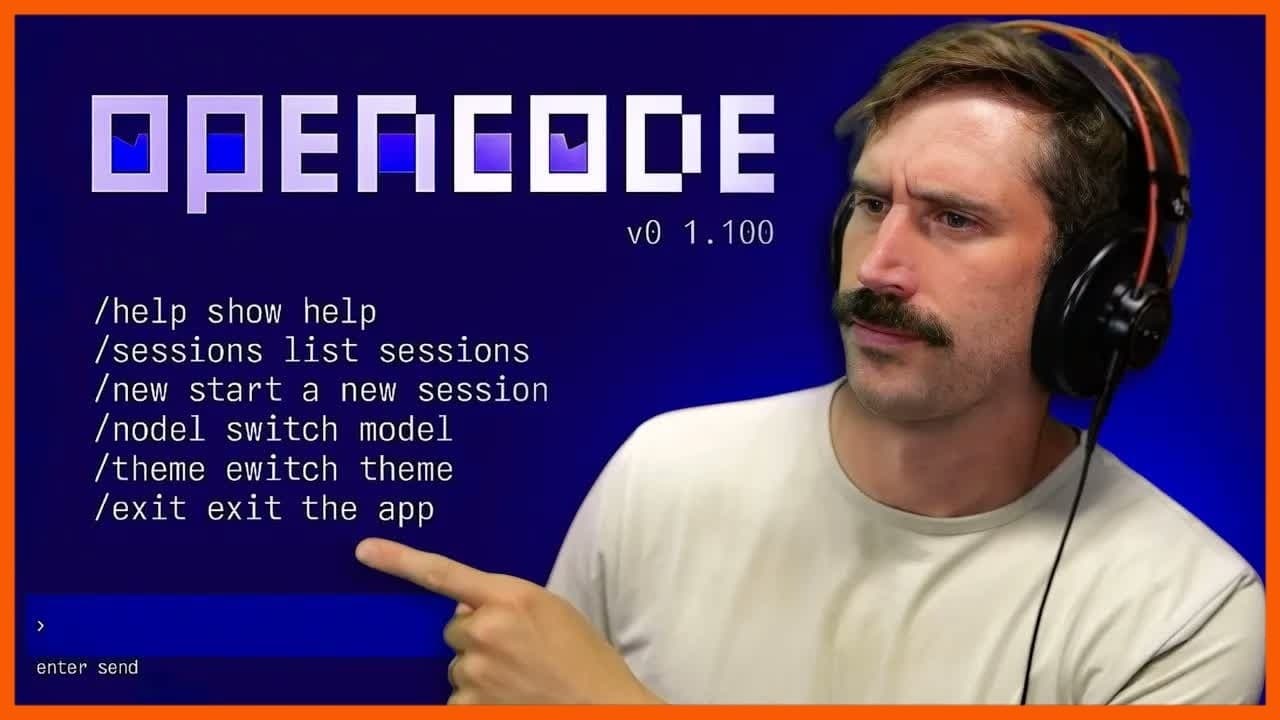
An AI coding agent combines a language model with programming tools and a loop that lets it repeatedly inspect files, make changes, and respond. Building a useful agent requires more than this basic formula: developers must manage model compatibility, context, sessions, local environments, tool feedback, security tradeoffs, and a polished interface that complements existing editors.
Transcript
Guys, have you guys checked out the hottest new site, Balls. Yoga. What? Yeah, I have checked it out. Adam, check it out. Balls. Yoga. Check it out. Oh my god. What is this? It's so hot right now. So hot. This is you guys. What in the world? I just sent in the chat the we we made a ad for Bolt for their hackathon this month that we were doing. And ... Read More
Key Insights
- An AI coding agent is a language model equipped with programming tools and placed inside a loop. The loop allows it to read files, edit code, call additional tools, evaluate what happened, and continue working before returning a response.
- Tool access is central to agent behavior because a language model alone cannot directly inspect or modify a codebase. Programming agents typically receive tools for reading files, editing files, and performing other development tasks relevant to the repository.
- System prompts are useful for defining an agent's behavior, but they are not presented as a defensible secret advantage. Existing coding agents use broadly similar tools and prompts, while individual models can still respond differently to the same instructions.
- The surrounding product experience is a major source of differentiation between coding agents. OpenCode focuses on session sharing, visible conversation history, a polished terminal interface, and planned mobile access rather than claiming a fundamentally different agent formula.
- Local execution is valuable because it gives an agent access to the developer's existing files, tools, and configured development environment. Remote agents can work, but users may need to reproduce their preferred local setup inside a cloud environment.
- Mobile access can extend a locally running agent without relocating its execution environment. The proposed OpenCode client would connect to a session on a running laptop, notify the developer when input is needed, and allow feedback while away from the desk.
- Provider flexibility creates substantial engineering work because OpenCode aims to support Anthropic, Google, OpenAI, local models, and other available providers. Each option must be tested, and the speakers report that only a small number of models perform programming-agent tasks well.
- A production-quality coding agent requires work beyond connecting a model to tools. The discussion identifies model testing, tool integration, feedback loops, context compression, session management, parallel work, security decisions, and terminal interface constraints as parts of the larger engineering problem.
Install to Summarize YouTube Videos and Get Transcripts
Explore YouTube Video Summarizer or Get YouTube Transcript Extractor
Questions & Answers
Q: What is an AI coding agent?
An AI coding agent is a language model given access to programming-related tools and placed in a repeated execution loop. Its tools can include reading and editing files in a codebase. The model calls those tools, observes their results, continues making decisions or changes, and eventually returns a response when it has completed the task or needs more input.
Q: How does the loop in an AI agent work?
The loop repeatedly gives the language model opportunities to choose and call tools, inspect the resulting output, and decide what to do next. For a coding task, that may involve reading several files, editing code, and reviewing additional information before responding. This repeated process distinguishes an agent from a single model request that immediately produces one answer.
Q: What tools does an AI coding agent need?
An AI coding agent needs tools that correspond to the work it is expected to perform. The core examples discussed are tools for reading files and editing files in a codebase. The broader discussion also references tool usage and language server integration, showing that useful feedback can be supplied to the model as it works through its loop.
Q: How important is the system prompt for an AI agent?
A system prompt helps keep an agent focused on its role, task, and expected behavior, and different models may respond to that prompt differently. However, the speakers do not treat prompt wording as a highly protected advantage. They argue that coding agents generally use roughly similar prompts and tool sets, with much of the meaningful differentiation appearing elsewhere in the product.
Q: Why does OpenCode run AI agents locally?
OpenCode favors local execution because a developer's machine usually already contains the files, tools, configuration, and working environment needed for development. A remote agent can function in the cloud, but the user may have to recreate that environment there. Keeping execution local lets the agent operate where the developer's setup already works best.
Q: How could a mobile client control a local coding agent?
The planned mobile client would connect to an agent session that continues running on the user's laptop. A developer could leave the desk, receive a notification when the agent finishes a loop or requires guidance, and continue the conversation from a phone. The laptop would remain running, so the agent would retain access to the established local development environment.
Q: Why is building a production AI agent difficult?
The basic agent formula is straightforward, but a usable product requires many additional systems. OpenCode must test behavior across providers and models, manage tool calls and repeated loops, preserve useful context, organize sessions, consider parallel work and security, and deliver a reliable terminal interface. These surrounding concerns explain why a serious agent takes longer than a weekend demonstration.
Q: What differentiates OpenCode from other coding agents?
OpenCode is positioned as a terminal-based agent that complements whichever editor a developer already uses, especially for people who do not want to abandon Neovim or their command-line workflow. Its differentiators center on product design, including a strong terminal experience, shareable sessions, complete session histories, multiple provider support, local execution, and planned mobile access.
Summary & Key Takeaways
-
An AI coding agent is built around a language model, programming tools, and a repeated execution loop. The model can read or edit files, inspect a codebase, call tools, make changes, and continue working until it produces a response. System prompts provide additional guidance, although they are not the main differentiator.
-
OpenCode is designed as a terminal-based agent that complements editors such as Neovim instead of requiring users to replace their preferred development environment. It supports multiple AI providers and emphasizes product features surrounding the agent, including session histories, sharing, interface quality, and plans for continuing locally running sessions from a mobile client.
-
Running the agent locally preserves access to a developer's established tools, files, and working environment. Cloud execution can work, but it may require recreating that environment remotely. The broader engineering challenge includes testing models and providers, managing loops and context, designing sessions, considering security, and building a usable terminal interface.
Read in Other Languages (beta)
Share This Summary 📚
Summarize YouTube Videos and Get Video Transcripts with 1-Click
Try YouTube Summary with ChatGPT & Claude or YouTube Transcript Generator
Explore More Summaries from The PrimeTime 📚




Summarize YouTube Videos and Get Video Transcripts with 1-Click
Try YouTube Summary with ChatGPT & Claude or YouTube Transcript Generator